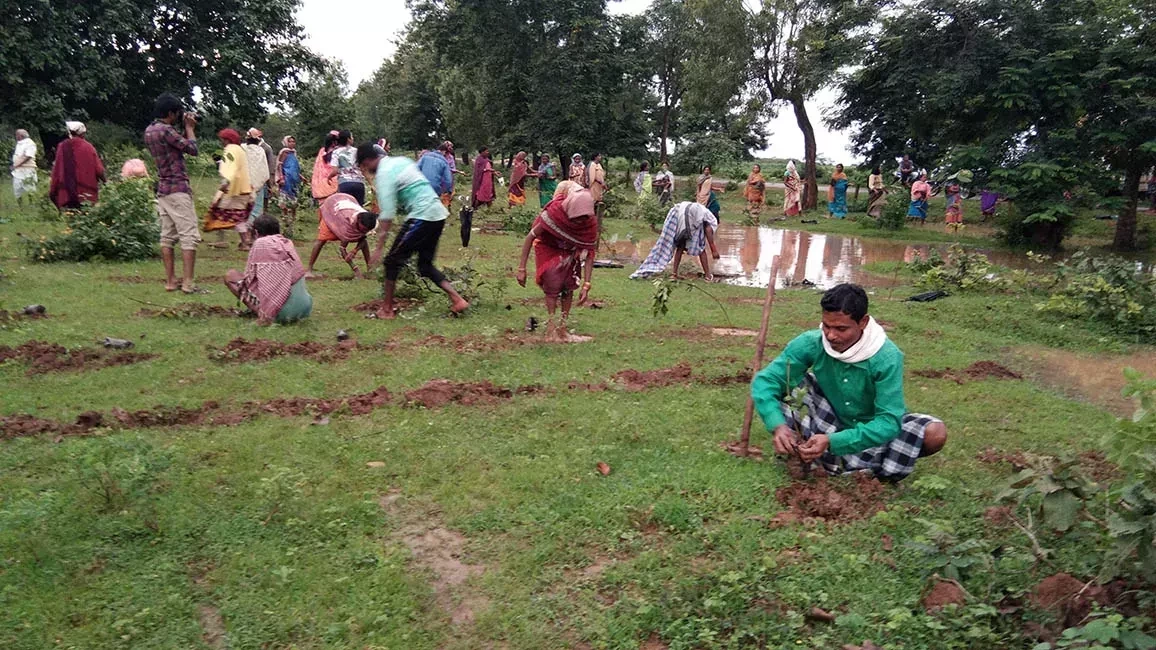

In the context of environmental conservation/restoration, the state of Chhattisgarh, India, is witnessing a significant initiative in the Bastar region. A plantation project, aimed at promoting conservation and ecological restoration. Through the active engagement of local communities in tree planting and nurturing activities, this project seeks to restore degraded forests, promote biodiversity, and foster environmental stewardship.
The plantation project in Bastar, Chhattisgarh, is a pioneering initiative that holds immense potential in raising environmental awareness and aiding fauna conservation efforts, and its impact is multifaceted and far-reaching. By engaging local communities in the planting and nurturing of trees, this project not only increases forest cover but also instils a sense of responsibility towards the environment and its inhabitants, fostering a deeper appreciation for the intricate relationship between human existence and the natural world. As the community becomes more conscious of the importance of preserving the environment and protecting wildlife habitats, they begin to recognize the vital role that forests play in supporting biodiversity, regulating the climate, and providing livelihoods for countless individuals. By engaging in activities such as tree planting, maintenance, and harvesting, individuals are able to earn a steady income and support their families. The projects have also encouraged the cultivation of diverse plant species, including fruit-bearing trees and medicinal plants. This diversification not only boosts income but also enhances food security and promotes sustainable livelihoods. The increased forest cover provides shelter, food, and breeding grounds for wildlife, contributing to the conservation of diverse wildlife species in the region, and supporting the delicate balance of the ecosystem. Through the plantation project, the community becomes increasingly aware of the interconnectedness of the environment and the impact of human actions on the ecosystem. They begin to understand the importance of preserving natural resources, such as water and soil. The project's emphasis on community engagement empowers individuals to take charge of their environment, making informed decisions about resource and conservation. This, in turn, leads to a potential reduction in environmental degradation, and a more sustainable future for generations to come.
Furthermore, the project's impact extends beyond the local community, contributing to global efforts to combat climate change, preserve biodiversity, and promote sustainable development. The project serves as a model for environmental stewardship, demonstrating the effectiveness of community-led initiatives in promoting environmental conservation. It is a shining example of the power of community-led conservation efforts, demonstrating that even small initiatives can have a profound impact on the environment and its inhabitants when guided by a shared vision and collective action. By empowering local communities to take ownership of their environment, the project promotes a grassroots approach to conservation, ensuring the long-term sustainability of the ecosystem.
Commentaires (0)
Laissez un commentaire