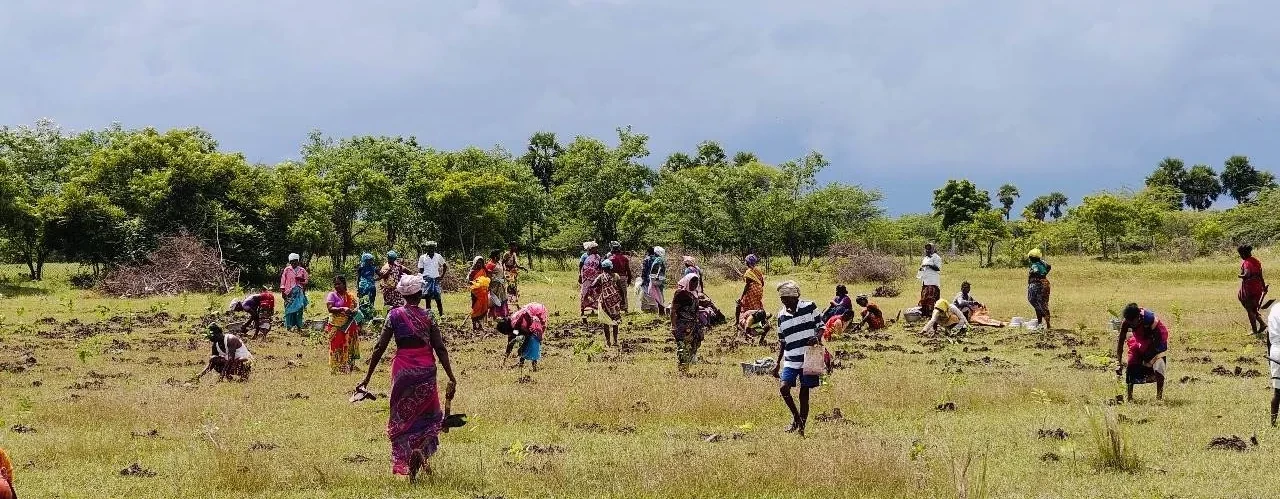

The Irula tribe represents one of the region's oldest indigenous cultures, deeply connected to the landscapes they inhabit. With a rich history of practices like snake catching and honey harvesting, they have long relied on the resources of their environment. However, rapid urbanization and environmental degradation have disrupted their traditional livelihoods, leaving many in precarious economic situations. In this context, engaging the Irula community in tree planting initiatives offers a vital opportunity. Our project in Tamil Nadu not only provides immediate economic benefits but also help restore their cultural identity and connection to the land.
Economic Opportunities Through Tree Planting
Engaging the Irula community in tree planting efforts creates vital economic pathways. As traditional livelihoods dwindle, many Irulas have transitioned from their ancestral practices, such as snake catching, to labour-intensive jobs that often lack sustainability. Tree planting offers a dual benefit: it provides immediate employment opportunities in nursery management, sapling transportation, and planting activities while establishing a long-term source of income through the sale of timber, fruits, and other forest products.
The communities involved in sustainable forestry can see significant improvements in household income. For instance, the sale of non-timber forest products (NTFPs), such as fruits and medicinal plants, can supplement family incomes, thereby reducing poverty levels. Furthermore, by cultivating trees that are native to the region, the Irula tribe can enhance their understanding of biodiversity and its economic potential, creating a sustainable livelihood model that respects their heritage.
Cultural Reconnection
Tree planting does more than just provide economic benefits; it fosters a renewed sense of cultural identity and responsibility towards the environment. The Irula tribe has traditionally held a deep reverence for nature, and engaging in reforestation efforts allows them to revive this connection.
Each tree planted symbolizes a commitment to their ancestral land, reinforcing the importance of preserving the ecosystems that have sustained them for generations. Moreover, the knowledge that the Irula people possess about local flora and fauna is invaluable. By involving them in the selection and planting of native species, these initiatives can enhance biodiversity and ecological resilience. This not only restores the natural landscape but also empowers the Irulas as custodians of their environment, instilling pride in their role as environmental stewards.
A Vision for the Future
As tree planting initiatives take root within the Irula community, the potential for positive change is vast. Not only can these projects uplift the socio-economic status of the tribe, but they also encourage a revival of cultural practices that celebrate their heritage. By fostering a strong relationship with the land, the Irula people can reclaim their identity while contributing to the health of their environment.
In conclusion, tree planting serves as a powerful tool for empowering the Irula tribe, intertwining economic opportunity with cultural and environmental stewardship. As communities engage in these transformative efforts, they pave the way for a sustainable future that honours both their past and the rich biodiversity of Tamil Nadu. Through this dual focus on economic upliftment and cultural reconnection, the Irula tribe can emerge as a vibrant and resilient community, deeply rooted in their traditions while looking forward to a sustainable future.
Commentaires (0)
Laissez un commentaire