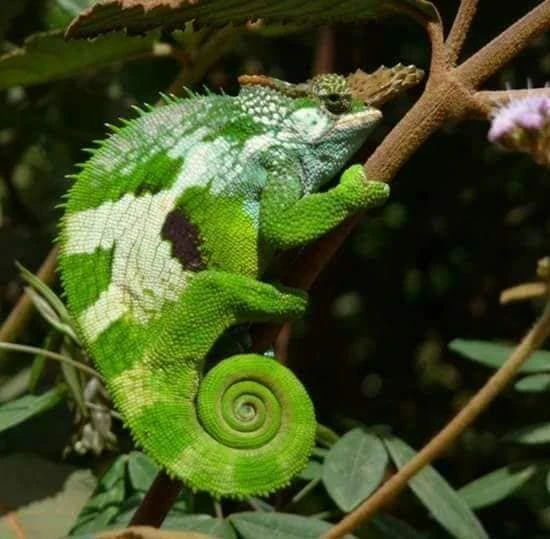

POPULATION
There is no information on the abundance or population trends of this species. The species is restricted to forest fragments and forest edges. Given the heavy transformation and encroachment into these fragments, it is likely the populations are in decline, because the fragments are still under pressure, and if left unchecked, they will decline in size and number. While the species is observed near the forest edges, in these areas it is restricted to structurally complex vegetation and does not tolerate or adapt to heavily transformed landscapes. Therefore, the population can be considered severely fragmented.
The small forest fragments this species inhabits are impacted by timber removal, resource utilization, encroachment and transformation for agriculture. This species is also one of the most heavily exported from East Africa for the pet trade. Because the subpopulations are heavily fragmented and their habitat is under pressure, and this species has a small area of occupancy, the removal of animals from the wild for pet trade is an additional threat that this species may not be able to tolerate.
Geographic Range
This Tanzanian endemic inhabits the fragmented Afrotemperate forest patches of the West Usambara Mountains (Tilbury 2010). It is a forest endemic, that avoids the transformed landscape although can be found in degraded forest and forest edges.
This species is found in Afrotemperate forest of the West Usambara Mountains, from 1,200-2,500 m asl. (Tilbury 2010). It can be found in modified vegetation adjacent to forest patches, on shrubs and trees by roadsides (J. Stipala pers. comm. 2013), but it does not range across the transformed landscape (M. Menegon pers. comm. 2013).


