Kenya Mangroves Restoration

Kenya Mangroves Restoration

KE Quênia

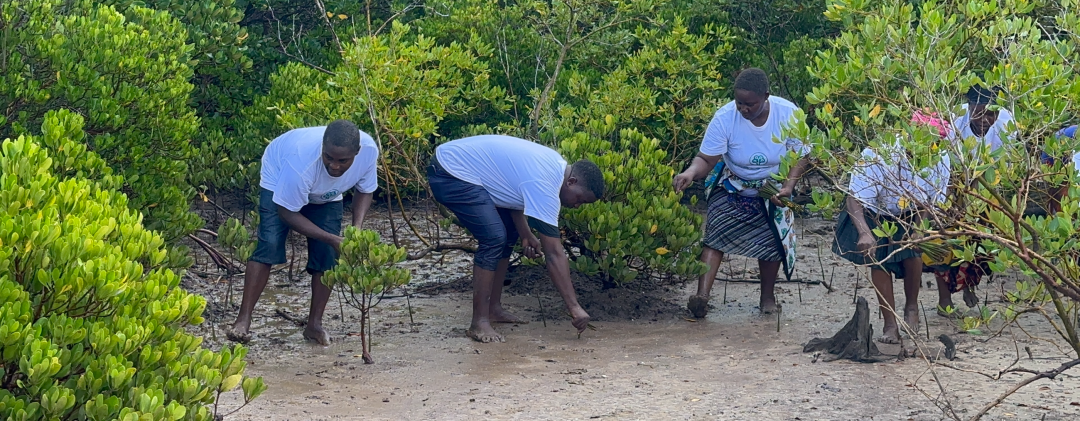
This mangrove restoration project along Kenya’s coast is restoring degraded areas, strengthening livelihoods, and bringing back vital ecosystem benefits. Through community action, this Tree-Nation led project is reviving critical coastal ecosystems while creating sustainable opportunities for local communities. Healthy mangroves also protect coastlines from erosion and storms, and strengthen the resilience of nature and coastal communities.

32,633Árvores financiados de 1,350,000
496 TCO2 capturado
1,168Seguidores
Plantar desde 0.35 €
17 atualizações
outubro 2026

Planting preparations begin by ensuring that sufficient planting materials are available and ready. In most cases, a full day is dedicated to this activity.

15 out 2026

Not all mangrove species are planted using propagules; some, such as Avicennia marina, are often raised as seedlings before transplanting. Here, a community planter carefully plants young mangrove seedlings, helping restore degraded area, one tree at a time!

12 out 2026
Alt Gr SA · 15 outubro

Top!

These community-raised mangrove seedlings are healthy, strong, and ready for transplanting. Every seedling planted is a step toward restoring degraded coastlines, protecting coastal communities, providing habitat for marine life, and building resilience against climate change.

08 out 2026
Krishna Antoine · 8 outubro

Great work !!

Planters have been trained to constantly check quality and maturity of propagules as they are key to higher survival and greater resilience against threats such as storms and grazing crabs during early stages of establishment.

05 out 2026
Ricardo Musselli · 6 outubro

🙌

Women are always at the forefront of conservation—raising seedlings, planting trees, and nurturing them to grow.
From the nursery to the field, their dedication is helping restore landscapes and build a greener future, one tree at a time.

01 out 2026
setembro 2026

Enrichment planting of mangroves in degraded areas previously impacted by human activities

09 set 2026

No bridge, no problem! Getting to the planting site is an adventure of its own! Within the mangrove ecosystem are tidal streams that planters must cross on their way to the planting areas. Propagules in buckets—carried by hand and balanced on the head!

08 set 2026

Propagules are the primary planting material for mangrove species such as Ceriops tagal. Before planting, community planters carefully collect, sort, and count the propagules to ensure accurate records and proper tracking of the planting materials.

08 set 2026

Avicennia marina seedlings ready for distribution within the planting site. This species has a relatively fast growth rate and high survival potential, particularly when seedlings are first raised and established in a nursery before being transplanted to the restoration site.

08 set 2026
Filmore Development · 9 setembro

Great

agosto 2026

Planters carefully plant mangrove seedlings as part of efforts to restore degraded coastal areas and revive the mangrove ecosystem

28 ago 2026

The project promotes gender inclusion and participation across different age groups, with elderly planters also actively and enthusiastically participating in the planting activities.

28 ago 2026

Selected propagules are counted before planting to ensure accurate planting records, properly track each planter’s contribution, and ensure that all planters are fairly compensated for their work.

28 ago 2026

Mature propagules are key to achieving high survival rates, so careful selection and sorting before transplanting is essential.

28 ago 2026
julho 2026

Tree-Nation's First Direct Restoration Pilot Takes Root in Coastal Kenya

Along Kenya's coastline, mangroves have quietly done the work of a seawall, a nursery, and a climate buffer all at once. Decades of logging and coa...

Ler artigo

Planting mangroves during the rainy season is considered a best practice because it significantly improves seedling establishment, survival, and long-term growth.

10 jul 2026