Alamanga is the first social enterprise on Madagascar that serves environmental purposes. By definition, a social enterprise is a business with a social, societal or environmental purpose while the profit it makes is limited. Therefore, we seek to involve stakeholders in Alamanga's project governance.
As a company, we aim to redistribute our profits to the employees and create new jobs. So far, Alamanga employs five people full time and twenty on a seasonal basis. Nearly all of them are from the villages surrounding our plantation.
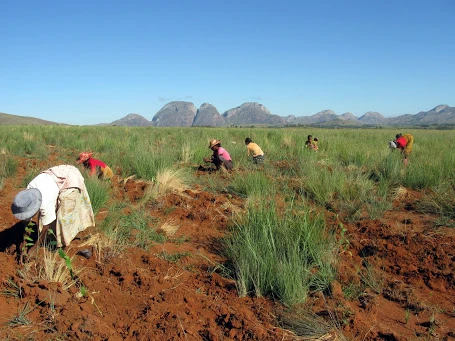
The villagers who were recruited for Alamanga's planting in 2011.
Developing tools with the Ministry of Environment and Forests to educate and raise environmental awareness in students. Followed by a distribution of seedlings.
In the upcoming school year we will work with an association of young academics, in collaboration with the Ministry of Environment and Forests, running environmental awareness campaigns in schools around the plantation. We will support this campaign by distributing seedlings that the children can plant themselves and get engaged in. We would like to note that the motto of Alamanga is: "Mamboly hazo tanora, manan-kialofana rehefa lehibe.", which means: he who plants a tree in his youth will have the shade later.
We will also set up more income-generating activities to fight poverty and help local people promoting their culture and traditions.
Alamanga has chosen to go into beekeeping because it can be an excellent source of income for villagers surrounding the plantation in Vohimarina. We already planted Eucalyptus and Acacia trees on our pilot site, two fast growing species which give very good honey. The price of honey varies between 3,000 Ariary (equivalent to 1 Euro) and 9,000 Ariary (equivalent to 3 Euros) per litre, depending on quality and season. Furthermore, beekeeping has good synergies with environmental conservation. The demand for honey is estimated at 50,000 kilograms per year while national production currently totals between 5,000 and 10,000 kg per year. The future beekeepers of our village cooperative will be trained by beekeeping organizations of the Haute Matsiatra region.
When the beekeeping project has taken on full swing our second job will be the silk production.
Ambalavao has a reputation for sericulture or silk production. In fact, this district is the leading producer of silk in Madagascar, both for wild silk and silk farming. For this reason Alamanga has planted Tsitoavina or Dodonaea Madagascariensis since last year, a species endemic to Madagascar whose leaves are eaten by wild silkworms. The cooperative will train the weavers and manage related activities. Alamanga will assist the cooperative in finding outlets on the local, regional and international market.
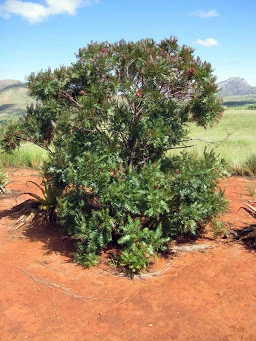
Tsitoavina or Dodonaea Madagascariensis for the sericulture we want to implement
Since last year, Alamanga also sponsors football teams from neighbouring villages, due to the lack of other entertainment in rural Madagascar.
Hope you enjoyed the read!
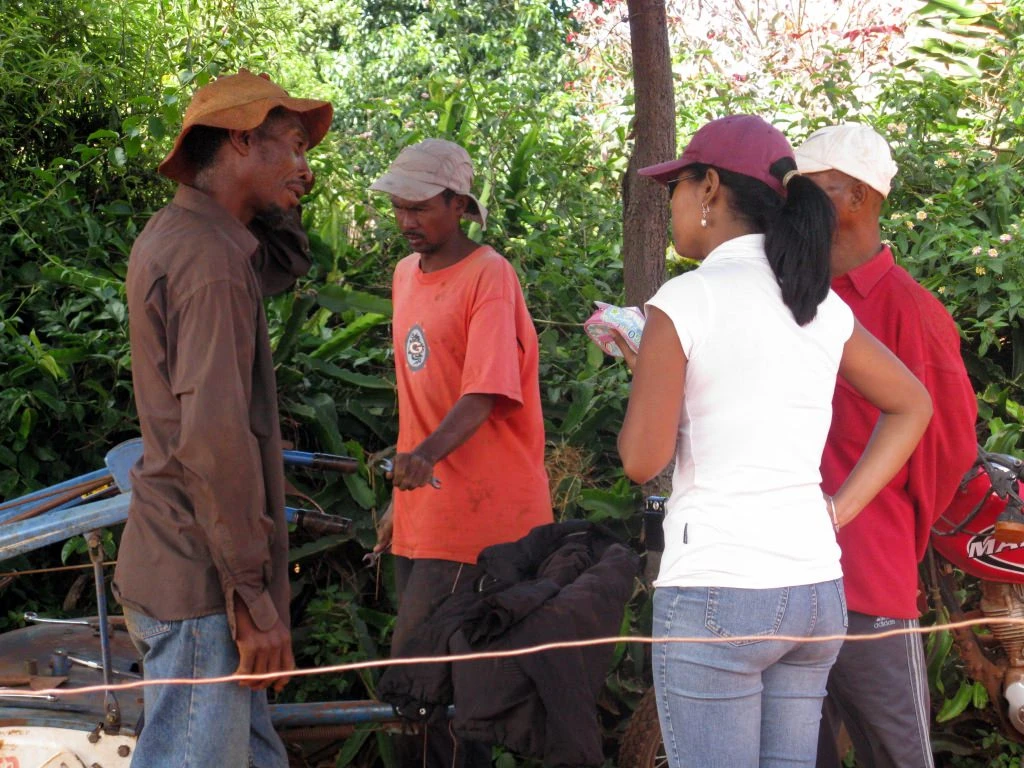
Image cover: Team Alamanga discusses on the plantation in Vohimarina


