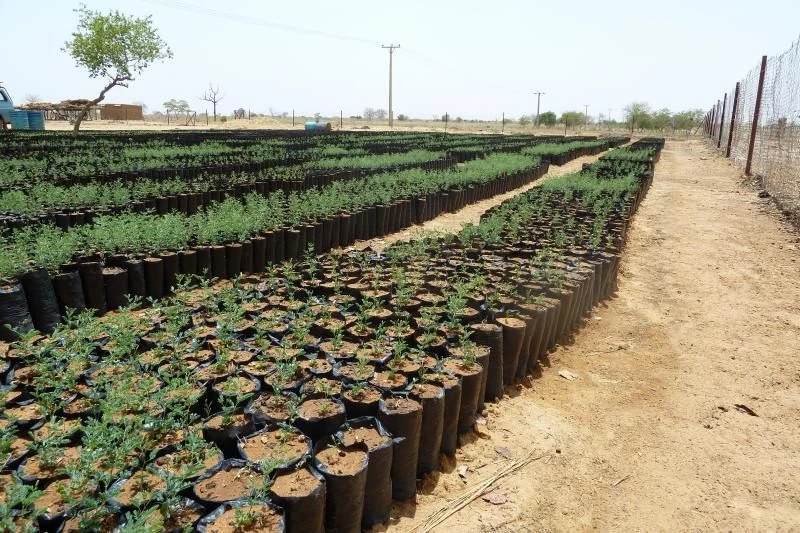
A month and a half after the first sowing, most of the 46,000 plants in the nursery have begun to sprout. Here are some photos of the nursery, as well as the some news, including information about the latest work being done.
50°C heat wave
Whilst it’s true that there have been a fair few crickets swarming over to nibble on the leaves, the worst scourge over the last few weeks has been the stifling heat. Average highs for April and May usually stand at 40°C and 41°C respectively, but this year temperatures have regularly reached 45 to 50°C, with the heat accompanied by a hot, dry wind coming in from the desert. This heat dries and kills plants that have just emerged from the ground, giving us a high failure rate. (to learn more about our replanting methods, see “Pricking out and replanting” below)
Construction of a fence to offer shelter from the wind
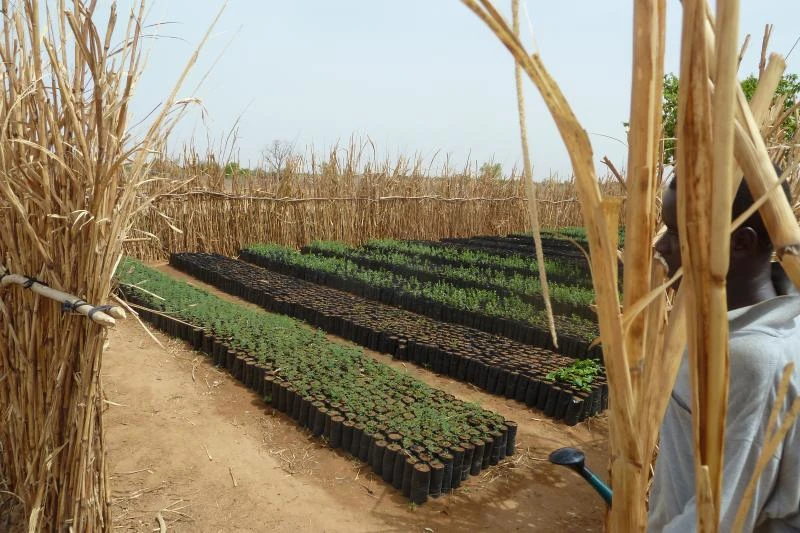
A millet stem fence has been put up between the rows of pots to block the hot southerly wind. This fence should hopefully reduce mortality amongst the youngest shoots in the first few days after germination.
Pricking out and replanting
Two techniques are used in order to minimise impact on the success rate. First off, the nurserymen and women initiate pricking out. Since 2-3 seeds are used in each pot, it is possible for 2-3 plants to sprout in a single pot, while none germinate in the neighbouring one. At sunset, these extra plants are removed, planted in pots where nothing has sprouted, and then watered. The success rate for these transplants is pretty high (around 75%). Then, if there aren’t enough plants to prick out, it’s time to replant. To speed up the germination process, we put the seeds in hot water (just after boiling) in order to soften the shell.
Indian Jujubes
The seeds of Indian jujubes take a while to germinate. This process can be hastened by cracking the shell and only planting the fragile seed inside it. However, this is a laborious task, since it must be done one by one and, since the shell is hard, it is hard to crack it without crushing the seeds. Out of the 5000 species, we decided to crack half and leave the other half untouched. The former have sprouted well, while the others have not responded. So last week saw us get cracking again in order to replant the remaining 2500...
Weeding
Every day, the nurserymen and women remove unwanted weeds and survey the young sprouts to make sure they spot any diseases, insects or other threats.
Moving
A major task on the horizon will involve relocating all of the pots to prevent the formation of strong roots in the soil under the pots. By relocating the plants, you break the roots while they are still developing and force the tree to create new ones in the pot, which will significantly increase its chances of surviving once planted in the ground. This is in comparison to a plant that is not moved, which will have fewer, longer roots that must be severed when the time comes to finally transport the plant.


