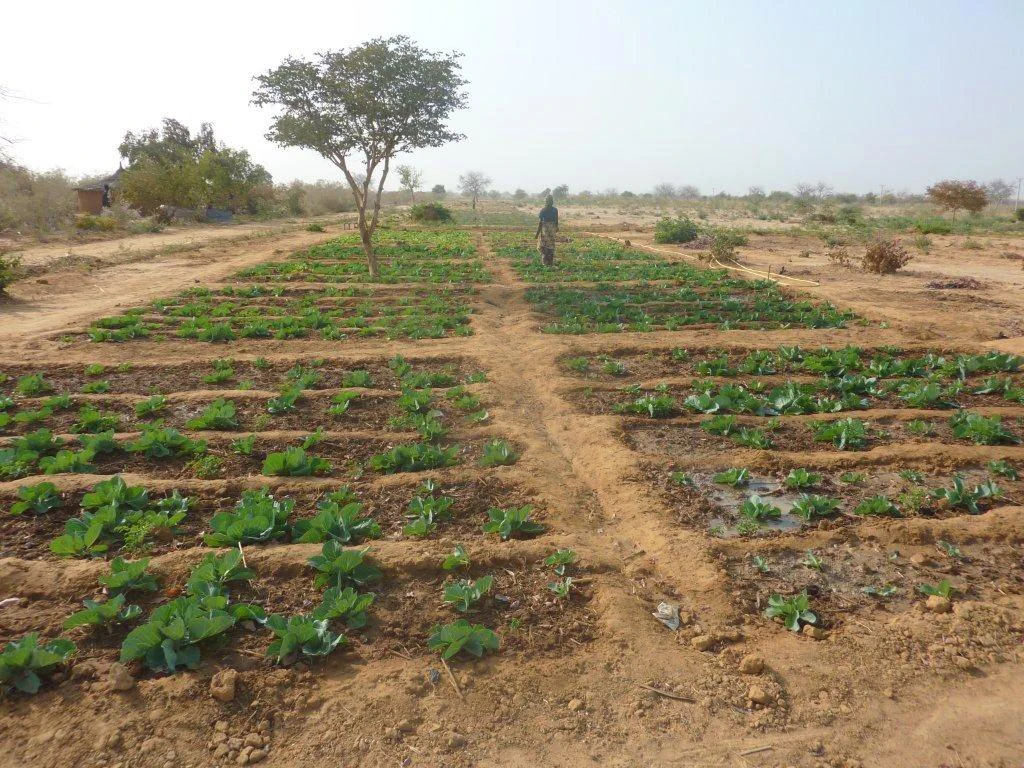
Vegetable production:
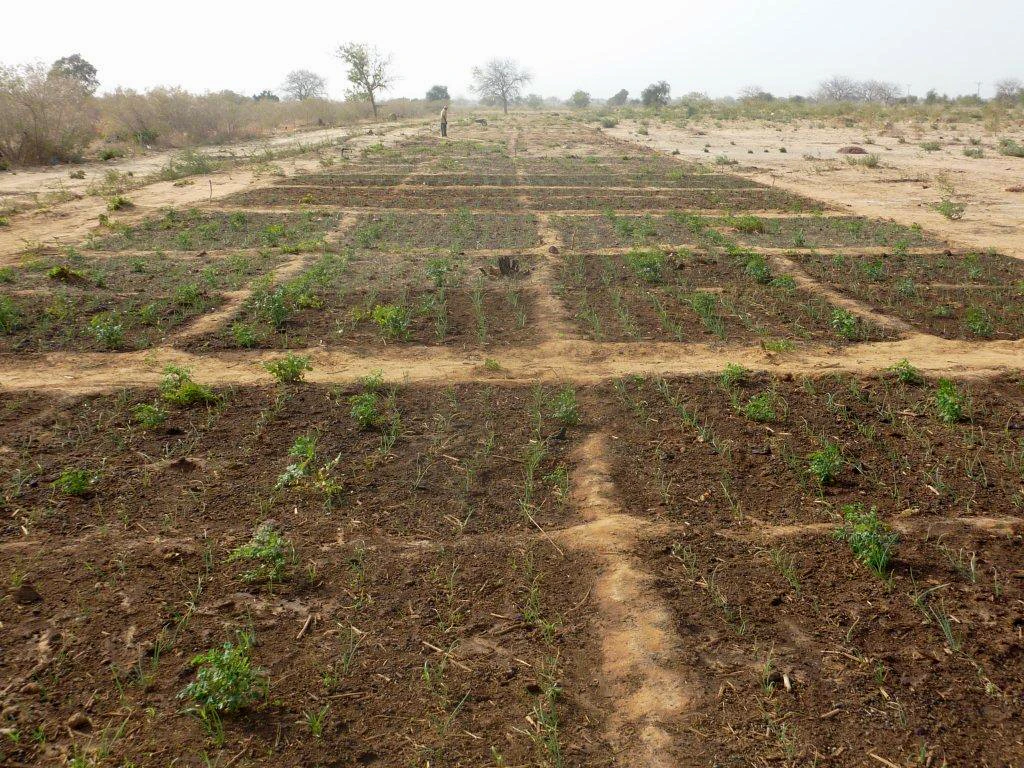
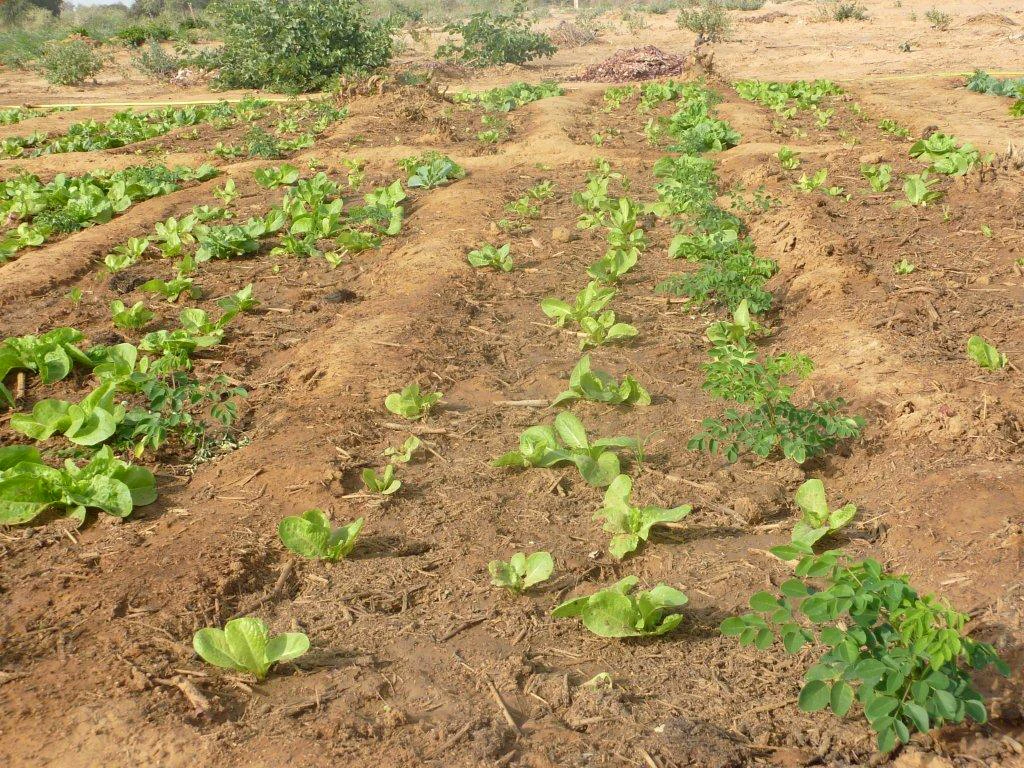
Alongside planting trees, we are beginning to farm fruits and vegetables as we cultivate the trees planted. Our goal is twofold: to enhance the quality of the soil and the growth of the trees through agroforestry and to take advantage by selling the products farmed in the process.
So far, we have planted tomatoes, aubergines and cucumbers. While the first two have yielded good results, many cucumbers have been lost owing to the pest of caterpillars. We are, however, going to continue farming the vegetables and we hope to make the most of distribution outlets in the capital of Niamey and in local markets to sell them alongside our production of #Moringa_oleifera leaves.
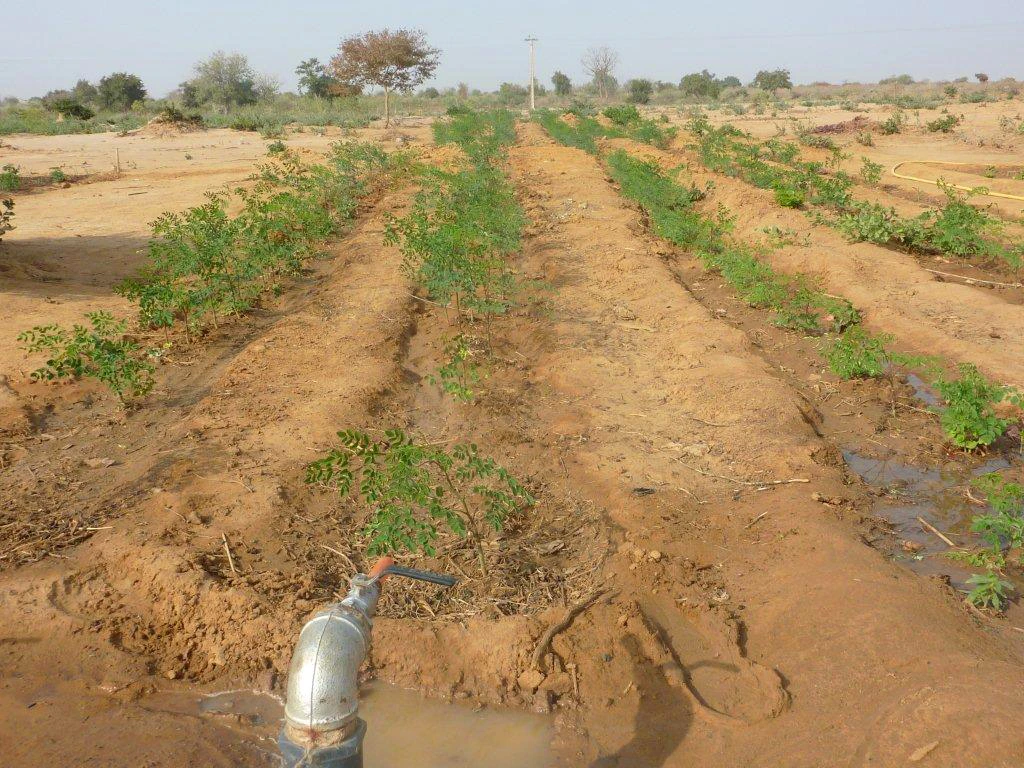
The Moringa plantation:
We have also decided to reorganise our site to open a new Moringa park. 15 metres wide, it runs alongside the channelling strip used for channelling the irrigation from the basin, which is a round 200 metres long. It will be ideally placed to take advantage of the water well and our soon-to-be-in-place micro irrigation system, by using the border irrigation technique, which involves irrigating a whole area of land at one time. As for our old park, until the irrigation system has been expanded it will only be being farmed on a seasonal basis.
In all, over the last few months we have harvested around 200 kg of Moringa leaves. And, while we’re on the subject, we thought you might want to know that we’ve just collected our first Baobab leaves since they were planted 4-5 years ago!
These results are still pretty poor production-wise, but it’s worth noting that the region has had an extremely tough year in terms of rainfall (less than 200 mm of rainfall throughout the whole year – 3 times less than usual!). This means that our new irrigation system has not had the good fortune to be greeted with a good rainy season, which would have had a major impact on production. Nevertheless, a significant difference is already in evidence compared to the neighbouring lands. What’s more, a local television channel came to visit the plantation and broadcast a report on our results. Right now we’re trying to get our hands on the film, which is proving no mean feat!
This article is also available in FR, NL, DE, IT, ES language.


