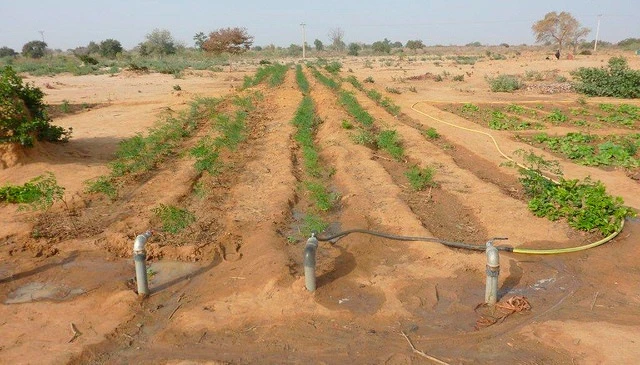
Non-timber forest and agricultural production
#Moringa_oleifera leaf production has enjoyed substantial progress during the month of January, despite the moderate sunlight (remember that the well pump is connected to solar panels). 200 kg of leaves have been harvested, a figure considerably higher than in previous months.
457 kg of tomatoes and 54 kg of aubergines and lettuces have been produced over the month. We have also established cabbage and onion crops that are growing normally.
We are striving to make the plantation more self-sustainable, drawing on the sale of our crops in local markets. In January, income has also reached 30% of the needs of the project. In the coming months, while tomato production will be reduced due to the completion of its growth cycle, the increase in cabbage production will maintain the level of income achieved in previous months. We hope to be able to achieve the goal of covering running costs from our own resources in the next few months, especially if we receive some extra investment to increase production and irrigation water (see the note on drip irrigation below).
Forest and fruit plant production
In January, in the nursery, there has been a increase in the number of melons and watermelons planted but we didn't plant new trees. We have been mainly focusing our efforts on maintenance of existing facilities, including fruit plants, and particularly on grafting mango plants and Ziziphus, or Sahel apple, species.
We are also looking forward to the arrival of Dr. Abubakar Ichaou, director of the INRAN (National Agronomy Research Institute of Niger) centre in Niamey, who will be taking stock of our technical operations and identifying appropriate solutions in terms of spatial structure and production of seedlings for the rest of the 2012 campaign.
Promotion and Operations Management
During this month we received three visits from institutions based in Dosso, aiming to publicise the project on a larger scale and identify possible partnerships. These consisted of:
1. A group of leaders of the ARMF (Increasing Women’s Monetary Revenue) project in Dosso, funded by the Belgian Development Agency in Niger, visited to explore the possibility of women being trained to develop the Moringa plantation in the area.
2. The Dosso Regional Water and Forest Department, accompanied by the national television network, came to film a documentary about measures to regenerate and protect pasture and timber areas (we discussed this in our previous article).
3. We received a joint visit from the President of the Regional Chamber of Agriculture and the Director of the Department of Agriculture in Dosso, who were looking to find out more about the initiatives taking place on the Tree-Nation site.
First attempt at drip irrigation (micro-irrigation)
Between now and the beginning of March we are going to start testing drip irrigation on half a hectare of land. This will allow us to assess the possibility of extending this system to an area of between 1 and 3 hectares, which would be set aside for the cultivation of Moringa. We will keep you posted.
By the way, have you ever tried Moringa leaves?


