
#EcoEducation #CarbonCatchers
The benefits of healthy soil & why soil organic matter matters
Almost everything eaten by humans and animals can be traced back to soil. It is fundamental to all terrestrial life, and without it, we would be “hungry, thirsty, naked, homeless and breathless”. It is one of our most precious resources and the complexity of its ecosystems provides a habitat for millions of living things.
For soil to provide the benefits it does, it needs to be healthy. Soil health is defined as “the capacity of a specific kind of soil to function, within natural or managed ecosystem boundaries, to sustain plant and animal productivity, maintain or enhance water and air quality, and support human health and habitation”. In essence, soil plays a vital role in supporting earthly processes sustaining our planet. These include;
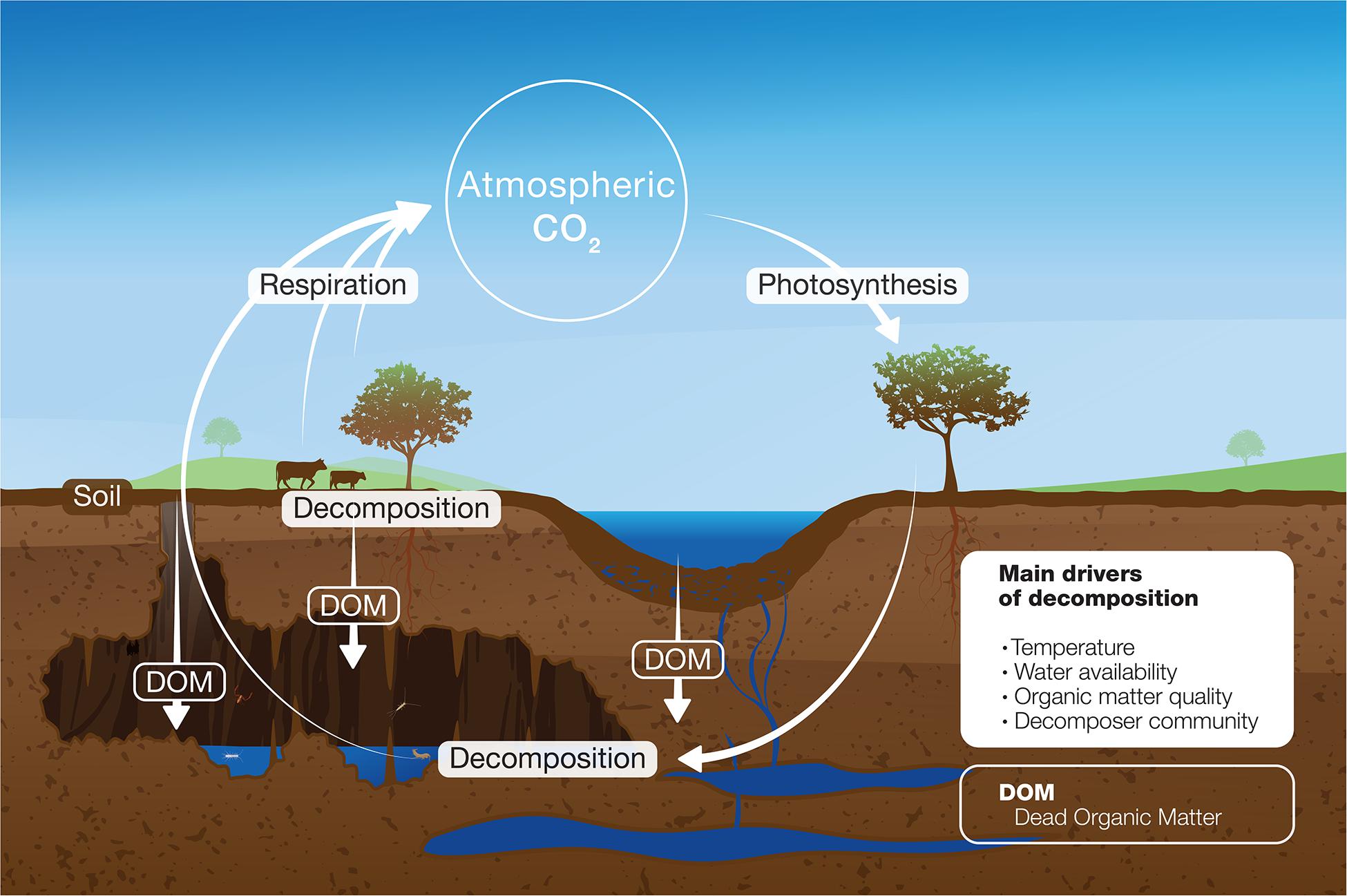
- Soil contributes to oxygen available in our atmosphere. Plants grow from soil and photosynthesis, converting CO2 into oxygen. Healthy soil allows these plants to obtain water and nutrients necessary for this process to take place, whilst additionally providing physical stability for their roots.
- Soil provides us with the world’s second-largest natural carbon sink after oceans. Its ability for carbon sequestration is the result of photosynthesis - carbon is taken from the air and stored as soil organic carbon (SOC). Having healthy soil allows for greater carbon storage, whilst simultaneously improving soil and health productivity.
- Soil is a living resource and contains more than 25% of the planet’s biodiversity including things that can be seen such as worms, beetles and ants, to things undetectable to the human eye such as microorganisms, bacteria, and fungi. All these organisms are part of a vast food web that plays a vital role in sustaining both plant and animal life.
- Soil helps to regulate water, controlling where rain, snowmelt, and irrigation go. This water is then filtered, stored for plants and animals to use, or partitioned as groundwater.
- 95% of our food is directly or indirectly produced on our soils. It provides the foundations for a healthy food system, producing crops to nourish both humans and animals. Healthy soil is directly linked to the quality and quantity of crops grown.
One of the most important functions of soil is the ability of microorganisms to break down and convert animal and plant tissue into soil organic matter. Soil organic matter, therefore, is the organic component of soil at various stages of breakdown (decomposition).
Soil organic matter has direct benefits for agricultural and forestry production, playing a vital role in soil fertility and quality. It is because of soil organic matter that soil is able to provide us with it the processes mentioned above. It improves the soil's ability to store and supply nutrients to plants, improves the soil's structure to help prevent erosion and water filtration, and it is the primary source of carbon that enhances biodiversity.
The highest concentration of soil organic matter and microorganisms is found in topsoil; the upper layer of soil. This is where the majority of the earth's biological soil activity occurs and where most plants obtain their vital nutrients.

Unfortunately, due to agricultural, industrial, and commercial pollution; loss of arable land due to urban expansion, deforestation and unsustainable agricultural practices; and long-term climatic changes, soil degradation and erosion is occurring on a global scale and putting the future of the planet at risk.
Soil Degradation and Erosion
Soil degradation is the decline in soil fertility and biodiversity caused by agricultural, pastoral, industrial, and urban purposes. When soil is degraded it no longer contains a healthy mix of bacteria and other organisms to break down organic matter and is no longer able to sustain plants and animal growth.
Soil erosion is a form of soil degradation and involves the loss of topsoil and nutrients from the land. Erosion usually occurs primarily when soil is left exposed to strong winds, rain, and water.
What are the impacts?
Both soil erosion and degradation have devastating environmental consequences. 50% of the world’s topsoil has been lost in the last 150 years due to erosion and human-based activity. Without this topsoil, the earth loses its ability to filter water, absorb carbon and grow crops, posing a huge threat to the future of food security.
Soil degradation increases the frequency of flooding - the change in the composition of the soil impacts its ability to hold and absorb water. This flooding has led to an increased amount of pollution and sedimentation in rivers and streams and is responsible for clogging waterways and harming aquatic life.
Furthermore, when the soil is no longer able to capture and store water, nutrients, carbon, and support microbiological processes, it leads to desertification, whereby the fertile land becomes a desert.

As land degradation and desertification increase, vulnerable communities are affected due to the increased risk of malnutrition from reduced food and water supplies, and an increased risk of respiratory diseases caused by atmospheric dust.
Unsustainable farming practices
Unsustainable farming practices are associated with soil erosion and degradation. Overexploitation is exhausting the land, and intensive farming practices such as deforestation and cultivation are continuously disturbing the soil and its complex ecosystems.
The main offenders of soil degradation and erosion in relation to unsustainable farming practices are;
Deforestation
It is estimated that 50% of the world’s topsoil has diminished due to deforestation, and 80% of deforestation is a result of agricultural production. Deforestation occurs in agriculture because large areas of trees are cut down to make room for pastoral farming. Trees provide the soil with shelter from the wind and rain whilst also anchoring it to the ground. When they are cut down and removed, the soil is left exposed and vulnerable to climatic conditions, erosion, and degradation.
The use of synthetic fertilizers
Synthetic fertilizer is a chemically manufactured material that contains the necessary nutrients (nitrogen, phosphorus, and potassium) for plant growth. It can help to stimulate the growth of plants and increase crop yield. However, synthetic fertilizers are incredibly harmful to the environment. They are responsible for killing the microorganisms in the soil, reducing the availability of nutrients to the soil and soil fertility.
Furthermore, synthetic fertilizers contain high levels of nitrogen and phosphorus. When it rains, nitrogen and phosphorus runoff from farms can leach into groundwater, increasing the toxicity of waterways. Fertilizers also leach into streams, rivers, and lakes causing algal blooms which destroy aquatic life.
Soil Tillage
Tillage has long been part of crop farming. It involves turning the soil to control weeds and pests and preparing the land for seeding. Soil is often completely inverted with a tractor-pulled plow, followed by further tillage to smooth the soil for crop cultivation. This process negatively impacts almost all the characteristics that make up healthy soil, disrupting soil structure, accelerating surface runoff, and promoting soil erosion.
The more soil disturbed through tilling, the more soil organic matter is lost, leaving the land more susceptible to wind and water erosion and also reducing the soil's ability to sequester carbon.
Monoculture
Monoculture farming is a form of agriculture where only one type of crop is grown in a specific field. This type of farming is unnatural and is hugely detrimental to biodiversity, which promotes the health of an ecosystem. Farmers who grow one type of crop can often struggle with pest infestation, due to parasites' food being in one place for a long period of time - so they are more likely to have an intensified use of pesticides to try and kill the pests, contaminating both the soil and the groundwater.
Additionally, only having one type of crop, impacts the natural balance of the soils influencing soil degradation and fertility loss. This is because the variety of bacteria and microorganisms in the soil, essential for maintaining soil fertility, is reduced.
Global corporate agribusiness
Linking into monoculture, global corporate agribusiness is linked to growing for commercial reasons. The problem with growing large yields commercially is the intensification of farming practices to maximize profits. The intensification leads to excessive water and synthetic pesticide usage, greenhouse gas emissions, air and water pollution, wildlife destruction, antimicrobial resistance, and soil degradation.
In addition to these, it also entrenches inequality. Competition is taken away from small local farmers, giving commercial farmers disproportionate control over the industry with little to no incentives to help small farmers progress in the market.
Sustainable farming practices
With the world’s soil health depleting and farmers becoming more aware of the environmental damage their farming practices bring to the earth, sustainable farming methods and restorative practices must be implemented to maximize soil health.
Regenerative methods include; fallow crop, crop diversification and rotation, conservation tillage, organic fertilizers for nutrient recycling, and planting trees. These methods are explained below;
Fallow Crop
Fallow ground/soil is simply ground that is left unplanted for a period of time which allows the soil to regenerate. The ground is left for a period of usually 1 - 5 years. It is not a new technique and has been used for centuries by farmers as it allows the ground time to recover, the soil to replenish its nutrients and extinguishes the need for synthetic fertilizers. Additionally, it increases levels of carbon, nitrogen and soil organic matter, improving moisture holding and microorganisms in the soil. When crops are regrown on fallowed land, research has shown that higher crop yields are produced.
Crop diversification and rotation
Another effective strategy for sustainable agriculture involves crop diversification. This involves growing more than one crop in a given area. It can be achieved by adding a new crop species or different variety, or by changing the cropping system in use. Crop rotation involves planting different crops on the same plot of land to promote variation of microorganisms in the soil. Diversification and rotation help to reduce the reliability of agrochemicals and decrease the negative effects of intensive agriculture on soil quality, water pollution and eutrophication, emissions of greenhouse gases, soil erosion, and loss of biodiversity.

Conservation tillage
Conservation tillage is a method that has limited disturbance to the surface soil. This non-invasive technique helps to reduce soil erosion, and water runoff and promotes carbon sequestration. It involves leaving the previous year's crop residue on the fields before planting the next crop. This crop can be decomposed into soil organic matter and create healthier soil for the next yield. A further benefit is that it creates habitats for wildlife, providing food, water, and shelter to promote biodiversity.
Compost farming
There is a growing movement for farmers to return to compost as an alternative source for crops and grasslands. Compost farming adds nutrients such as nitrogen, potassium and phosphorus back into the soil promoting health and fertility to the soil so that crops can thrive. These nutrients come from the microorganisms decomposing organic matter such as food waste, manure, offcuts of crops, and woodchips.
Composting brings with it an abundance of benefits, including improving soil health, reintegrating nutrients back into the soil, stabilizing nitrogen, destroying pathogens, and diverting waste from landfill. This method is growing in popularity with composting on rangelands increasing grassland productivity, carbon sequestration, and water conservation.
Planting Trees
Planting trees is a great way of reversing some of the previous damage to the soil and reduces the risk of erosion. This is because trees promote the capacity for soil to absorb water, bind soil to the ground and create windbreaks, preventing soil from being blown away. Planting trees also helps to provide shelter which plays a role in regulating soil temperature and promoting biodiversity.
Trees play an important role in organic matter decomposition - when leaves fall off the trees, microorganisms in the soil break down these leaves into soil organic matter, replenishing topsoil and its nutrients. The more varieties of trees planted, the more microorganisms in the soil and, consequently, the healthier and more nutrient-rich the soil.
Planting trees offers us the ability to restore the soil, provide habitats for an abundance of species, microorganisms and bacteria, and promote carbon sequestration in a period of time when it is needed most. Through the simple steps of sowing a seed, years of overexploitation and intensification can be reversed, and now is our time to act.
References
- “Benefits of Conservation Tillage Systems - SARE.” Sustainable Agriculture Research and Education, https://www.sare.org/publications/conservation-tillage-systems-in-the-southeast/chapter-2-conservation-tillage-systems-history-the-future-and-benefits/benefits-of-conservation-tillage-systems/.
- “Climate change: Land degradation and desertification.” WHO | World Health Organization, 26 October 2020, https://www.who.int/news-room/questions-and-answers/item/climate-change-land-degradation-and-desertification.
- “Climate change: Land degradation and desertification.” WHO | World Health Organization, 26 October 2020, https://www.who.int/news-room/questions-and-answers/item/climate-change-land-degradation-and-desertification.
- Eip Agri. “Soil organic matter matters - Investing in soil quality for long-term benefits.” Agriculture & Innovation.
- Ersek, Kaitlyn. “What Are Synthetic Fertilizers, Organic Fertilizers & Soil Amendments?” Holganix, 7 April 2015, https://www.holganix.com/blog/what-are-synthetic-fertilizers-organic-fertilizers-soil-amendments.
- Food an Agriculture Organization of the United Nations. “Healthy soils are the basis for healthy food production.” International Year of Soils, 2015, https://cpb-eu-w2.wpmucdn.com/blogs.reading.ac.uk/dist/a/171/files/2018/06/EN_web_IYS_food.pdf.
- “Frequent tillage and its impact on soil quality | Integrated Crop Management.” Integrated Crop Management, https://crops.extension.iastate.edu/encyclopedia/frequent-tillage-and-its-impact-soil-quality.
- Larum, Darcy. “What Is Fallowing – Is Fallowing Good And Should You Let A Field Lie Fallow.” Gardening Know How, 4 March 2021, https://www.gardeningknowhow.com/garden-how-to/soil-fertilizers/what-is-fallow-ground.htm.
- “Soil means life — Science Learning Hub.” Science Learning Hub, 30 June 2015, https://www.sciencelearn.org.nz/resources/889-soil-means-life.
- “Soil Tillage and Crop Rotation.” USDA ERS, 28 April 2020, https://www.ers.usda.gov/topics/farm-practices-management/crop-livestock-practices/soil-tillage-and-crop-rotation/.
- “Soil - What is Soil Erosion and Degradation?” Young People's Trust For the Environment, https://ypte.org.uk/factsheets/soil/what-is-soil-erosion-and-degradation#section.
- “10 things you should know about industrial farming.” UNEP, 20 July 2020, https://www.unep.org/news-and-stories/story/10-things-you-should-know-about-industrial-farming.
- Thangarajan, Ramya, et al. “Role of organic amendment application on greenhouse gas emission from soil.” Science of The Total Environment, vol. 465, 2013, pp. 72-96, https://www.sciencedirect.com/science/article/abs/pii/S0048969713000417.
- “What is Erosion? Effects of Soil Erosion and Land Degradation.” World Wildlife Fund, https://www.worldwildlife.org/threats/soil-erosion-and-degradation.