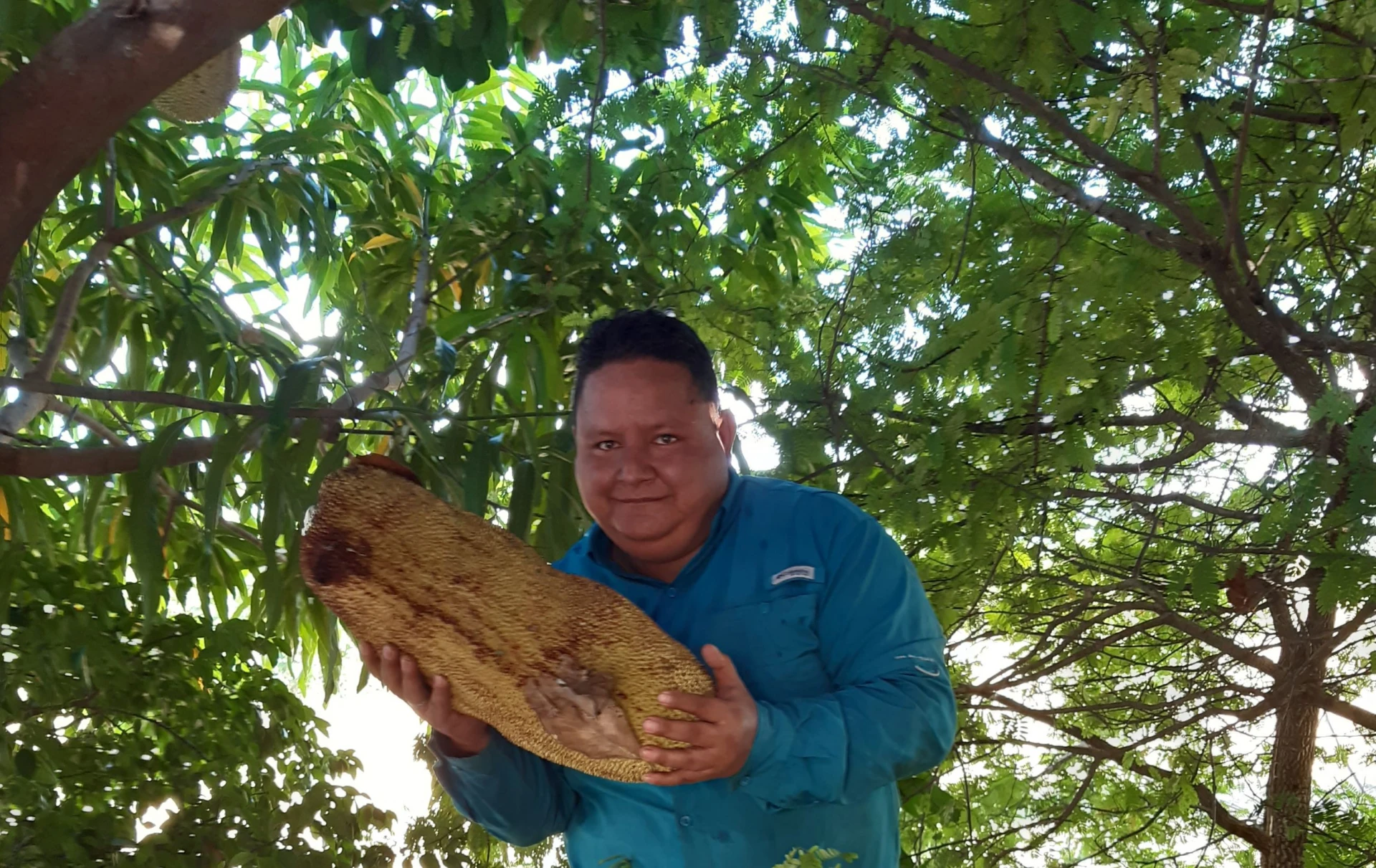

Article by La Pedregoza Founder Kochurani Dombro.
Jackfruit- largest fruit of all trees. A special tree in my heart because it originates from my homeland in Kerala, India. I met La Pedregoza founder Dexter Dombro as a teenager, when he came sailing by the coast of Kerala, in a home-made sailboat retracing the trade routes of Phoenicians. Life is magical, because even though Dexter has passed, our journey here in the savanna of the Orinoco River basin planting Jack fruit trees and creating a forest with the help of Tree Nation is still ongoing.
The jackfruit (Artocarpus heterophyllus). The name of “Jack” fruit comes from the Malayalam language term “Chakka” from Kerala, S. India. When the Portuguese arrived in India at Kozhikode, Kerala in 1499 they called it” Jaca”.
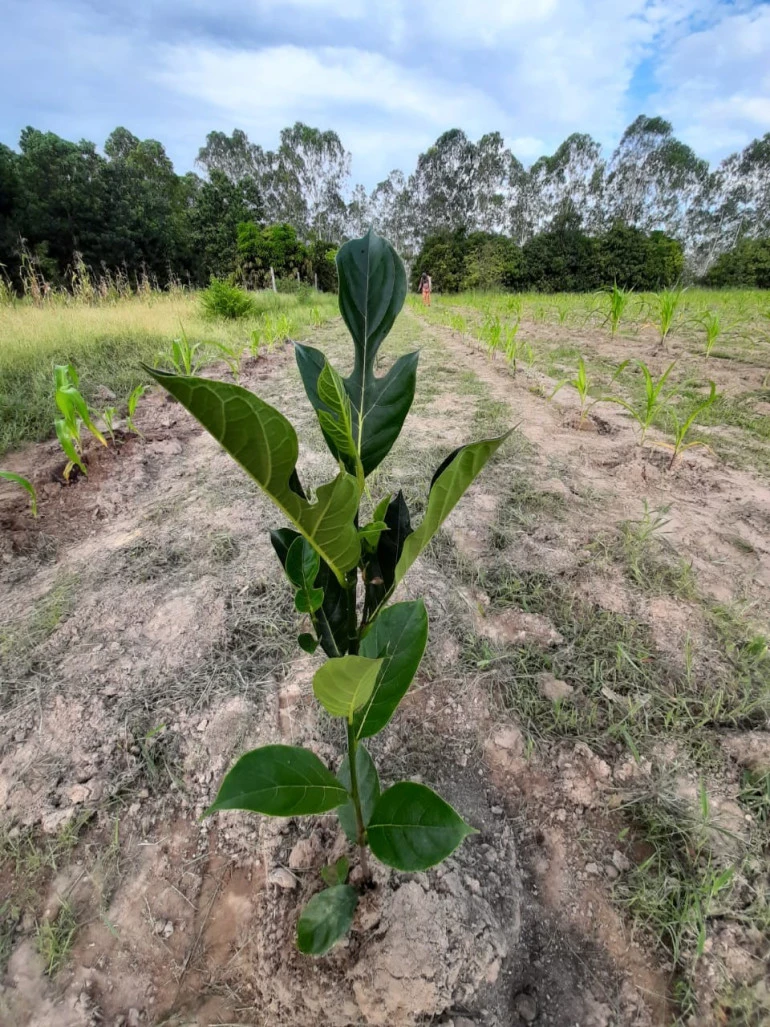
The jack fruit tree is widely cultivated in the tropical regions of the world. It is said to have originated somewhere between the Western Ghats of South India and rainforests of Malaysia. Some archeological findings show that Jackfruit was cultivated in India 3000 to 6000 years ago. The Jack fruit tree has played an important role in Indian culture for centuries. The priest seat, Avani Palaka, the ornate wooden plank, used in Hindu ceremonies in Kerala, India, is made from the jack fruit tree wood. Throughout Southeast Asia, the wood has also historically been used to make buddha statutes in temples, used in house construction (furniture, windows, doors, roofing), used in production of a variety of musical string instruments, drums, and wooden barrels for fish sauce. The Buddhist monks used the heartwood to make the dye that gives their robes the special light brown colour.
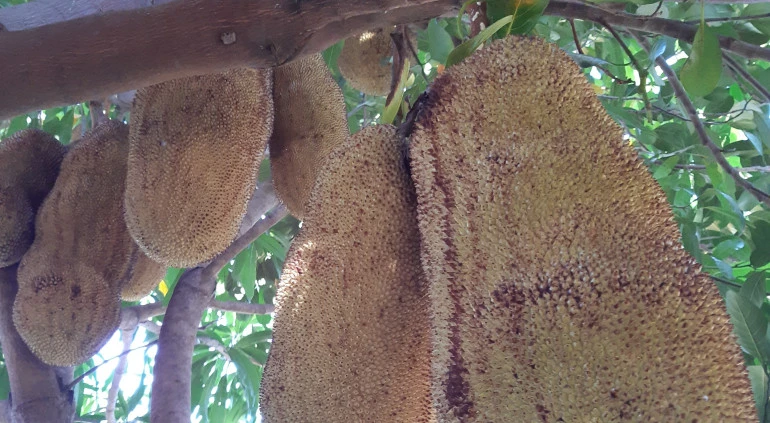
The Jack fruit has the largest fruit of all trees, one that can be eaten by humans, wildlife, and cattle. The fruits can reach around 55 kg in weight, 90cm in length and 20 cm in diameter. A mature tree produces about 200 fruits once a year, the older trees producing about 500 fruits per year. The fruit can be eaten when green as a vegetable or ripe when it is very sweet and is regarded as a wonder vegetable by many vegans around the world due to its versatility. Then nuts or seeds can also be prepared in a variety of ways.
The leaves, bark and fruit of this miracle tree have been used for centuries in traditional medicine across the eastern world for its antimicrobial, antifungal, anti-inflammatory, anticarcinogenic, hypoglycemic and wound healing properties. The functional compounds found in jackfruit are reported to enhance vision, reduce high blood pressure, reduce heart disease and strokes. It is rich in Calcium and Potassium. Calcium and potassium help improve muscle and nerve function, hence beneficial for people suffering from arthritis and osteoporosis. Copper present in the fruit helps thyroid metabolism especially in hormone production and absorption. The Vitamin C, magnesium, iron, and copper enhances blood quality and aids in metabolism. Hence it is no surprise that vegans have recently discovered jack fruit as the meat alternative since it is loaded with multiple health benefits.
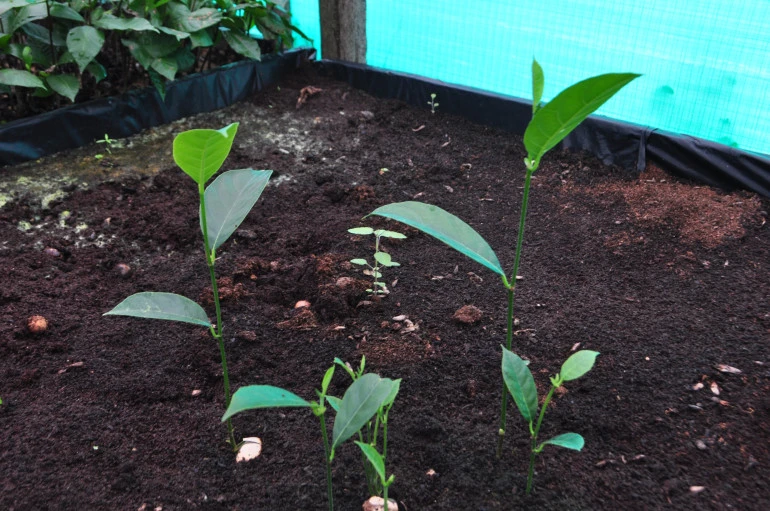
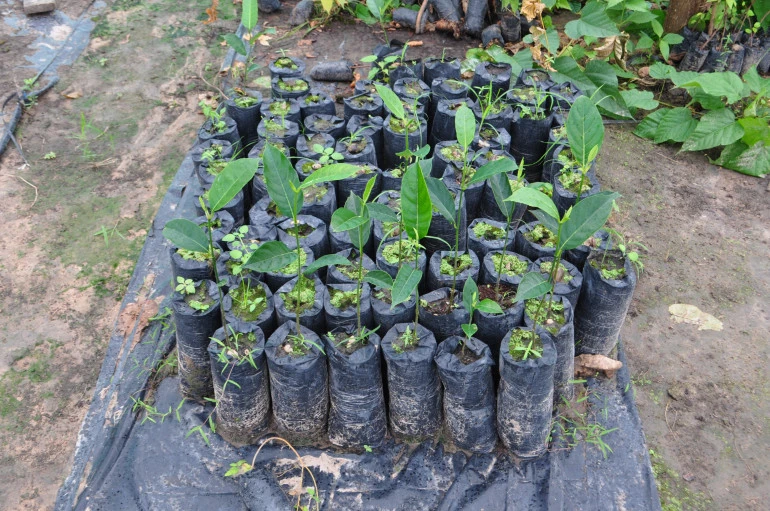
This amazing tree given the proper nurturing regiment can grow very well and is a good source of food, nutrients, shade, wood, and medicine in the parched savannas of the Orinoco River basin. Jack fruit trees in Colombia are not well cultivated nor found easily. I bought a fruit a few years ago in a market in Colombia and out of the 15 seeds that sprouted only a few trees survived and has now borne its first fruits. The seeds harvested from these fruits have sprouted and now are being cared for in our nursery waiting to be planted.
Note to readers please use your discretion and consult your Health Care practitioner before using Jack fruit for remedies. This article does not provide medical advice.


