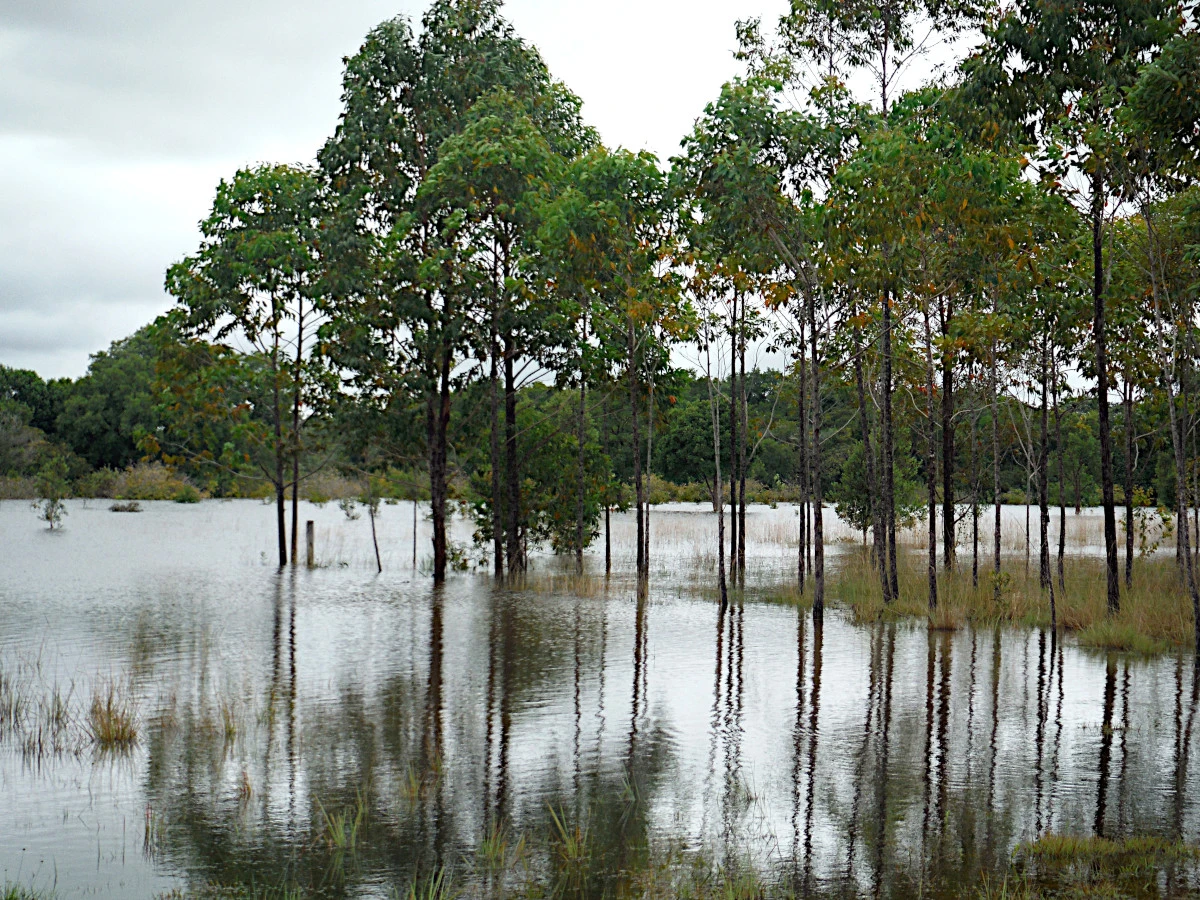

by Dexter B. Dombro
As many of you know, La Pedregoza is a fervent promoter of the planting of native tree species. Citing the principles of analog forestry, we recommend them for massive CO2 compensation planting, for degraded land restoration in conservation areas, and for biodiversity preservation. The Sacred Seeds Botanical Garden (Semillas Sagradas) is devoted to the conservation of medicinal and alimentary trees of the Orinoco River basin. So why does La Pedregoza also plant Acacia mangium, Eucalyptus pellita and Pinus caribaea, all introduced species? There isn’t a single answer, but rather several. Let’s examine some of the principle reasons why those species can be useful:
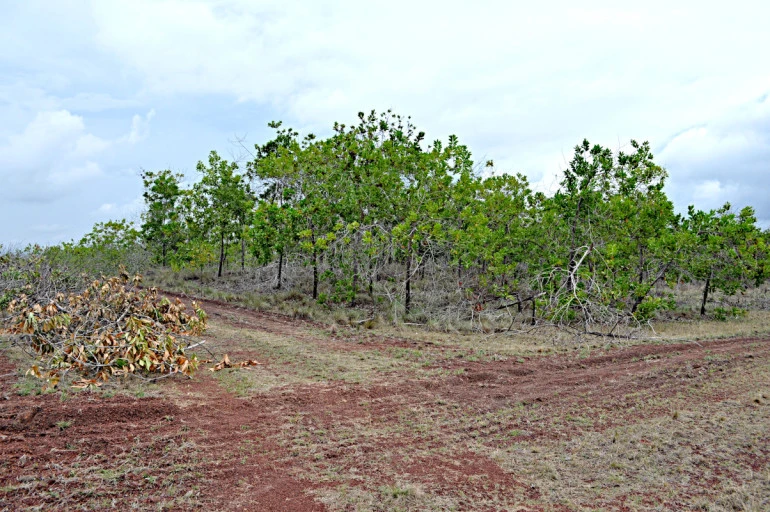
Acacia mangium in rocky terrain, used to build soil so other species can follow.
Acacia mangium: This tree will grow in poor soils that are toxic. It is a preferred species for the restoration of mining sites, where a lot of heavy metals in the turned up soil prevent other trees from being established. It will actually absorb heavy metals from the soil. In the case of the Orinoco River basin, we have found the tree to be very resilient in soils heavy with aluminum and iron, both toxic to many other tree species. While dumping large quantities of agricultural lime is a traditional solution to binding aluminum and iron in the soil, this practice can have negative environmental consequences in soils with a high lixiviation rate, as the lime leaches into water systems, changing the pH, which in turn can kill a lot of fish, amphibians and reptiles.
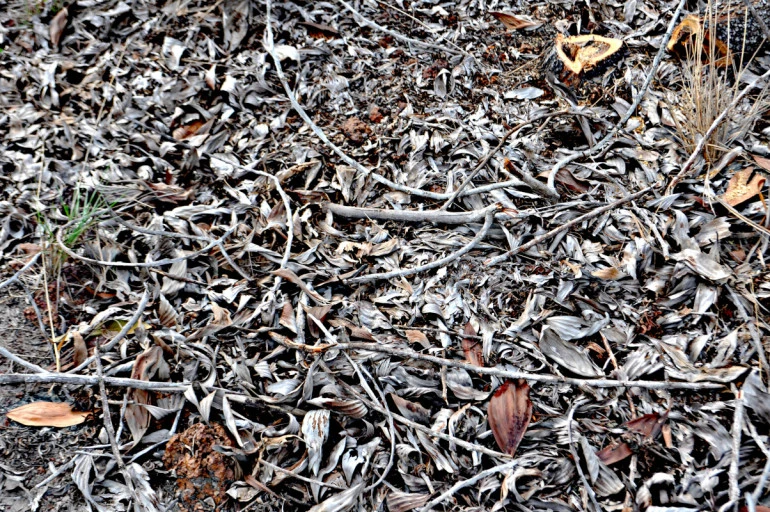
Acacia mangium deposits large quantities of leaves and branches, creating soil.
This means that our preferred solution to changing the soil in areas with high toxicity and lixiviation levels is to plant Acacia mangium in a short cycle of between 5 to 7 years. The tree starts to deposit large amounts of carbon from leaves and twigs in the soil, and is a formidable nitrogen-fixing tree needed for the successful planting of other species. Simply put, our methodology is to plant Acacia mangium in problematic areas first, so that we can condition the soil to permit the planting of other tree species, mostly native ones, in those same areas after the initial cycle with Acacia mangium
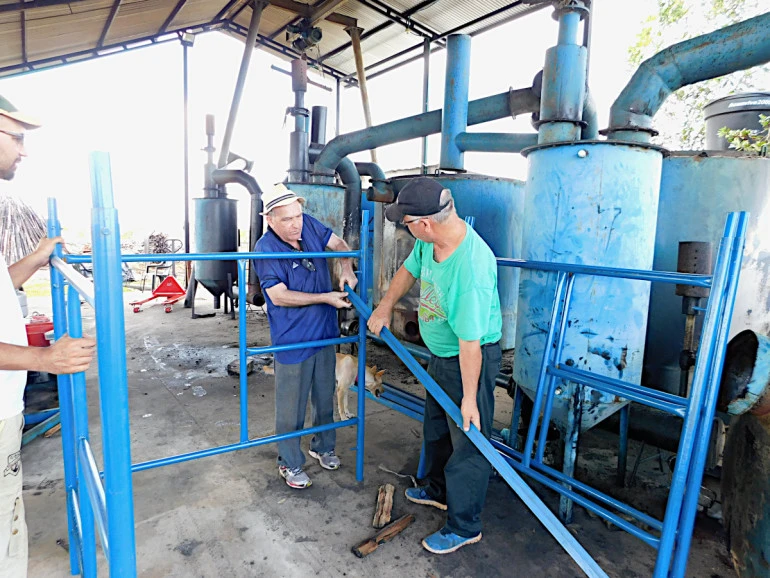
The biochar plant at La Pedregoza only uses Acacia mangium from soil improvement sites.
It doesn’t end there. The Acacia mangium harvested from those areas can be converted to biochar. It is one of the best tree species for biochar production, also ensuring that people do not harvest trees from the natural forest in order to make biochar. Its short growth cycle makes it a financially sensible and environmentally friendly solution to the large scale production of biochar as a soil amendment for use in poor tropical soils. In terms of socio-economic development, it is a large-scale producer of extra-floral nectar, enhancing the production of honey throughout the year, not just in peak flowering seasons, something that has a big impact on poor rural communities.
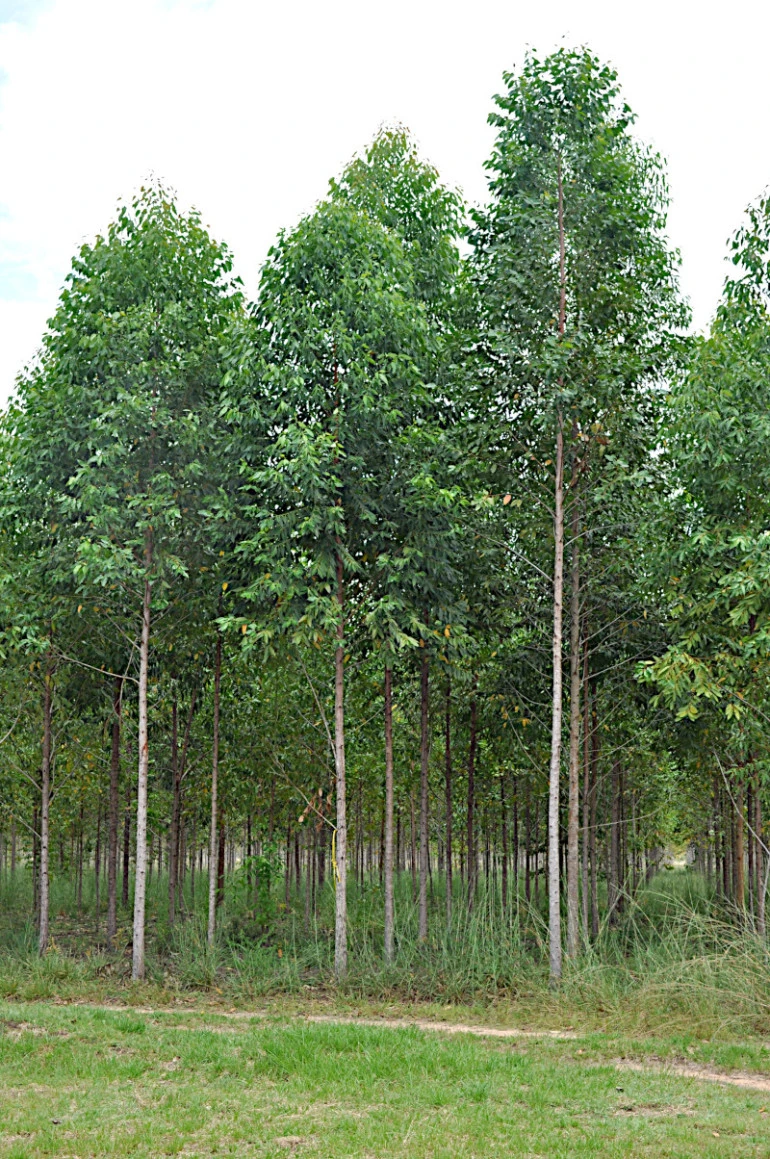
Eucalyptus pellita trees used to raise ground water levels.
Eucalyptus pellita: There is a lot of incorrect information about Eucalyptus trees. The problem is that people try to mix species in locations that are inadequate, and then blame the species that survives for the problems. Eucalypts are very resilient trees, but their most important contribution when planted as an introduced species is their deep root system, essential when dealing with severe erosion or ground water retention problems. The selective planting of areas with Eucalyptus pellita has resulted in the maintenance of much higher levels of ground water at La Pedregoza, which in turn has helped all of the other species planted in our tree plantation. Ironically, we have had some success co-planting cacao in Eucalyptus pellita groves, adding a socio-economic development benefit to the equation, as cacao needs adjacent shade trees. We have also successfully co-planted ginger and turmeric in Eucalyptus pellita groves, making it a versatile agroforestry tree thanks to its rapid growth.
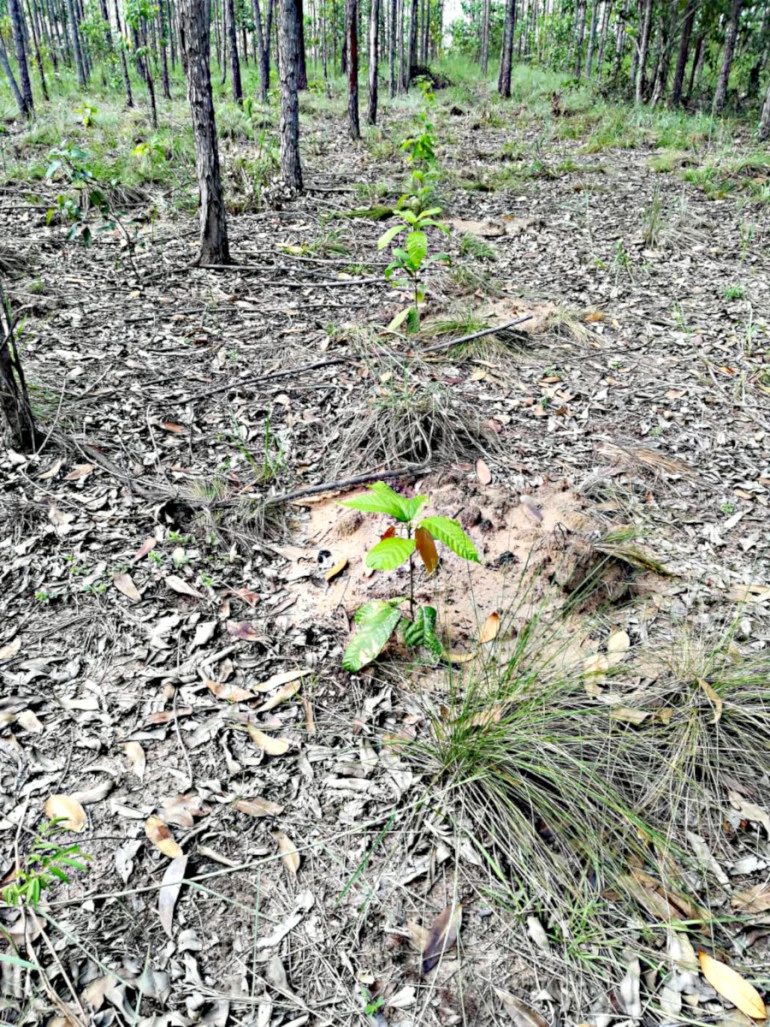
Cacao trees planted inside a Eucalyptus pellita cultivation at La Pedregoza.
That rapid growth is also useful when establishing windbreaks. The tree tends to grow tall very quickly, which in poor savanna soils is an important consideration when trying to establish a windbreak. One of the principle beneficiaries of this are plantain (Musa paradisiaca) cultivations, which suffer a lot from wind problems. At La Pedregoza we plant Eucalyptus pellita for erosion control and windbreaks, but also native tree species at the same time, the difference being that it takes much longer for the native tree species to provide the same functions that the Eucalyptus pellita can provide, so the species is a good initial solution.
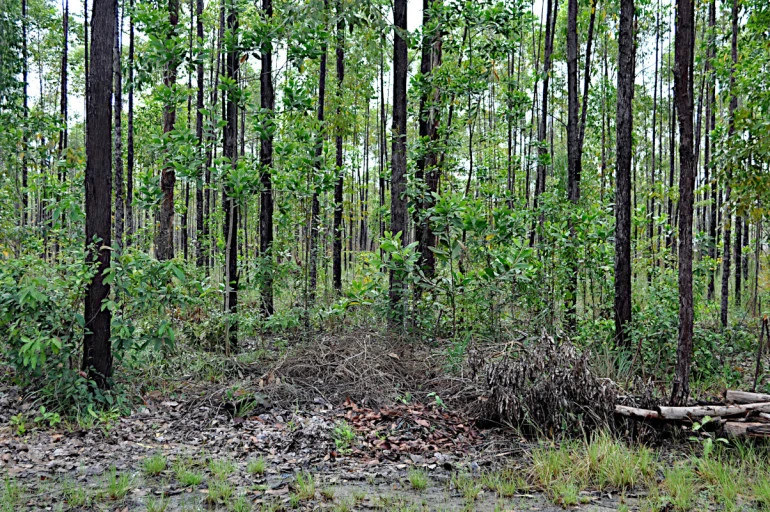
Native tree undergrowth in a Eucalyptus pellita cultivation.
At this point it is important to also explain that many native tree species lack scientifically approved technical packages, in other words when you plant that species you have no idea what the outcome should be or how much time it might take to achieve that outcome. That means that using introduced species while experimenting with native tree species is a sensible management practice in large scale plantation operations. It should also be stressed that financial considerations need to be addressed. It is nice to think that things happen magically over a large number of years, but reality shows that financial considerations, if ignored, more often than not lead to project failure. Eucalyptus pellita is an excellent lumber tree that supplies wood for furniture, for pulp and paper, for plywood and for bioenergy. It is preferable to plant and harvest an introduced species in savanna settings, than to have harvests in natural forests, at least for as long as it takes to develop adequate technical packages for native tree species.
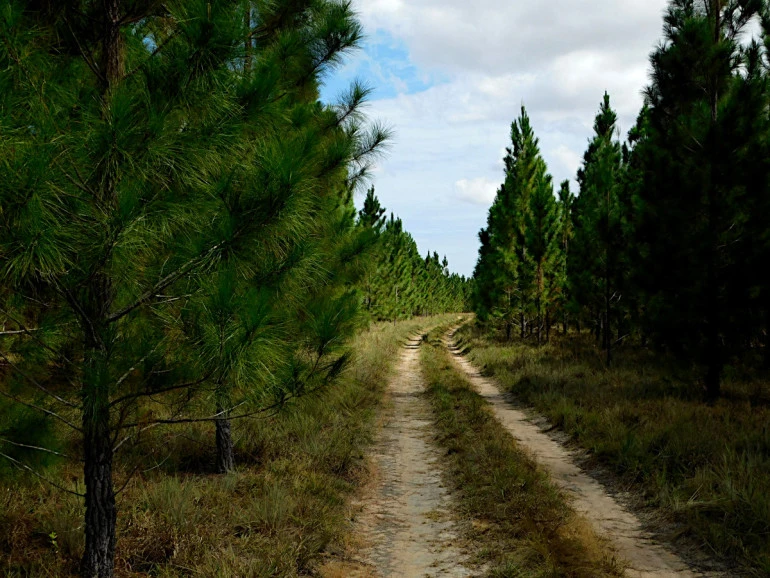
Pinus caribaea create a formidable wind break, besides providing financial stability.
Pinus caribaea:This tree originally hails from Guatemala and Honduras, and is one of the few pine species adapted to hot climatic and sea level conditions. Once again, there is a lot of misinformation about the role of pine trees, like for instance that it turns soil acidic. The reality, at least in the tropics, is that the Caribbean pine tree flourishes in acidic soil, which can be important in locations where it is undesirable to be dumping tons of agricultural lime to change soil acidity. As with other species, Pinus caribaea is an excellent tree for erosion control, with a deep tap root, making it a good tree for windbreaks, as well as a tree with relatively fast growth and good biomass accumulation, important for CO2 capture from the atmosphere.
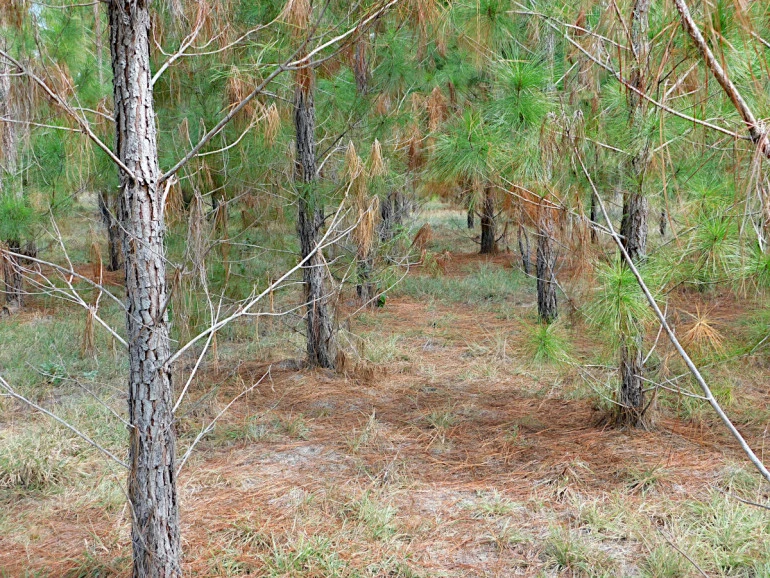
Caribbean pine trees happily growing in very acidic soil with a pH of 3.5
One of the surprising ecological benefits from pine cultivations is their production of aerosol, which in turn helps to cool the planet, an important contribution in the fight against climate change. In addition, Pinus caribaea is an important species for wildlife habitat, providing protection for bird nests due to its dense foliage, while at the same time providing a food source for birds and small mammals, like squirrels that use the pine cone nuts the tree produces. At La Pedregoza we often see foxes in the Pinus caribaea stands, no doubt because of the above factors.
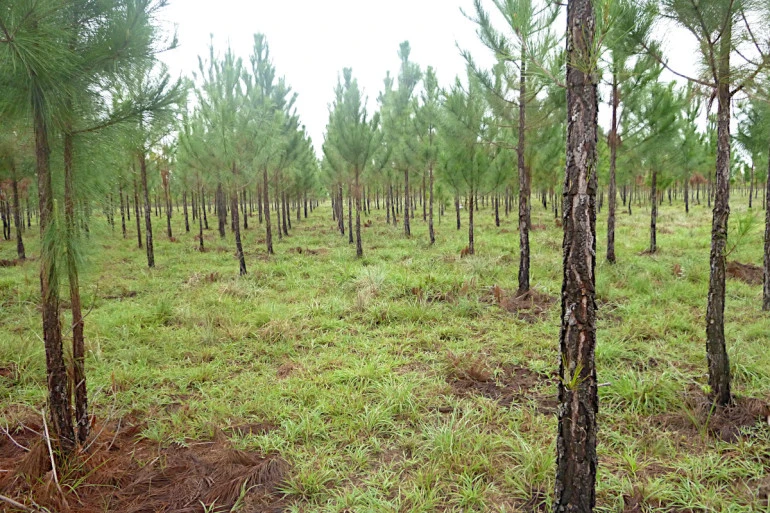
Pinus caribaea planted for erosion control and financial sustainability.
Conclusion: As with many introduced species, the issue is ultimately having a professional decision making process, one that determines what species can or should be planted, and where and why. Besides its ecological benefits, Caribbean pine is an important contributor to the financial health of tree plantations, with a 20 year turnaround from planting to harvest. At La Pedregoza, we spend a lot of time determining the aptitude of different species for planting in a large variety of settings. Introduced species are frequently planted in 10 hectare lots for management efficiency, but with those lots spread out all over the area, based on soil conditions and planting objectives. This means we are able to avoid large scale monoculture conditions. At La Pedregoza, we have over 40 tree species planted in a mix of lot types, with some species being cycled out (like Acacia mangium), in order to make way for a more desirable native tree species, once the soil has been improved. The point is that all plantations need to balance a large range of considerations, including long term financial viability, if they are going to be successful. So to summarize, can introduced tree species be beneficial? The answer is yes. Are they the long term goal? The answer is no.
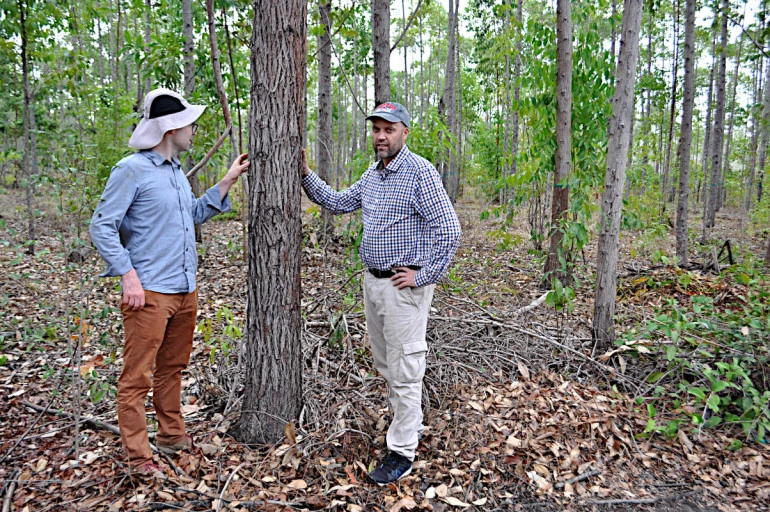
A French-managed forestry company has adopted La Pedregoza's operational methods.
I hope this article clarifies the concerns some people may have regarding the use of introduced tree species in Tree-Nation plantations. In the same way we as humans should not be discriminating against immigrants who contribute to our societies, neither should we discriminate against the use of introduced tree species in forestry settings, where they may provide services that are needed in the short term, and always provided that they are not invasive or at least can be controlled, so that they do not damage other trees and plants. Foresters have to think in terms of 10, 20, 30 or even more years. The success of tree planting cannot be based on short term preferences, but rather needs to be based on long-term, scientifically supported outcomes and benefits. That long-term thinking is what makes the contributions by Tree-Nation members unique and ever so important in the struggle to save our planet from devastating deforestation and desertification.


