This mangrove tree (Avicennia marina) probably displays one of the broadest distributions over the Indian Ocean to the Western Pacific when compared to other mangrove trees of the region.In Kenya, Avicennia marina typically displays a double zonation pattern, occuring on the coastal edge of the mangroves as tall trees (up to about 15 m), as well as on the terrestrial edge, often exhibiting various degrees of dwarf-growth depending on the salinity and on the drainage of the site.Leaves of A. marina exhibit a lot of variation depending on the salinity of the environment. In areas with low salinities, leaves are lanceolate, with a pointed apex and are on average 15 cm long. In an extremely saline environment, leaves are more elliptical with a rounded apex ; they are more leathery and are very small (2cm length in extreme conditions). The underside of the leaves have a typical greyish-whitish color, due to the presence of small hairs. On the upperside of the leaves, salt cristals, excreted by the leaves can be observed.
The above ground root system of Avicennia marina is characterized by upright pencillike pneumatophores which originate from an underground cable root. The length of these pneumatophores seem to be dependend on inundation time. More uncommon on Avicennia marina are short aerial roots originating directly on the stem, usually very close to the ground, but often just hanging from the stem without anchoring in the ground.
A. marina has developped a certain degree of viviparity, refered to as criptoviviparity (the embryo grows out of the seed coat, but does not emerge from the fruit). The seeds of A. marina have a velvet capsule #environment#growth #kenya #mangroves #restoration #carbonsequestration#savingplanet
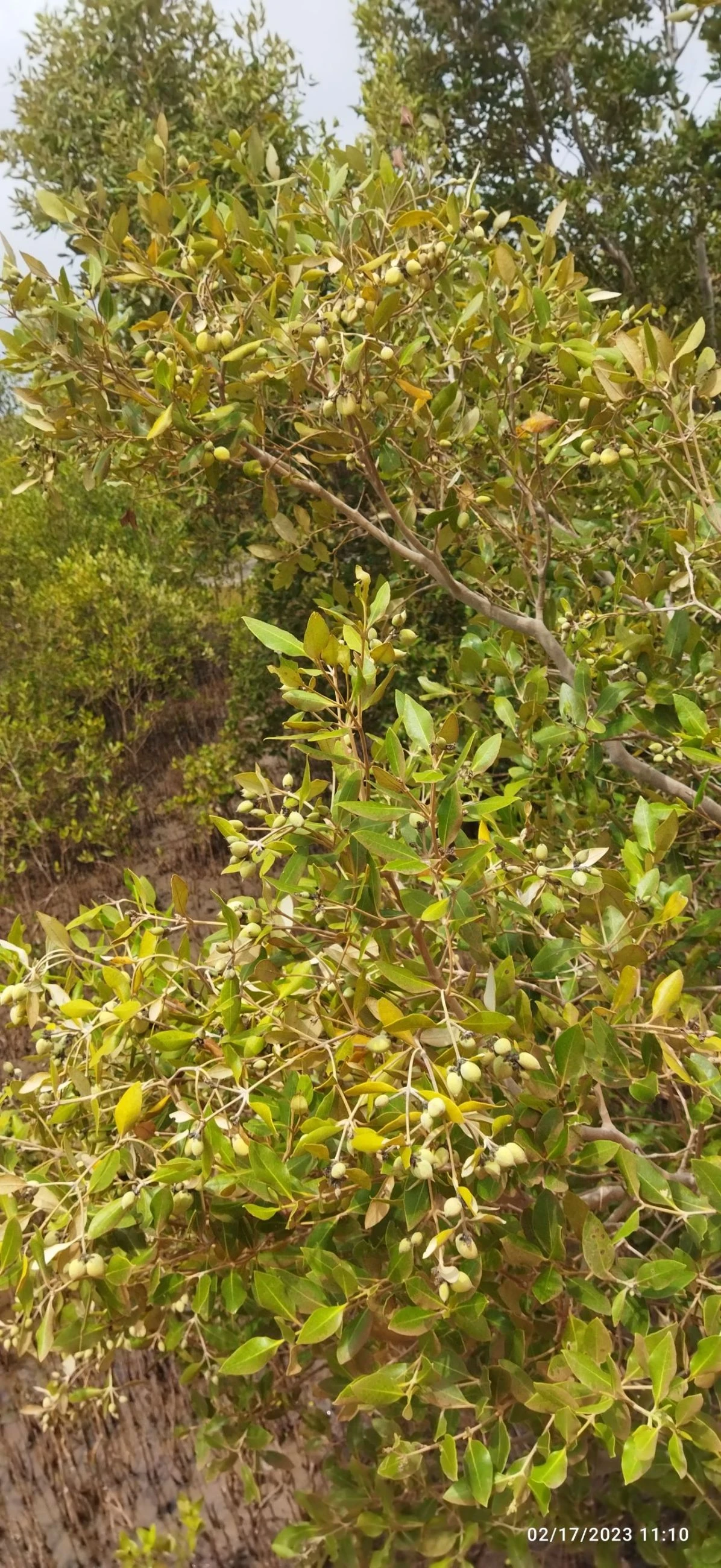
Avicennia marina mangrove species

Edward Mwamuye20 February 2023
Leave a comment
No results to show


Terms of Use·Terms of Service·Privacy policy·Cookies policy··Copyright © 2006 - 2026 Tree-Nation NEOVEE SOLUTIONS, SL