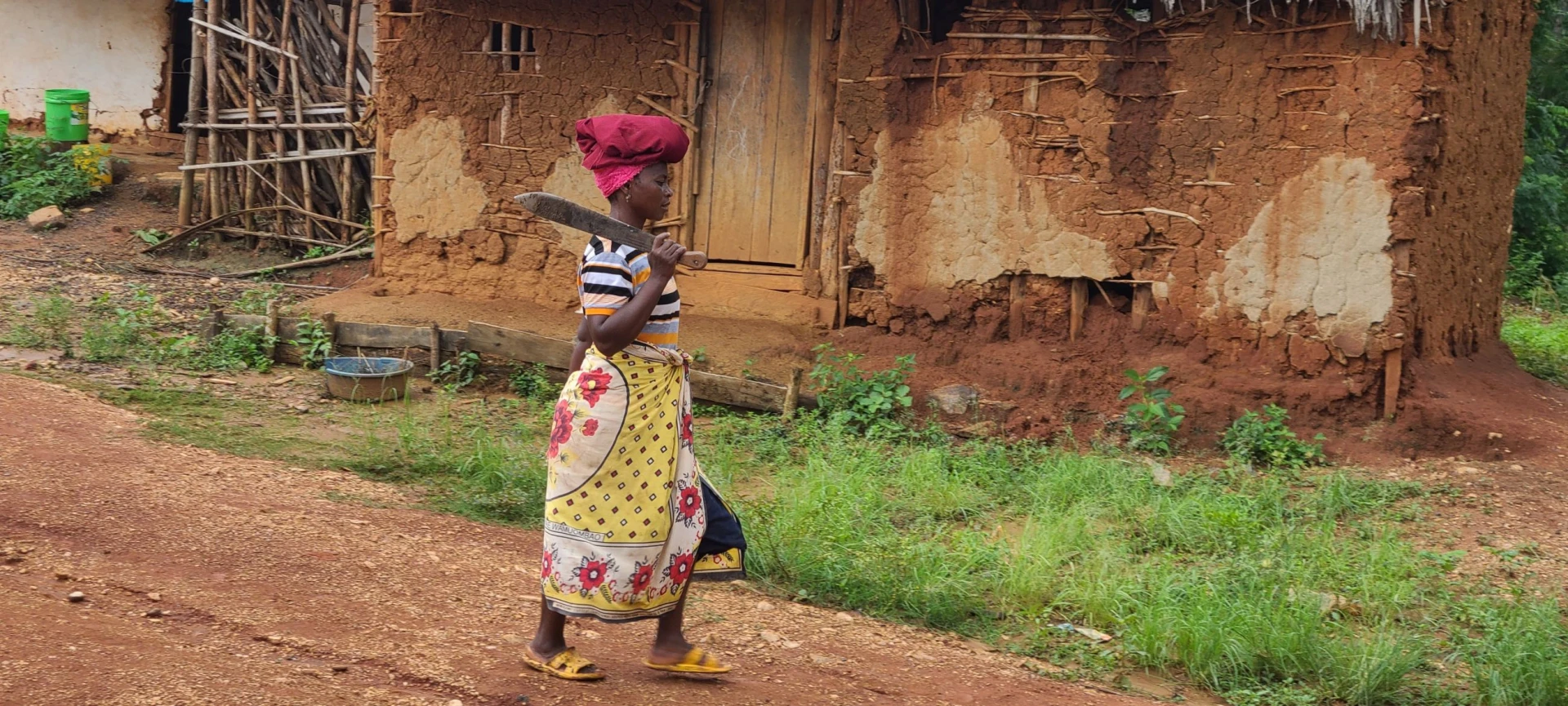

With limited life opportunities village women are traditionally obliged to walk long distances for resources like water, fuel wood and food for families. In harsh circumstances as a result of Global climate change such needs are never guaranteed no matter how extended the walk can be. Today such ways of life drag this group into extreme illiteracy and poverty.
Plant to stop poverty project provides a cross cutting solution to revise the situation. Grouped farmers are supported to improve their small farms by improving soils in various ways. The use of cheap to make compost enables every farmer to trace their way to revitalized and improved soil quality. Strategical planting of leguminous plants pushes soil nutrients levels higher, eventually eradicating the need to use expensive industrial fertilizers and pesticides which are in turn destructive. Companion crops and trees are grown in a way to provide multiple benefits such as food, wood, fruits, spice bunches and fodder for domesticated animals.
Moreover, Aquatic tree species are in the chain to restore and protect water levels in destroyed wet lands.
Every component of the project is expected to bring out its first outcome in the very first two years. Once that achieved country peasants will be in a position to access their daily needs from small land pieces they own rather that expanding towards natural forests for more fertile land, wood and fruits.
Such needs accessed in proximal areas help the community to spare and protect the few existing forests which were recently found to decline in both species’ richness and diversity. In many parts of the Eastern Usambara for instance a number of animals and plants are confirmed extinct and endangered as a result of destructive less paying jobs involving illegal lumbering, mining and agricultural encroachment inwards in search for fertile lands.
In its preliminary years of implementation Plant to stop poverty projects has succeeded to provide solutions to a number of human-wildlife conflicts just by offering tree planting as a prime economic alternative in the villages of Ubiri, Sakale, Monga, Kicheba, Misozwe and Kwetango where 70% of the daily supplies used to depend on forests and water sources around.


