
Environmental awareness is understanding the fragility of our environment and the need for its protection. Promoting environmental awareness is a must if we are to achieve the SDGs .Sustainable development refers to the conservation, protection and regeneration of resources over an indefinite period of time. Crucial to sustainability is the idea that today's decisions impact the future of human health and well-being, the environment and the economy.Without environmental sustainability it is impossible to achieve sustainable development. Environmental education should provide experiences of problem-solving, decision-making and participation, with considerations based on ecological, political, economic, social, aesthetic and ethical aspects. Challenging global realities require that we foster through education - the values, behaviour and lifestyles required for asustainable future.
Community awareness and knowledge of environmental protection are crucial to avoid environmental degradation. Lack of relevant scientific principles and lack of public awareness of environmental or other projects are hindrances to controlling environmental degradation. Increasing economic activities in developing countries result in more energy and consumption demand, which generally lead to environmental degradation. In recent years there has been a growing consensus that environmental education should be focused around the whole idea of sustainable development.
In June 1992, at the Earth summit in Rio de Janeiro, Brazil, more than 178 countries adopted Agenda 21, a comprehensive plan of action to build a global partnership for sustainable development to improve human lives and protect the environment. Subsequent global forums culminated in the subsequent adoption of the 2030 Agenda for Sustainable Development, with 17 SDGs at its core, at the UN Sustainable Development Summit in September 2015. There is need for agressive local actions to make the achievement of SDGs a reality through advocacy and relevant outreaches and interventions.
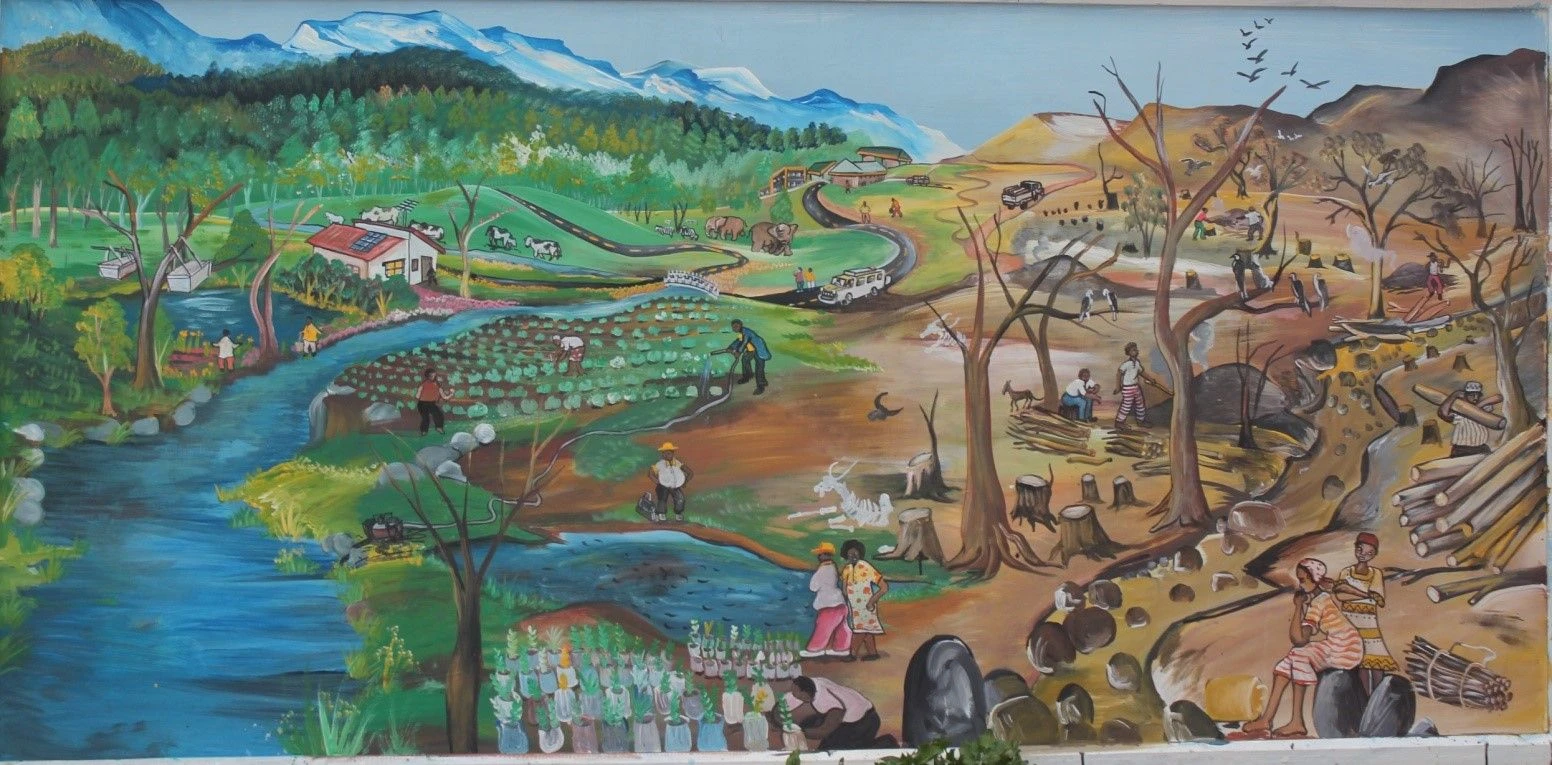
Kiangure Springs Environment Initiative(KSEI) is working with local artists to promote community level awareness on the need to conserve our environment through mural art. The paintings capture the theme of conservation, with the intended goal of raising awareness for attitudinal change and encourage greater participation of community members in conservation activities near the Aberdare and Mt. Kenya World Heritage Sites. These two forests are Kenyas leading water towers.
The billboards and murals erected will create public awareness on the need to preserve the forests and cut down on the use of wood products. Over 80% of households around the Aberdare and Mt. Kenya forests rely on wood for fuel and majority use traditional 3 stones cooking stove which uses a lot of wood and emits a lot of smoke causing indoor house pollution(IHP) which in causes respiratory complications and impacts the atmosphere. This demand for wood fuels accelerates deforestation .
Our murals compares a degraded landscape with a well conserved one giving the observer a moment of reflection on which way to follow, Degradation or Conservation. Many people using wood products unsustainably do not have an idea of the bigger picture of what happens when they cut trees. Who suffers when they gain from selling or using tree products?
Our awareness creation comes to solve the dilemma by helping communities make informed choices necessary to sustainable management of our forests. We highlight the importance of tree growing in order to replenish the much degraded landscapes.


