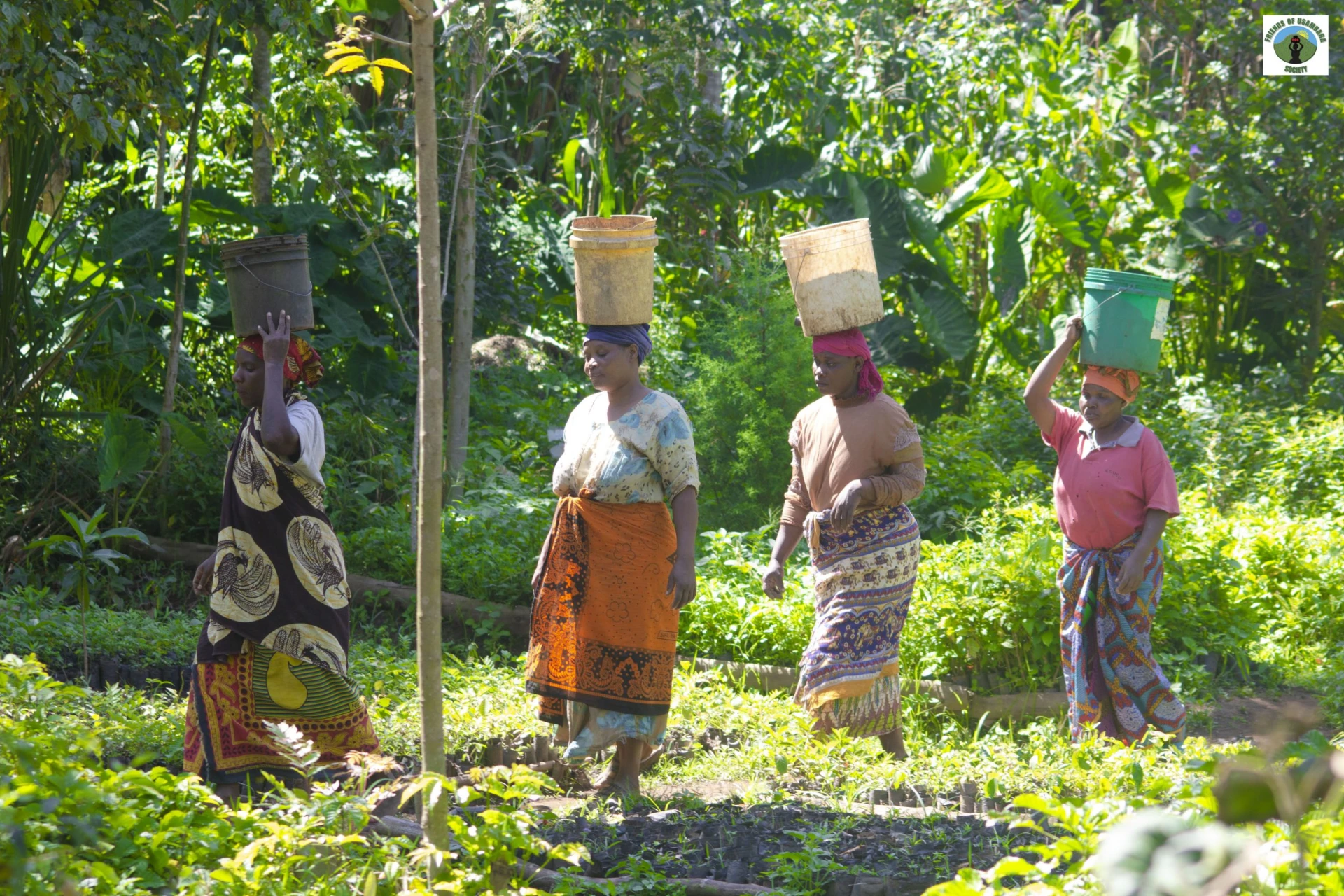

Usambara Biodiversity Conservation Youth and women empowerment fall direct into FoU program which premised around addressing complications resulting from the global climate crisis within the wider context of climate change mitigation and adaptation strategies. Overall, FoU’s Program is coherent and fits very well within the national and global policies and legal context for responding to global climate crisis – including: The National Climate Change Strategy (URT, 2012); The Agriculture Climate Resilience Plan (URT, 2014); and lastly The Climate-Smart Agriculture Program for Tanzania (2015-2025).
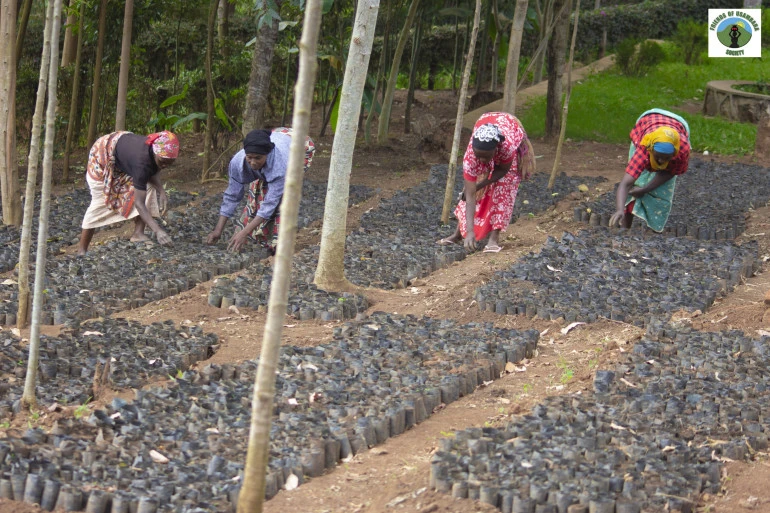
FoU’s Program architecture is purposely honed to unlock the potential held by the tourism sector through linking tourism development to sustainable biodiversity conservation and livelihoods development for poverty eradication. FoU is pursuing a crucial role by consistently working to restore degraded forests as well as leveraging sustainable livelihoods in the Western Usambara region in collaboration with other local and international partners. Our non-profit whose mission is to provide fair wage employment to impoverished villagers as agents of global forest restoration. Our “Employ to Plant methodology” results in a multiplication of positive socioeconomic and environmental outcomes. The project aims to: Grow, plant and guard large-scale reforestation projects, To prevent deforestation by alleviating extreme poverty through employment. Restore the environment through reforestation efforts, improving fisheries, agriculture and carbon sequestration. Restore vital animal habitat, our Project has a goal to address the following under these topics whereby;
• Food Systems, Land Use and Restoration Impact Program, focusing on the promotion of climate smart agriculture and sustainable land management while also increasing the prospects for food security for smallholders and communities that are dependent on farming for their livelihoods by which our proposed project is addressing fruits trees on agroforestry intending to improve living standard of the community by eradicate and graduate them from extremely poverty.
• Sustainable Forest Management Impact Program, addressing the promotion of low-carbon strategies in the dryland forests where by about 200,000 trees will be planted in the nature forest reserve, on forest reserves, Agroforestry and well as hill top afforestation.
Usambara Biodiversity Conservation Youth and women empowerment is proposing hereby establishing “Green school program” An education program for schools which aims to support teachers and schools to inspire new generations about the local and global importance of trees and forests through an innovative combination of global learning and outdoor learning. Green school vision is a world where young people appreciate, value and act to sustain the vital role of trees and forests in supporting life on Earth starting with the Usambara Mountains.
Green school objectives are to:
- Enable children to explore the role of trees and forests in environmental, economic, social and cultural terms
- Enable children to explore the causes of deforestation, and its impact on the environment, farming, climate change, and livelihoods
- Engage children as local guardians of trees (through tree planting and care projects)
- Engage children as global guardians of trees (through taking action against deforestation and irresponsible consumption of tree products)
- In the long term, Green school seeks to change consumer behavior in order to achieve a slow-down in the rate of deforestation and hence, an improvement in both the environment and in the lives of people who depend directly or indirectly on forests and trees.
Why Usambara considered amongst the 25 Hotspot Biodiversity
Usambaras as a part of the Eastern Arc Mountain originally encompassing 23,700 sq. km and stretching in scattered mountain blocks from the Taita Hills in southern Kenya to the Udzungwa Mountains in southern Tanzania, the Eastern Arc Forests are among the oldest and most biologically diverse forests in the world in which this project proposal is intending to preserve with help from Tree Nation. The main mountains, from north to south, are: Taita Hills, North and South Pare, West and East Usambara, North and South Nguru, Ukaguru, Uluguru, Rubeho, and Udzungwa.
The Eastern Arc Mountain forests sustain the lives of millions of people living in Eastern Tanzania by providing a clean and reliable supply of water and protecting fragile mountain soils. The forests are a vital source of non-timber forest products including fuel and food for millions of rural people. The forests are also a biodiversity hotspot home to hundreds of species found nowhere else on earth and store as much as one hundred million tons of carbon which might otherwise be released into the atmosphere to contribute to climate change. Supporting the lives of millions of Tanzanians, Water supply for more than 3.5 million Tanzanians, Storage for over 100 million tons of carbon, More than 100 endemic vertebrates and 800 endemic plants, Soil protection for hundreds of thousands of farmers
Why the project is needed
The Eastern Arc Mountains are a global biodiversity hot spot, and this biodiversity must be maintained. Tree nursery projects to reforest lands in the Usambara Mountain’s African Rainforest are an excellent way to achieve this imperative. Population growth puts further pressure on these Unique Forests Reserves as people need building materials, cooking fuel, and other tree products. The project has the objective to enhance tree planting in and around villages. By assuring adequate Fruits tree availability to communities in the Usambara Mountains, we can avoid the unsustainable illegal use of the Reserves. This project is also an effective instrument to combat deforestation, global warming and community economic life improvement. It also seeks to reestablish the link between Forest natural resource management as well as remove the people out of the old day practices that led to loss of biodiversity. If this project is given consideration will go a long way to stimulate tree planting, reforestation and encourage community actions against the phenomenon of climate change and then more importantly, restore hope in a population that for the past 20 years has witnessed a drastic drop in potable and destruction of the Forest nature reserve. It is also a very important tool for the enhancement of community organization and it also gives the communities in the three districts population the aptness to participate in saving lives since planting a tree is considered as a precious gift a person can offer to the conservation of Eastern Arc Forest reserves and the world as whole
A Society team of five dedicated conservationists, to be led by TREE NATION with close collaboration Yassin Madiwa, Executive Director & FoU Core Founder will be involved from the beginning of the sessions to mentor, supervise and monitor the nursery activities, will supervise all the activities from Tree Establishment as well as selection of Value sampling on FoU nurseries and the distribution and planting phases of the project. Successful implementation of the project activities will involve a multi-sectorial approach, which requires a strong commitment, close collaboration and smooth coordination of all stakeholders in the implementation of the project activities being led by Friends of Usambara IT professional. The proposed project encourages and demonstrates the essence of collective measures in the fight against climate change, however these committed staffs will be responsible for geotagging activities as per TREE NATION standard and reporting as per required. The methodology that will be used is to consist of putting at the forefront farmers to take part in sustainable protective measures and creations of superb ambassadors who will participate fully into conserving Forest nature reserve and the Planet in general, however by using a holistic framework, FoU introduces poor peasant women to opportunities for better economic standards and training that would be otherwise unavailable. FoU will provide resources to poor peasants with management of natural resources skills and provide them with continuing assistance to start their own tree nurseries. Additionally, we will build poor peasants’ capacity to successfully become aware of the future project extension after the one-year project completion.
The project will give the farmers in the communities a chance to learn confidence and life skills as they have fun growing and planting Fruits trees. They will learn about ecological benefits: trees sequester atmospheric carbon dioxide and help to reduce global climate change; trees help preserve bio-diversity in this "hot spot”; trees help to capture water in the catchment basin; trees help reduce erosion to preserve soil, and more.
Monitoring and evaluation: How will activities be monitored and outcomes evaluated
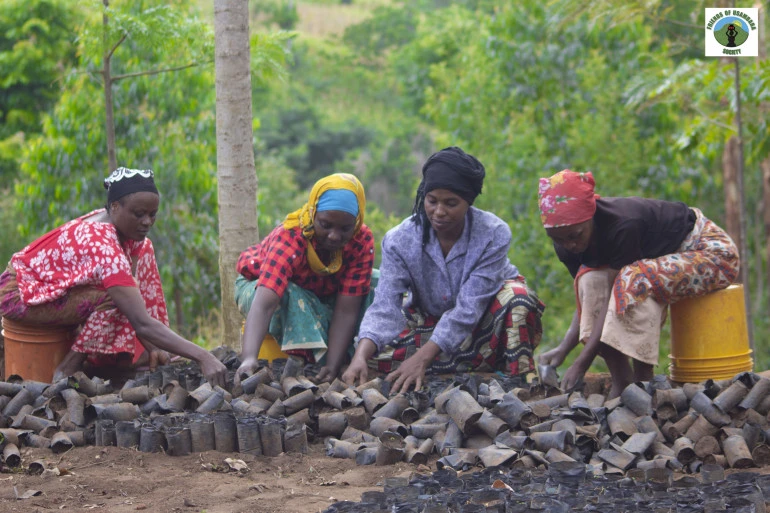
Project start up by construction of tree nurseries in proposed schools and well as seedlings distributions from FoU Tree nurseries which has capacity capacity of production 200,000 needed seedlings with close supervision of Friends of Usambara IT department which will be taking geotagging pictures during all of the process by involving the farmers who will be responsible for watering the trees and replacing those which did not do well. These methodologies will go together with training of the farmers on the nest agroforestry practices with support of Friends of Usambara Professionals-Green club who will be saving specifically to this proposed project.
Though proper training given to the farmers,the participants will be able to control mortality rate by taking care of seedling replacement of the fail plant on monthly bases which shall goes along with good collaboration with Partners institutions such as TAFORI- Tanzania Forest Research Institution the center which is based in Lushoto where the project will be implemented.
With regards to the monitoring process, farmers will maintain the plants to the period of providing income and that will be possible by recording the GPS Coordinates, photos taken by FoU IT department, assuring verification of trees performance by taking individual photos and creating database which will be available at Friends of Usambara Office to be shared to Forest Nation
This pilot phase is to transform educational institutions into a vehicle of transmission to the communities. If this project will be funded and implemented, it will empower youths in agro forestry techniques and advocate for zero chemicals, and create a small forest for each school to maintain and thus giving children the ability to plant more trees when they leave school. Not only that but also children will think of alternatives means of income generating activities and eradicate the thought of being employed by the Government. Adapting to climate change is about reducing vulnerability to current and projected climate risks. Vulnerability to climate change is determined in large part by people’s adaptive capacity. A particular climate hazard, such as a drought, does not affect all people within a community – or even the same household – equally because some people have greater capacity than others to manage the crisis. However, poverty is directly related to biodiversity degradation in the project area. By improving livelihood status of the communities in the area, they would reduce pressure of destructing the reserve through illegal activities such as extraction of wild fruits. However, implementation of the proposed new project will enhance local communities in the target villages to plant trees so as to improve their livelihoods in the future and also to reduce dependence on the Forest nature Reserve Contributing to the climate Change while accelerate the transition to sustainable living to great population. Enhancement of communities especially youths in primary and secondary school kids to produce more Trees and fruits and access markets would reduce their poverty and therefore reduce pressure on the degradation of the reserve and preservation of environmental in general which varies much from the past Intervention.
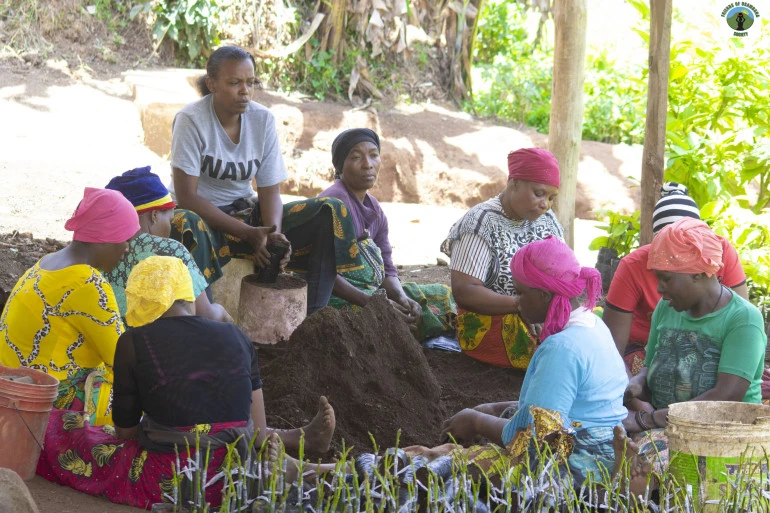
The issue at stake is that these activities lead to pollution, soil degradation, dry-off springs/wetlands and frequently drastic water shortage. Poverty, scarcity of water, drought, and floods, poor harvests, soil erosion etc. seem to take control of the future of our dynamic population. To salvage the situation, children have to be motivated to plant trees. This project if implemented will boost natural resource management and stimulate every child to plant a tree. Above all, communities will understand during the implementation phase of the project that it is not by pouring libations in drying-off streams that water will come back, it is only through planting trees.
THE ANALYSIS OF WOMEN IN PROJECT AREA
The inequitable distribution of rights, resources and power – as well as repressive cultural rules and norms – constrains many people’s ability to take action on climate change. This is especially true for women. Therefore, gender is a critical factor in understanding vulnerability to climate change and hereby this project proposal is intending to create the solution for women in the Usambara Mountains communities. CARE’s approach to adaptation begins with comprehensive analysis that includes an examination of differential vulnerability due to social, political and economic inequalities Gender Policy defines gender as “social differences between females and males throughout the life cycle that are learned, and though deeply rooted in every culture, are changeable over time, and have wide variations both within and between cultures.” Gender – along with class, race and age – contribute to shaping the roles, power and resources available to women and men in any culture, in the Usambara Mountains.
- Roles in a community: Normally women stay home to care for children, as well as sick or elderly family members while man can migrate to access economic opportunities, their ability to migrate in search of economic opportunities makes it easier for men to deal with crisis, and may result in benefits for the family as a whole. However, male migration often increases women’s workload, as they are left behind to manage the household in addition to usual tasks. It can also increase women’s exposure to other risks, such as gender-based violence and HIV infection, when the project will be implemented will give the women a chance to earn more incomes, make their ends met and improve the households’ living standards.
- Produce household-oriented crops and livestock products; Produce market-oriented crops and livestock Products. Both crops and livestock are affected by climate change, and this has profound consequences for household food security in the Usambara Mountains. Men often claim safer/more fertile land for growing market-oriented crops, leaving women to grow household-oriented crops on more vulnerable/less fertile land. Women are responsible for food storage and preparation while men are responsible for selling valuable produce and livestock. In addition to the challenges described above, climate change has implications for food preparation and storage (in terms of water for food preparation and the vulnerability of food stores to extreme events, such as deforestation and land degradation as well as floods). Harvests may be reduced or even wiped out by floods, wind and droughts. This affects market prices and the availability of surplus to sell – Placing pressure on both men and women to identify other sources of income and reduce major expenditures (e.g. school fees). In times of food shortage, women are often expected to feed other members of the family before attending to their own needs, after implementation of the proposed proposal then women will be fully empowered economically.
- Resources; Women particularly in these rural areas have lower incomes and are more likely to be economically dependent while men have higher incomes and are more likely to own land and other assets in which men typically have more money and other assets than women. Men’s savings provide a “buffer” during tough times and, along with other assets, make it easier for them to invest in alternative livelihoods. Women have less access to education and information rather than men being who have more access to education and information. Managing climate-related risks to agricultural production requires new information, skills and technologies, such as seasonal forecasts, risk analysis and water-saving agricultural practices. Men are more likely to have access to these resources and the power to use them and are therefore, better equipped to adapt. At the same time, women often have traditional knowledge that can inform adaptation efforts, both new and old information is important in the context of adaptation and after implementations of the projects especially on training on business managements situation will change and provide equality.
- Power; women have less power over family finances in the area and other assets while men have more power over family finances and other assets, without the power to decide on family resources and finances, women’s ability to manage risks by, for example, diversifying crops, storing food or seeds or putting money into savings, is limited, not only that but also women have limited engagement in community politics while men have greater involvement/decision-making power in community politics. Men are likely to have more influence over local governance-promoting policies and programs that may not support women’s rights and priorities. Face many cultural restrictions/prohibitions on mobility; face few cultural restrictions/prohibitions on mobility. Mobility is a key factor in accessing information and services. It is also critical for escaping the danger posed by extreme weather such as floods. Therefore, women are often at higher risk from these events, the problem will be addressed and solve after implementation of the proposed projects.
- The inequitable distributions of rights, resources and power – as well as repressive cultural rules and norms – constrain the ability of many women to take action on climate change. However, poor and marginalized men in the Usambara Mountains often contend with similar constraints. Therefore, CARE’s approach to adaptation includes “empowering” both women and men to challenge and change deeply rooted inequalities. As such, project proposal strategic approach to adaptation explicitly incorporates activities contributing towards gender equality. Whether addressing agency, relations or structures, project is intending to characterize these activities as “gender-transformative and achieves.
How does the Proposed Project going to address United Nations sustainable development goals (SDGs)?
The proposed project will help address the environmental, social, and economic targets of the SDGs.
Goal #1 recognizes that poverty is a multi-dimensional issue, with factors ranging from unemployment to social exclusion, vulnerability to natural disasters, susceptibility to disease vectors, these factors prevent people from being productive members of society, but growing inequality doesn't just hurt individuals. It also impedes economic growth and undermines social cohesion, increasing political and social tensions and, in some cases, driving instability and conflict. We're proud to state that each farmer involved in the proposed agroforestry project will benefits in the form of fruits, nuts, medicine, apiculture, increased crop yields, and access to cookstoves, fodder, and fuelwood.
Goal #2 targets the hunger crisis, giving special attention to how food is grown, shared, and consumed. FoU is going to do it right, agriculture, and provide nutritious food for everyone, generate sustainable income, support people-centered rural development, and protect the environment. Investments in agriculture are crucial to increasing productivity and supporting the sustainable food systems necessary to alleviate hunger within the community in the Usambaras. Our Project involved tree planting on Ovadaco farms, banana suckers as well as makadamia nuts and in secondary forests. When the trees reach maturity, the farmers involved will be able to sell products like fruits, spices, and traditional medicines. Participants will also be mobilized to plant trees in their communities. School compounds, roadsides, recreational areas, and community facilities will benefit from positive impacts like beautification and carbon sequestration.
Goal #3 aims to increase health and well-being for people of all ages. By providing more efficient funding to health systems, improving sanitation and hygiene, increasing access to physicians, and reducing ambient pollution, significant progress is expected to be made—saving the lives of thousands.
Our reforestation project proposed focuses on deforested and degraded areas in the forests of the native communities in the Usambaras, we're working to support good health and well-being by planting trees native such as Moringa Oleifera.
With an anticipated together with other species the project will plant 200,000 trees in 2021, this reforestation project will sequester approximately 64 lbs of carbon per tree each year. One of the trees included in this project is the Makhamea lutea. This canopy tree grows tall and straight, reaching up to 30 meters high! In traditional herbal medicine, Moringa and erythrina ebathenica bark are decocted and used as medicinal plant.
Goal #4 recognizes that increasing the availability of high-quality education is essential to promoting sustainable development. While a good education improves quality of life, it can also help equip locals with the tools they need to develop innovative solutions to the world's greatest problems. And often, even the children that make it to school miss out on the basic literacy and math skills they need to thrive. Still, major progress has been made towards increasing access to education in the last decade. The project will work with 4 school and Environmental clubs will be identified where by 600 students will be receiving training on Environmental conservation though this proposed project.
Goal #5 Providing women and girls with equal access to education, health care, decent work, and fair representation during political and economic decision-making will fuel sustainable economies, change societies, and benefit all of humanity. Implementing new legal frameworks for female equality in the workplace and eradicating the many harmful practices targeted at women is crucial to ending the gender-based discrimination prevalent in many countries around the world. The primary goal of this project is to provided banana suckers, Fish farming and Macadamia nuts seedlings that will be planted and grown into healthy trees that create steady income, enabling approximately 4000 banana suckers to the farmers to secure health care and education for themselves and their families. In partnership with communities will be helping the women in the community, women are going to be first priorities on all of our tree planting project.
Goal #6 aims to secure universal and equitable access to safe drinking water every where. Though other measures are needed to safely manage water supplies, trees play a vital role in making clean drinking water accessible to everyone, one of the targeted area to be planted are though water sources as well as mountains ridges which will insure water availability in the Community around the Usambaras.
Goal #7 Energy is at the center of nearly every major challenge and opportunity the world faces today where by Usambaras is unexceptional. From jobs to security to climate change, food production and increased income, equitable access to energy is essential. Intertwining with several other Sustainable Development Goals, achieving affordable and clean energy is paramount, on this proposed project Energy saving stoves are going to be provided,
Goal#8 targets the roughly 50% of the world’s population that still lives on only $2 a day. With global unemployment rates at 5.7%, having a job no longer guarantees upward mobility or the ability to escape from poverty. This slow and uneven progress requires us to rethink and retool the economic and social policies we've developed in the past. Or truly sustainable economic growth, societies must create quality jobs that stimulate the economy without harming the environment.
And to be truly equitable, these opportunities should be available to the entire working population. As prosperity increases, people will need access to financial services to help them manage their incomes, accumulate assets, and make productive investments. And developing the infrastructure necessary for trade, banking and agriculture will help to reduce unemployment levels and increase productivity in the world’s most impoverished regions. On this proposed project, we promote an agroforestry approach, in which multi-cropped fruit and forest trees are co-managed with the standard subsistence and cash crops farmers depend on. This approach helps to diversify the revenues of smallholders and family farmers, while ensuring that they will have access to short-term income while the trees grow and develop.We also promote sustainable woodlot management; for better or for worse, Usambara Mountains currently depends on fuelwood. Until that changes, we promote rapid growing species that can be sustainably harvested and have a high heat value to improve the efficiency of charcoal production.
Goal #9 aims to increase investments in infrastructure worldwide–from transportation and irrigation to energy, IT, and communication technology. These developments will play a crucial role in empowering communities and encouraging sustainable development. It has long been recognized that improvements in infrastructure are a necessary precursor to increasing productivity through better work, higher incomes, and improved health and educational outcomes where by this proposed project will create great employment to the local people in the Mountains.
Project Area
The population is growing rapidly in the East Usambaras due to a high birth rate and immigration (Hamilton and Bensted-Smith 1989). The annual population growth rate in 2001 was 2.2% (The World Bank Group 2004), but it is higher in the highlands, which includes the East Usambaras. Some estimates in other highlands (Uluguru Mountains) indicate annual growth rates of up to 6.5%. Suitable climate conditions and job opportunities at tea plantations are tempting people to immigrate to the area.
Households in the East Usambaras consist of an average of six persons. Land is normally managed with family labor. There is a dual system of land tenure in Tanzania. All land officially belongs to the state. The right of occupancy in the country can be granted by the Commissioner for Lands or acquired through customs and tradition. In the Usambaras, the land is mainly inherited through customary tenure conditions based on patrilineal kin-ship structures. Forest encroachment on public land is still very common in the study area; 40% of the farming land is obtained by clearing the forest. The average farm size per household is about 3.5 ha, of which about 0.8 ha is set aside as fallow or rented to new couples or to landless immigrants. This so-called Kinyange -farming system is still a common practice in the study area. People are very poor in the area. Many families cannot even send their children to schools because of the school fees and long distances. This explains why most people have only a primary school background (84% of the farmers) or no education at all (14%). The main source of rural farmers’ income is obtained from the sales of crops, animals, and animal products.
Lushoto is one of the eight districts of Tanga Region in Tanzania. Located at
Latitude. -4.6666667°, Longitude.38.3333333°. It is bordered to the northeast by Kenya, to the east by the Muheza District, to the northwest by the Kilimanjaro Region and to the south by the Korogwe District. The population of Lushoto district is 492,441 whereas males are 230,236 and female 262,205. The population of Lushoto ward project area is 28,190 whereas males are13,258 and females are 14,932 (Tanzania national census 2012). Usambara Mountains is one of the densely populated areas in Tanzania with population density of 500,000 people living equivalent to 124 people living per square kilometres. Usambara Mountains has area covered of 3500, the biggest challenges in this region is the threatening of the natural resources such as natural forests in this region in which majority of the women and youths are cutting down timbers and charcoal fuel wood to earn income to make their living in which is damaging this region considered to be the 23rd hotspot biodiversity on the Earth.Many of the man in the Villagers has gone to the big Cities looking for jobs hence women are mainly people found in the village, currently the mainly people working in the land are women sometime spending the whole day collecting fire wood, making charcoal at Magamba nature reserve contributing to the destruction of the natural forest and this project is intending to provide them with alternatives means whilst raising the standard of living to their families.
Characteristics of Project Area
The East Usambaras are a range of low mountains,800–1250 m above sea level (masl), covering an area of 1300 km2 located between 4 48¢ and 5 13¢S latitude and 38 32¢ and 38 48¢E longitude. They are situated close to the coast in the northeastern corner of Tanzania in the Tanga region and belong to the chain of mountains called the Eastern Arc. Exceptional long-time uniform climatic regimes have resulted in high rates of endemism and unique biodiversity values (Sayer and others 1992). The East Usambaras belong to the most valuable conservation areas in Africa; 35%of its plant species are endemic. With bimodal rainfall (short rains; November– December; long rains; March–May) the East Usambaran humid tropical forests secure the water supply for Tanga’s 220,000 inhabitants and are vitally important for local people (more than100,000) in many different ways. Still, forest destruction for mainly cultivation purposes continues to be a major threat to biological diversity. The agricultural practices are often detrimental to the environment.
The motive of the local communities to conserve these forests could be determined by the benefits that the forests would bring them. There are still different potential sources of revenue in the Eastern Arc forests, both direct and indirect. For example, many urban water supply systems in Tanzania depend on the water originating from the Eastern Arc forests. A part of the revenues from water should be used to develop the economies of the respective communities. There are also exploitable forestry products and indirect sources, such as ecotourism and research fees (Munishi and others 2002). The sustainable exploitation of at least some forestry products in the East Usambara could be possible and would benefit the local people. Ecotourism is a very small-scale business in the area, despite the fact that facilities are rather good. At least, it is benefiting few trained ecotourism guides and their families.
Conclusions, an improved agroforestry system is found to be the most suitable option on the East Usambara Mountains. Farmers could receive a double net income compared to traditional farming with little investment in terms of time, capital, and labor. The greatest contribution to the household annual income was derived from cash crop cultivation. With more intensified cultivation of cash crops, the income of the households could be quickly increased. The average total income in improved agroforestry methods in the highlands (US$860) was about three times larger when compared to traditional farming system in the lowlands (US$ 270); this is a very significant difference. The income of traditional cultivation methods could be duplicated with improved agroforestry systems. In the lowlands, where the incomes were generally less, the revenues derived from the cash crops could be easily three times larger with improved agroforestry systems than with traditional cultivation methods. Nonetheless, in terms of per-capita income, even in improved systems, the value is lower than the national average. Intensification of the agroforestry systems might constitute an altar-native to improve farmer’s income to desired levels. Conserving biodiversity in the natural forests by increasing the diversity and production in the human-made ecosystems allows us to use the existing potential of the very varied farm species in the East Usambaras.
PROJECT DETAILS
Contribution of the project towards alleviating or addressing any socio-economic issues or aspects.
The Eastern Arc Mountains are a global biodiversity hot spot, and this biodiversity must be maintained. Tree nursery projects to reforest lands in the Usambara Mountains African Rainforest are an excellent way to achieve this imperative. Population growth puts further pressure on the Forest Nature Reserve as people need building materials, cooking fuel, and other tree products. The project has the objective to enhance tree planting in and around villages adjacent to Nature Forest Reserve and the Jegestal water source. By assuring adequate tree availability to communities in the Usambara Mountains, we can avoid the unsustainable illegal use of the Reserves. Preserving Biodiversity in the Eastern Arc Mountains rain forest is the primary goal of this project. Additionally, key issues to be addressed are reversing the serious deforestation around Forest Nature Reserve, a critical need for woods and construction materials, the need for environmental conservation education, and extreme poverty alleviation through agroforestry.
The overall objective of the project is to contribute in conserving the Magamba nature reserve and to mitigate climate change through support for ecological balance, economic and social significances of tree planting which will go a long way to improve the living conditions of the direct and indirect beneficiaries by providing potable water to people of Lushoto town and surroundings’ villages.
This project is also an effective instrument to combat deforestation, global warming and readdress water shortage in Lushoto district. It also seeks to re-establish the link between Magamba natural resource management and nature as well as remove the people out of the old day practices that lead to loss of biodiversity. This project if given consideration will go a long way to stimulate tree planting, reforestation and encourage community actions against the phenomenon of climate change and then more importantly, restore hope in a population that for the past 20 years has witnessed a drastic drop in potable and destruction of the Magamba nature reserve.
SPECIFIC OBJECTIVES
ENVIRONMENT: Increase global tree cover, promote reforestation and appropriate tree cultivation; this will be archived through the planting exercise where by at least 200,000 tree seedlings will be planted in in one year. Trees planted in reforestation projects help to replace the lost forests.Trees planted in agroforestry sequester atmospheric CO2 while offering subsistence farmers nutritional and income generation benefits especially to the women around the mountains.Trees planted protect the Nature Reserve from poachers, maintaining biodiversity.
EDUCATION: foster an understanding of the amenity, ecological and economic value of trees, Classroom and practical sessions on tree nursery preparation and management. Students and women at the villages plant trees in the area to maintain biodiversity.Trees are sold to maintain sustainable school tree nurseries.Agroforestry tree products help subsistence women farmers improve nutrition and income
LIVELIHOODS: Enable communities to develop (restore) sustainable and productive landscapes by tree cultivation, through free distribution of tree species suitable for agroforestry especially Tree species natives to the Mountains.
CAPACITY BUILDING: Build capacity of women in the community organizations to advocate for and implement community-based forestry and agroforestry, Participants in school environmental clubs will be empowered with basic skills on tree nurseries establishment and management. Trees are marketable today so students can possibly start their own commercial tree nursery small business ventures when they are done with school, resulting to both greater agroforestry development and economic improvement. Project will help the Society reach toward its goal of planting 15 million trees which is Organization annual target starting in 2021
However, the project will find alternative ways of income generating activities for the women and enhance tree planting in villages adjacent to Magamba nature reserve so as to reduce pressure on the degradation of the reserve.
Friends of Usambara Society (FoU) will invite experts in forestry, and business management on, horticulture, health, gender and others to facilitate in the sensitization meetings and training. Such collective initiative is a more motivating way to make the community accept and assimilate the new knowledge and techniques. Tree planting is one of the major components of the project and the fact that over 200,000 seedlings will be planted further strengthens our commitment in fighting environmental hazards. Besides, each tree planted is expected to provide Oxygen to two people for the rest of their lives so much so that they could live and function normally. At the level of the children who are the main actors in the project, planting a tree is not just a gift to humanity but performing God’s work. Trees when mature, act as windbreakers and cleansers apart from stabilizing the water level that is also badly needed for human survival. These trees will also remove other pollutants and they are the better solution to mitigate the effect of climate change yet contribution 100 percent on conserving the Magamba nature reserve and eastern arc mountains as a whole.
PROJECT OUTCOMES
Once the project is funded it will lead to the following outcomes:
Women empowerment.
When women are able to earn, more income derived from alternative sources such as tree nurseries and other entrepreneurial ventures, their families benefit. Research indicates that income is more likely to be spent on human development when women control the cash. In Ghana, the greater the share of cereals under women’s controls the greater family members’ consumption of calories. As well, research has shown that women are more risk averse than men and are, therefore, more likely to take decisions that minimize risks. It has also been found that women are more open to advice and are more willing to change their strategies in response to new information.
After implementation especially through training, the project will be supporting women to assume leadership roles in community and local government organizations by providing training and mentoring, as well as by strengthening the capacity of women’s organizations to advocate for women’s rights. These efforts, alongside district-level action to reduce vulnerability, are reducing systemic inequalities that prevent women from fully contributing to the resilience of their households, communities and society.
Contribution to Improved Livelihoods: New skills on business management andbeekeeping and fish farming will increase household income, Improved agriculture through diversification to new breeds of banana will increase food availability and income to the women and save time to engage fully in economic activities, Tree planting activities will generate income through sale of fuel wood, building poles, seedlings and timber, Energy-saving stores will reduce greatly the use of fuel wood, increase cooking efficiency and relieve women and children workload from the problems of finding wood. Additionally, the use of efficient firewood stoves will reduce health risks associated with the soot produced.
Act as an effective tool to fight poverty and miseries in our communities, Stabilize the water level and eradicate drought and bring back water in stand taps in our communities during dry season while foster conservation practices and, Stimulate children to participate in tree planting, Off-set CO2 and give oxygen, Act as a powerful tool that directly and indirectly ensures survival and reduces the pressure on the small patches of forest, empower school environmental clubs hence discourage abusive planting of eucalyptus trees near watersheds and running streams, Empower youth leaders on tree planting, maintenance techniques and encourage the development of community tree nurseries, Curb rural exodus, Encourage zero chemical along water catchments and stimulate the replacement of eucalyptus treeswith native tree species in farmlands ,Encourage the planting of environmental friendly tree species in wetlands and emphasize on the importance of wetland protection, Setup a base for community action in the fight against climate change and act as a vehicle of information between farmers, grazers and the administration in conservation strategies, Demonstrate the role of the children in fostering sustainable development and educate communities about the value of proper landscaping to reduce non-point source pollution at the water source, Reduce erosion and stabilize stream banks in the running streams, Foster environmental stewardship and interest members of the community and raising public awareness about the treasures and threats to their watershed.
The project Outputs/Deliverables to be achieved
- On-farm fruit trees
- Availability of fruits in the target school and villages
- Improved health status of the community
- Income generation for the schools
- On-farm trees and well conserved Part of the Jegetal water source.
|
TREE DISTRIBUTION |
|
|
DESTINATION |
NO. OF TREES |
|
Agroforestry/ Farm land |
49200 |
|
Forest reserve |
82000 |
|
Ridges |
32800 |
|
School compound |
36000 |
|
Total |
200000 |
The value-added or enhancement(s) that the proposed project aims to bring.
The overall goal and purpose of the project is conserving local biodiversity in a global biodiversity hot spot by making a significant contribution in sustainable conservation and management of the Nature Reserve and Jegestal Water Source by planting fruit, fodder, and other trees in order to reduce pressure (dependence) on forest reserve while creating income generating opportunities for the schools and villagers
- Outcome 1: Maintain Biodiversity: Maintain and expand rain forest habitat to preserve biodiversity
- Outcome 2: Reforestation: Reforest lands where trees were cut to maintain topsoil and prevent erosion, helping to save the local water source.
- Outcome 3: Income generation: Trees are provided to farmers to plant in agroforestry and alley cropping, improving land productivity and providing a surplus that can be sold at market, raising livelihoods. Schools can sell seedlings, raising funds needed for learning materials, physical improvements, scholarships, and the tree nurseries. Tree projects bring in eco-tourists who provide much needed commerce to the region.
- Outcome 4: Education: Provide learning opportunities for students and village communities so people will understand how sustainable environmental conservation leads to increased availability of forest products, and helps to reduce dependency behavior on the Nature Reserve for forest resources. The ultimate outcome will be a new generation of people who understand how environmental conservation works to their benefit.
MAIN ACTIVITIES OF THE PROJECT
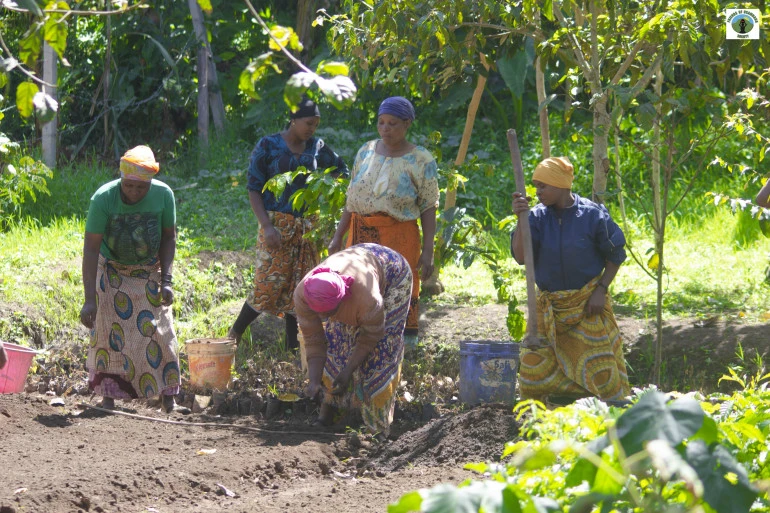
Mobilizing women group training them on business management, leadership and thus will empower the women financially and managing their business; the purchase of tree nurseries equipment’s and training of all participants. Furthermore, FoU intends to initiate and promote viable and profitable alternative sources of income-generating activities to the women at Kwembago near adjustment to Magamba Nature reserve such as beekeeping, fish farming and growing of high quality banana and macadamia, the society will also educate and sensitize the communities particularly women on business management and the use of energy-saving stoves, these goes along with distributing high quality of banana suckers.The proposed project will be conducted under the close supervision of Friends of Usambara Executive committee professionals of each targeting activities to be undertaken.
Organize sensitization meetings at local level to foster the sense of concern on women empowerment, Strengthen and establishment of the clubs/ groups as Committees at the village level to create village institution that will take leadership in the project implementation roles, Provide new skills in bee keeping and fish farming and business management and establishment of Sacco’s for the women. Promote banana farming as Agro forestry an alternative income generating activity, with the above the approach the following impacts
PROJECT IMPACTS
Contribution to conservation of the Eastern Arc. Increased concern on conservation of forest resources by local communities will reduce degradation of Eastern Arc Mountain forests, Household woodlots to be established will decrease extraction pressure against natural forests and forest reserves, alternative income-generating activities will reduce timber-based income-generating business.
Impact to the Community: Family wood lots will flourish, People will change their behaviour and accept progressive ideas, and the women in village will act as a nucleus to bring changes on women empowerment in the district.
METHODOLOGY FOR IMPLEMENTING THE PROJECT
The methodology that will be used is to consist of putting at the forefront youths who are the leaders of tomorrow to take part in sustainable protective measures and creations of superb ambassadors who will participate fully into conserving Forest nature reserve and the Planet in general, however by using a holistic framework, FoU introduces poor peasant women to opportunities for better economic standards and training that would be otherwise unavailable. FoU will provide resources to poor peasants with management of natural resources skills and provide them with continuing assistance to start their own tree nurseries. Additionally, we will build poor peasants’ capacity to successfully become aware of District Council laws and by – laws on natural resources management to productive use.
Prepared by Yassin Madiwa
CEO & FoU Core Founder


