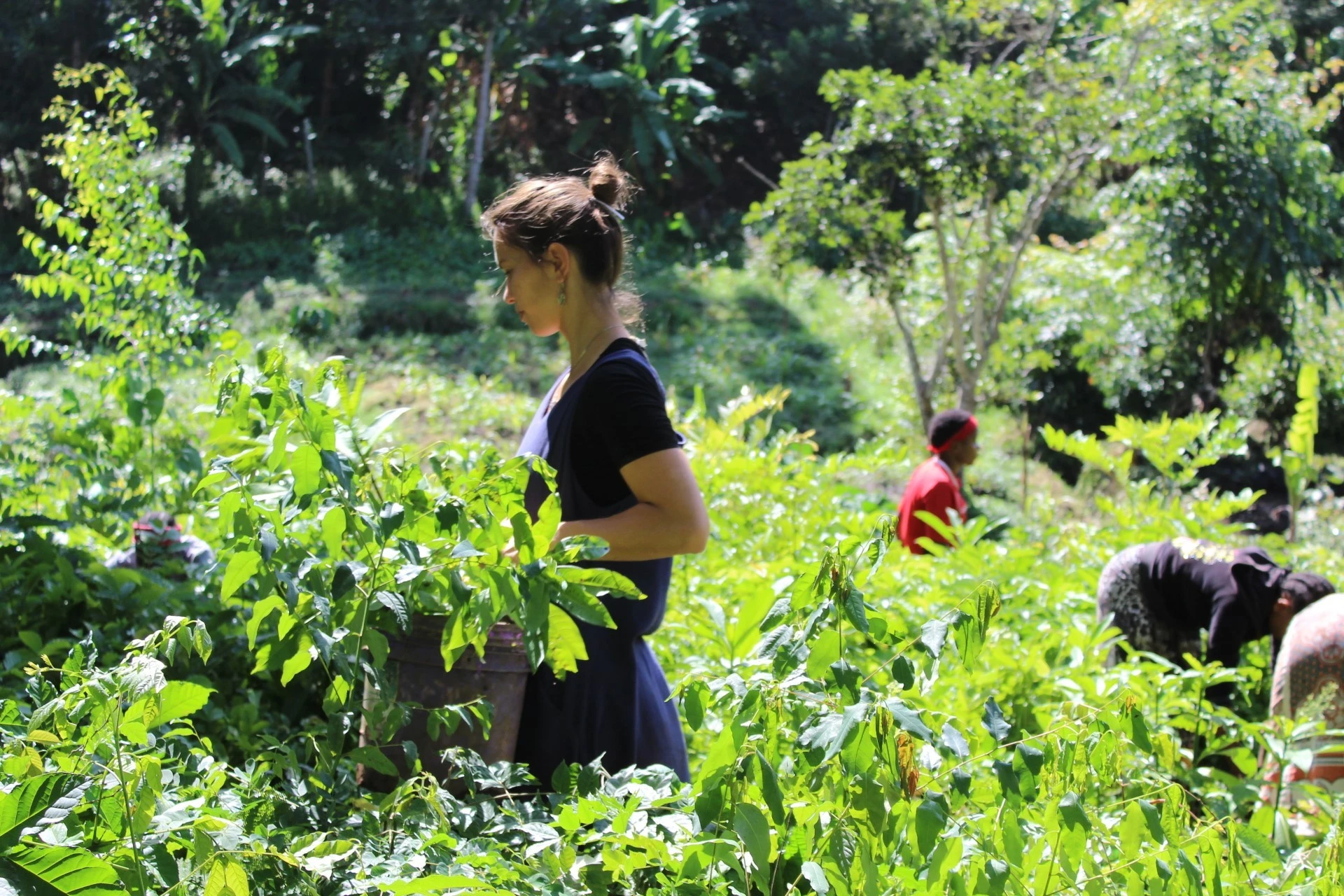

March, 2020 – Lushoto, Tanzania
In Lushoto – Tanzania, the international women’s day was cheerfully celebrated by, among others, planting five thousand (5,000) trees – giving a high note on the significance of responding to global climate crisis through community-lead tree planting initiatives, one of the flagship program of the Friends of Usambara – a grassroots non-profit organization that uses sustainable tourism to preserve culture and conserve nature in Tanzania.
Discussions about climate change on global scale have, until quite recently, taken a center stage as one of the critical issue on the perspectives of international development. Climate change is no longer a distant threat – rather, it is a today’s reality and it is happening now. It goes on record that the world will be poorer in 2050 than it is today due to the impacts of climate change – with developing countries being much more affected than developed ones due to the inherent lower level of economic development, poor institutions and inability to meet (operationalize) climate change objectives by most of the developing countries especially those located on the south of the sub-Saharan desert.
For the third world countries, the impacts of climate change have wide spread and overwhelming negative effects particularly on the sustainability of biodiversity and the lives of the
people. Climate crisis poses a serious threat on the resilience of national and household economy with more robust impacts ranging from more extreme weather and natural disasters to chronic droughts and economic instability. Viewing these impacts from the social vulnerability spectrum standpoint; women, youth and children represent the most vulnerable and thus the hardest hit segment of the population – and this has largely been exacerbated by lack of resources as well as poor implementation of responsive measures that focus on vulnerable groups (lack of inclusive thinking).
Apart from a myriad of complications that women have to bear as a result of the global climate crisis; the inherent social norms (social-cultural practices) and policy environment bar and marginalize women from effective and equal participation in development activities, including equitable sharing of benefits from such activities. Friends of Usambara gives a keen look on the interplay between gender, agriculture and climate change in an attempt to address the interrelated structural challenges.
Friends of Usambara is addressing complications resulting from the global climate crisis through its involvement in community-based environmental awareness creation and education campaign, biodiversity conservation, livelihoods development, as well as combating desertification and promoting sustainable forestry. In its overall approach, Friends of Usambara integrates gender-specific and youth empowerment guidelines (including the Women’s Empowerment in Agriculture Index, WEAI) and adapts key climate-smart agriculture practices (as provided by the Climate-Smart Agriculture Guidelines) based on local situations.
In collaboration with local and international partners, Friends of Usambara has been able to plant more than fourteen (14) million trees on the West Usambara Mountains, with roughly 90 per cent being indigenous tree species, primarily for biodiversity conservation. The remaining 10 per cent are either fruit trees (for food and/ or income generation) or woodlot (for timber, firewood and/ or commercial purposes). Alongside this, Friends of Usambara is promoting sustainable agriculture by empowering (how many?) smallholder farmers, mostly women, to implement agroforestry practices as both, a livelihood diversification option (adaptation measure) and a climate change mitigation strategy (state its outcomes so far). Provide an update on the school program as well, focus on the outcomes.
We are calling upon all of you to Plant Trees together via this Tree Nation Platform
Prepared by:
Yassin Madiwa
CEO & FoU Core Founder


