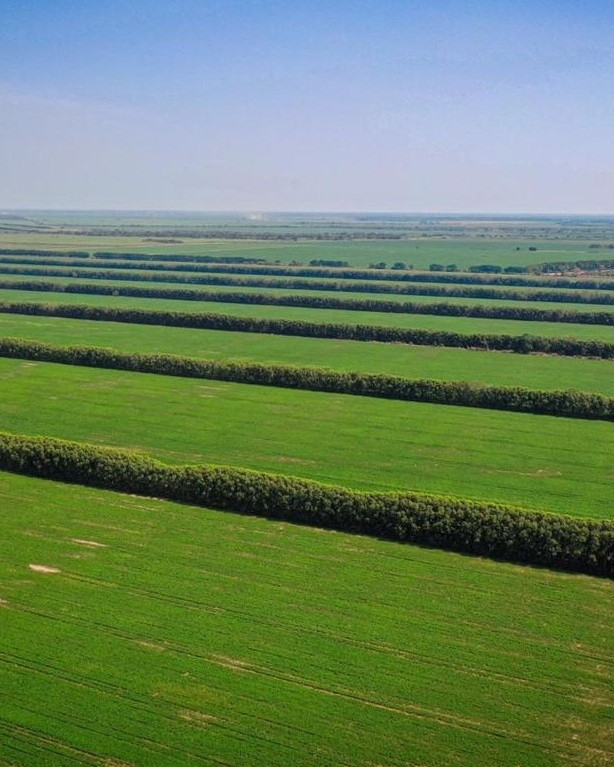
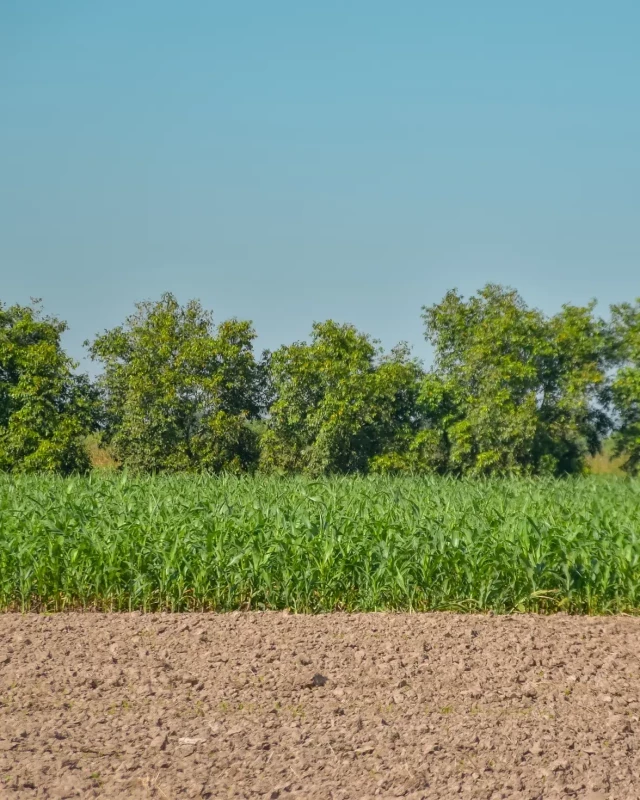
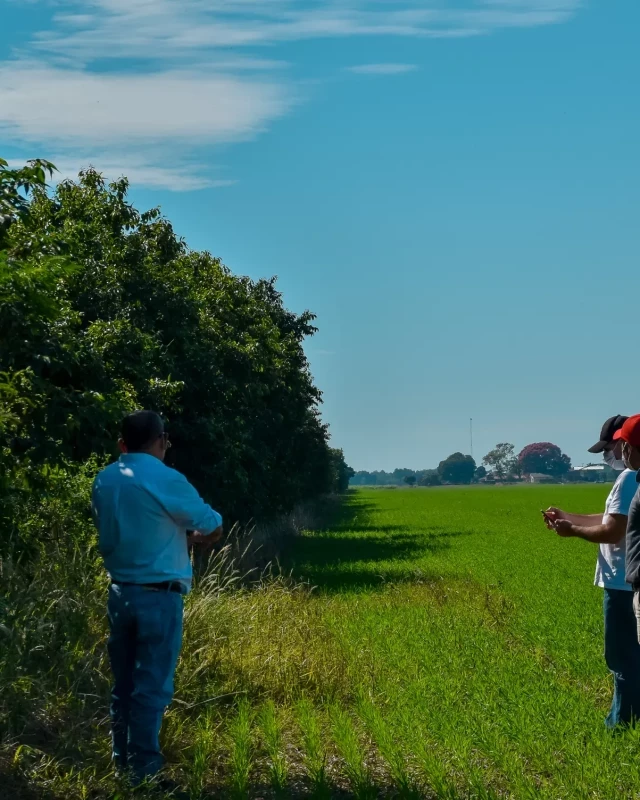
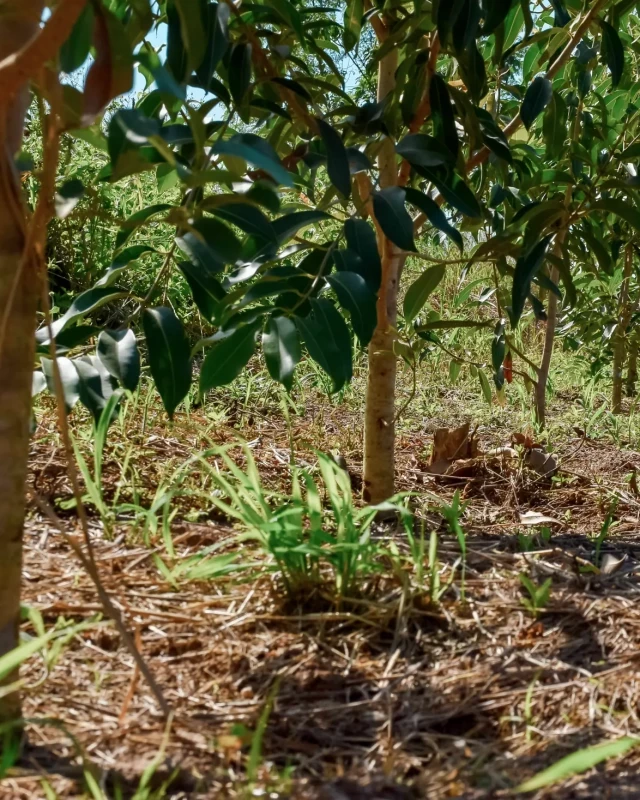
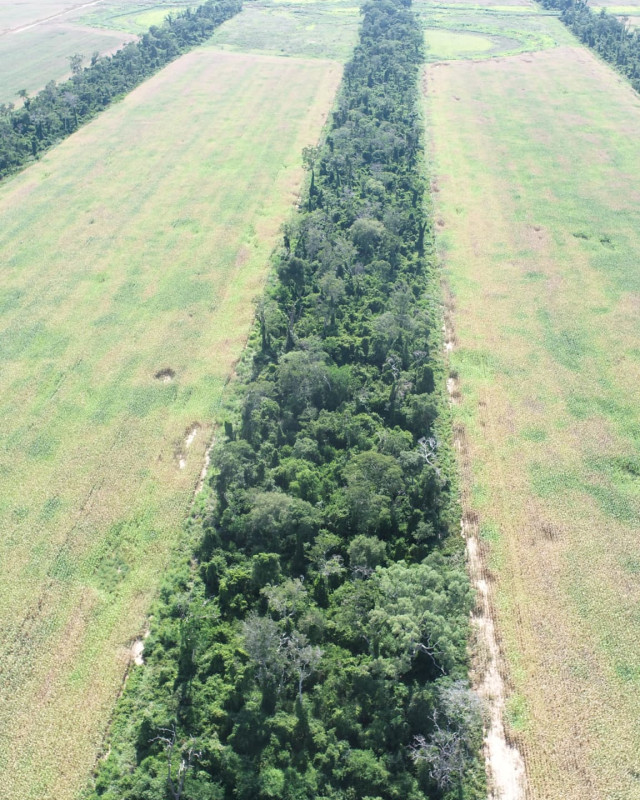
Foundation is our highest-precision tier. It applies to agroforestry hedgerows and biodiversity corridors on private land, where boundaries are stable, ownership is documented, and satellite aboveground carbon (AGC) datasets can measure the carbon stored in individual planting lines directly. These plantings support food production while creating habitats for wildlife to move through and live in.
- Land
- Private
- Carbon rights
- Included
- Verification
- Satellite aboveground carbon (AGC)
- Typical use
- Agroforestry hedgerows & biodiversity corridors
- Price
- From €2/tree
- Carbon captured
- Capped at 500kg ex-ante per tree
- Monitoring period
- 10 years per site from planting
- Partners
- Farmers
Impact potential
Climate change mitigation potential
The IPCC identifies agroforestry as one of the largest scalable land-based mitigation options globally.
Humans have converted roughly half of Earth's habitable land to agriculture, and that share is still rising to meet food demand. Foundation is a way to bring nature back into that system without taking farmland out of production. Agroforestry hedgerows and biodiversity corridors return trees to working land at the field edge, where they store carbon and reconnect fragmented habitats into corridors wildlife can actually move through. The IPCC identifies agroforestry as one of the largest scalable land-based mitigation options globally. What makes it credible at scale is the direct benefit to the farmer: hedgerows protect crops from wind and water damage, retain soil moisture, host pollinators and pest predators, and help deliver more reliable harvests season after season.
Climate change adaptation potential
Agriculture is where climate change hits soonest and hardest.
Agriculture is where climate change hits soonest and hardest. Heat stress, water stress, and extreme weather are already reducing yields for major cereals, and food security is the first system that starts to break when climate conditions deteriorate. Agroforestry directly buffers this. Hedgerows and corridors reduce wind erosion, retain soil moisture, cool field microclimates, and support the pollinator and predator communities that keep working land productive. This is why hedgerows are a common feature of climate-resilient farming systems long before any carbon value is attached to them. Foundation is a way to finance and measure that resilience layer at the scale it needs.
Socioeconomic impact
Agroforestry protects the food supply, not just the farm.
When hedgerows and corridors reduce yield losses from wind, drought, and pests, the benefit does not stay on the farm. More reliable harvests translate into a more stable food supply and less price volatility across the wider economy. Foundation is a food security investment, not just an environmental one.
Biodiversity impact
Hedgerows are both habitat and corridor: wildlife lives in them and moves through them.
Hedgerows and biodiversity corridors do two things at once: they create habitat where wildlife can live, and they connect fragmented natural areas so animals can move between them. Across agricultural landscapes carved up by monoculture, these corridors let pollinators, birds, small mammals, and predators find food, mates, and shelter. Native species are chosen to match the local ecology and support understory regeneration.
Our Foundation process
Validate planting partner
Tree-Nation finds and validates competent local partners who implement Foundation projects.
Select planting sites
Together with our partners, we validate farmers taking part in our program along with their planting sites.
Co-design PDD
We create a PDD for each planting site detailing the full project design from species selection to monitoring.
Planting report
We receive a planting report with geolocated photos as proof planting is completed.
Monitoring
The site is moved into monitoring with annual monitoring reports, backed by geolocated photos, satellite verification and survival rates.
Validate planting partner
Tree-Nation finds and validates competent local partners who implement Foundation projects.
Select planting sites
Together with our partners, we validate farmers taking part in our program along with their planting sites.
Co-design PDD
We create a PDD for each planting site detailing the full project design from species selection to monitoring.
Planting report
We receive a planting report with geolocated photos as proof planting is completed.
Monitoring
The site is moved into monitoring with annual monitoring reports, backed by geolocated photos, satellite verification and survival rates.
Aboveground carbon (AGC)
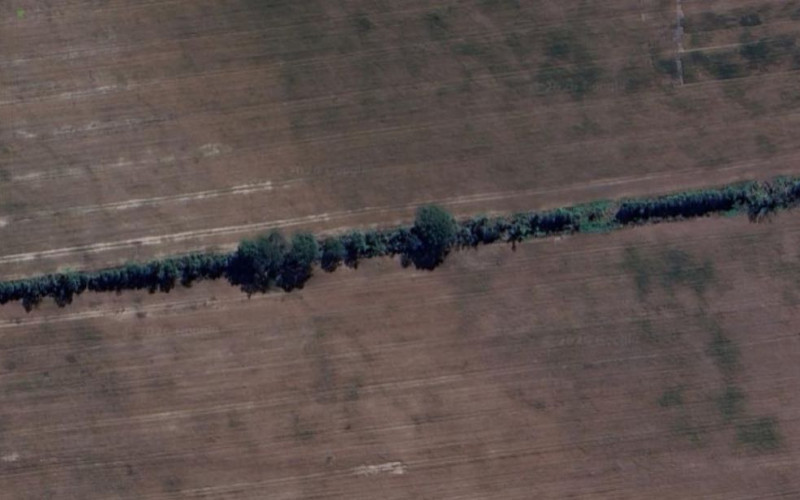
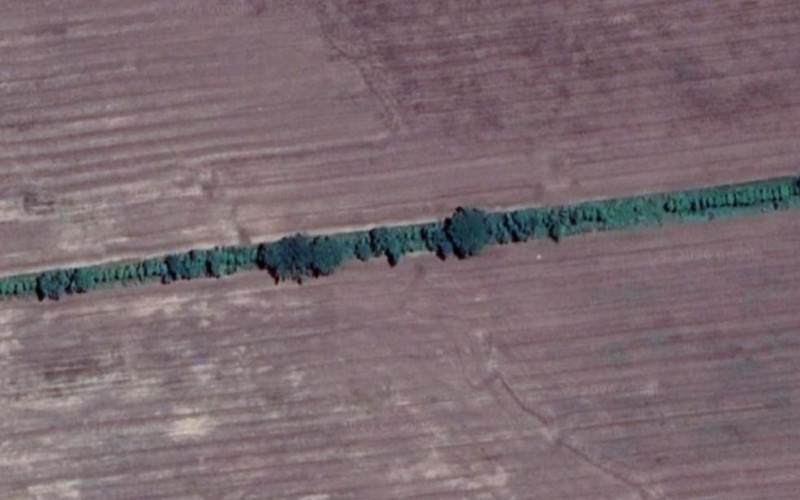
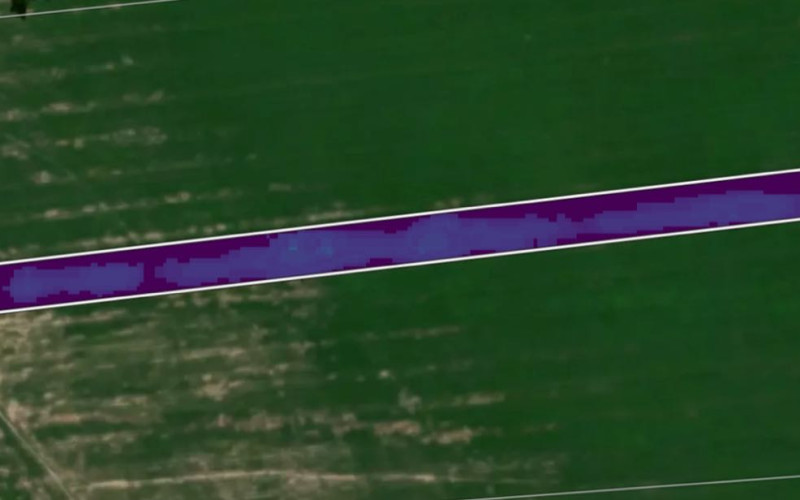
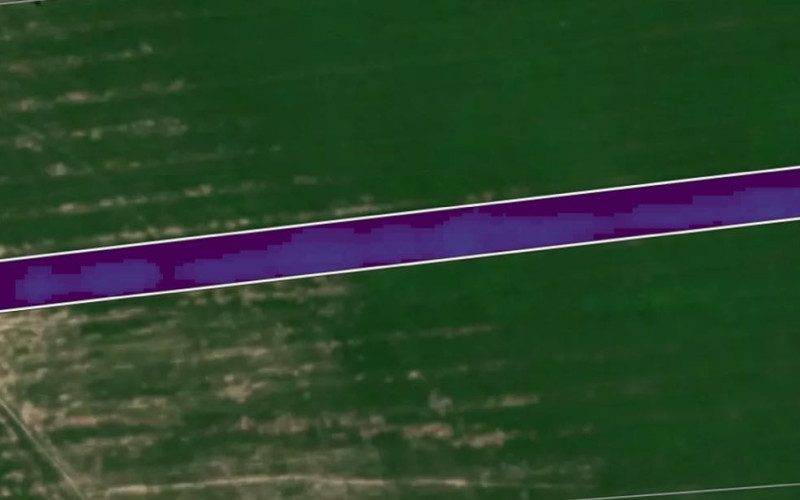
Foundation is the only Tree-Nation tier that quantifies carbon directly from satellite aboveground carbon (AGC) datasets. AGC estimates the carbon stored in the trees using third-party providers such as Planet, calibrated with NASA GEDI lidar data. These datasets are outside Tree-Nation's control, and Foundation's structured planting lines are resolvable at their spatial resolution.
Imagery
Aboveground carbon
Carbon over time (MgC/ha)
About this data
The Aboveground Carbon (AGC) values here come from Planet Forest Carbon Monitoring, a satellite-based model that estimates how much carbon is stored in the trees standing on a given hectare of land. Planet combines high-resolution optical imagery from its own satellite constellation with NASA GEDI LiDAR calibration data to produce carbon estimates anywhere on Earth without ground measurement.
Reading the unit. MgC/ha means megagrams of carbon per hectare, the mass of carbon atoms stored in aboveground biomass on that hectare. To convert to CO₂, multiply by 3.667, the mass ratio of a CO₂ molecule to a carbon atom. A line reading 25 MgC/ha holds roughly 92 tCO₂ aboveground.
Timeline of the tool. Planet released the Forest Carbon Diligence archive in late 2023, with annual estimates going back to 2020. The Forest Carbon Monitoring product, which delivers quarterly updates at 3-meter resolution, launched in September 2024. Values before September 2024 are archive estimates useful as baseline reference. The live monitoring window starts in late 2024. Independent of the tool's history, satellite-visible biomass on planting projects also stays low until canopies close, which typically happens a few years after planting, so the strongest growth appears once trees are mature enough to be seen from space.
Where we use it today. We apply Planet AGC to Foundation projects, where it fits best (agroforestry hedgerows and biodiversity corridors on private farmland visible from satellite). It runs alongside the direct per-tree measurements that back the certification. We do not use it as the basis for issuing carbon claims. It is complementary evidence showing the physical carbon signal from space over time.
Why we track it anyway. Planet Forest Carbon Monitoring is the leading candidate for what independent, objective, low-cost carbon measurement looks like at scale. The model improves each year, coverage widens, and the cost per hectare monitored is a fraction of ground survey. Making it part of our monitoring today positions Tree-Nation to move from indirect per-tree estimation to direct satellite measurement of stored carbon as the tool matures.
Data from Planet Forest Carbon Monitoring
How carbon is measured
Ex-ante CO2 capture is calculated per tree from species biology and climate region, then reduced for survival rate, cull-back, and prudence. Accounting is capped at 10 years of growth and 500 kg per tree, regardless of how much longer the tree keeps growing.
- Per tree, not per hectare
- 10-year growth cap and 500 kg per-tree hard cap
- Failure insurance applied before any claim is made
How it is verified
Planting lines are narrow and geometrically regular, which makes them the clearest signal available to satellite monitoring. Polygons are public, planting records are logged per site, and remote sensing tracks canopy development against the planting plan.
- Public polygons
- Planting records per site
- Satellite canopy monitoring
Reporting & disclosure
Foundation contributions are designed to fit the frameworks your sustainability team uses. Whether you're required to file depends on your size. Post-Omnibus CSRD applies to companies with 1,000+ employees and €450M+ turnover, with the first reports for FY 2027 due in 2028. If you file, here's how Foundation contributions fit each framework. If you don't file, the underlying methodology and data still back your voluntary communication credibly.
| Framework | Applies to | How Foundation contributions fit |
|---|---|---|
| CDP Climate Change (Full Corporate) | Voluntary. The version used by companies with 1,000+ employees or $250M+ revenue when they respond to CDP | Answer "Yes" to Question 7.79 (has your organization retired any project-based carbon credits within the reporting year). Then in Question 7.79.1, select Agroforestry (project type), Carbon removal (type of mitigation activity), Voluntary offsetting (purpose of retirement), and Purchased. For carbon-crediting program, choose "Other, please specify" and enter Tree-Nation; enter Foundation as the methodology. For vintage: select "Yes" and enter the planting year if planting has occurred; select "No" if retiring credits ex-ante before planting under Tree-Nation's pre-sale model. For method to assess additionality, select "Other, please specify" and note that Tree-Nation verifies exclusive sponsorship for the specific project (no other funding sources) and executes planning and planting with local partners. For reversal risk, select Monitoring and compensation. For leakage, select "Other, please specify" and note that Foundation adds trees to working farmland and increases agricultural yield through soil, pollinator, and microclimate benefits, which is the opposite of displacing agriculture. No activity-shifting or market leakage vectors apply. Sponsors fill in the free-text fields (project description, other issues, please explain) with their specific contribution details. |
| CDP Climate Change (SME) | Voluntary. The version available to smaller companies | Not applicable. The SME module covers internal emissions inventory, targets, and reduction initiatives only. Sponsors who want to disclose Foundation contributions can opt into the Full Corporate questionnaire instead. |
| CDP Forests (Full Corporate) | Voluntary. The version used by companies with 1,000+ employees or $250M+ revenue when they respond to CDP | Answer affirmatively on Question 8.17 (supporting or implementing projects focused on ecosystem restoration and long-term protection). In Question 8.17.1, fill the fields in order. Project reference: a name for this project in the sponsor's system. Project type: Agroforestry. Expected benefits: Increase in carbon sequestration, Net gain in biodiversity and ecosystem integrity, and Improvement to soil health. Is this project originating any carbon credits: Yes. Description of project: a brief summary of the project and the sponsor's contribution. Where is the project taking place in relation to your value chain: Project based elsewhere unless the sponsor has operations near the project. Start year: the planting year of the sponsor's contribution. Target year: typically 10 years from planting. Project area to date and Project area in the target year (hectares), Country/Area, Latitude, and Longitude come from the specific project record. Monitoring frequency: Annually. Total investment over the project period: the amount of the sponsor's contribution. For which of your expected benefits are you monitoring progress: Increase in carbon sequestration and Net gain in biodiversity and ecosystem integrity. Please explain: any additional context on the project or contribution. |
| CDP Forests (SME) | Voluntary. The version available to smaller companies | Not applicable. The SME Forests module asks the sponsor to disclose the deforestation-free (DF) or deforestation- and conversion-free (DCF) status of their own commodities (timber, palm oil, cattle, soy, rubber, cocoa, coffee), not restoration financing. Sponsors who want to disclose Foundation contributions can opt into the Full Corporate questionnaire instead. |
| CSRD ESRS E1: Climate | Mandatory for 1,000+ employees and €450M+ turnover. First reports for FY 2027 due in 2028 | Under Paragraphs 57-60, disclose: volume in tCO₂eq, classified as GHG removals; Foundation methodology as the quality standard applied; additionality ensured through Tree-Nation's verification of exclusive sponsorship for the specific project (no other funding sources support the intervention); permanence via the 10-year CO₂ cap, prudency reductions, and force majeure provisions; double counting prevented through unique per-tree tracking with vintage assigned at planting. Neutrality claims are substantiated at entity level when paired with value chain reductions. |
| CSRD ESRS E4: Biodiversity | Mandatory for 1,000+ employees and €450M+ turnover. First reports for FY 2027 due in 2028 | Under Paragraph 28, disclose Foundation as a biodiversity restoration action (Tree-Nation does not currently issue biodiversity offsets or credits). Describe the action (agroforestry biodiversity corridor and hedgerow restoration on private farmland), local knowledge incorporation via species selection reflecting local ecology and farmer input, and nature-based solutions applied (Paragraph 28c). Sponsors may optionally add KPIs (hectares planted, species diversity, biodiversity signal via satellite EVI), financing effects (direct sponsor contribution and indirect farmer benefits through improved soil, pollination, and yield), and Foundation methodology as the framework applied. |
| CSRD ESRS S3: Affected Communities | Mandatory for 1,000+ employees and €450M+ turnover. First reports for FY 2027 due in 2028 | Under Paragraphs 30-38, disclose: affected communities as private farmer landowners hosting the project and local planting labor engaged during implementation; positive impacts including soil health improvements, biodiversity benefits, and potential yield gains for landowners, along with employment for local planting and monitoring labor; financing effects as the sponsor's contribution allocation; tracking through project-level engagement records maintained by Tree-Nation partners. |
| VSME | Voluntary for SMEs | Describe your Foundation contribution in the Practices and Initiatives narrative (B2 in the Basic Module, or expanded in C2 in the Comprehensive Module). VSME is a simplified voluntary standard and does not include a quantified climate contribution slot. |