
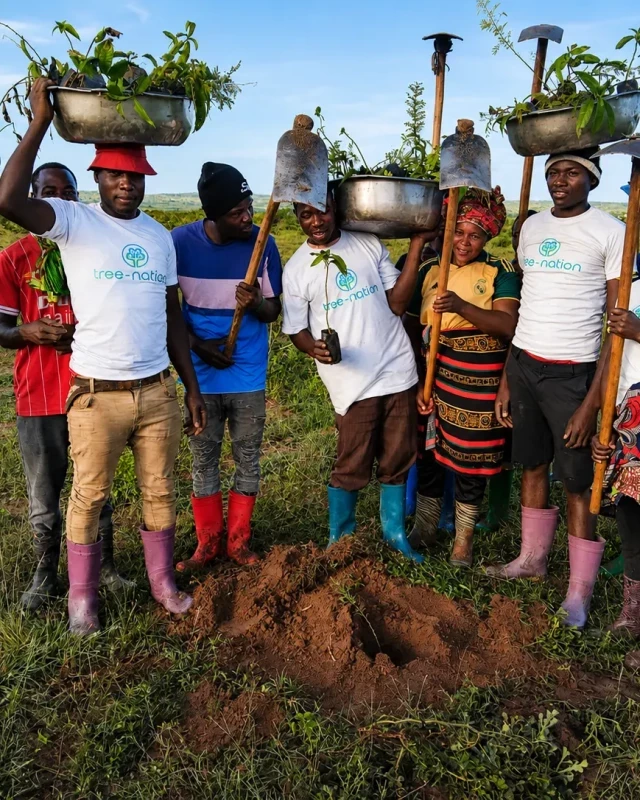
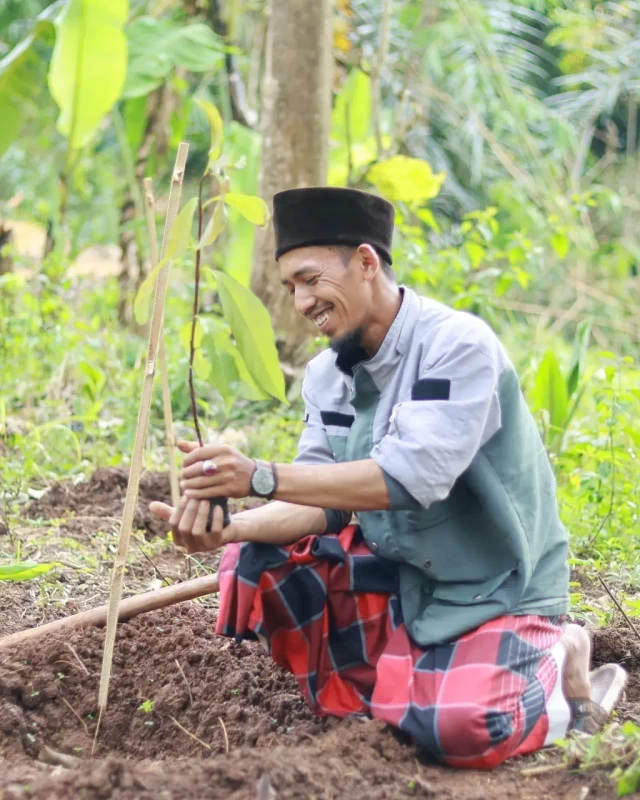
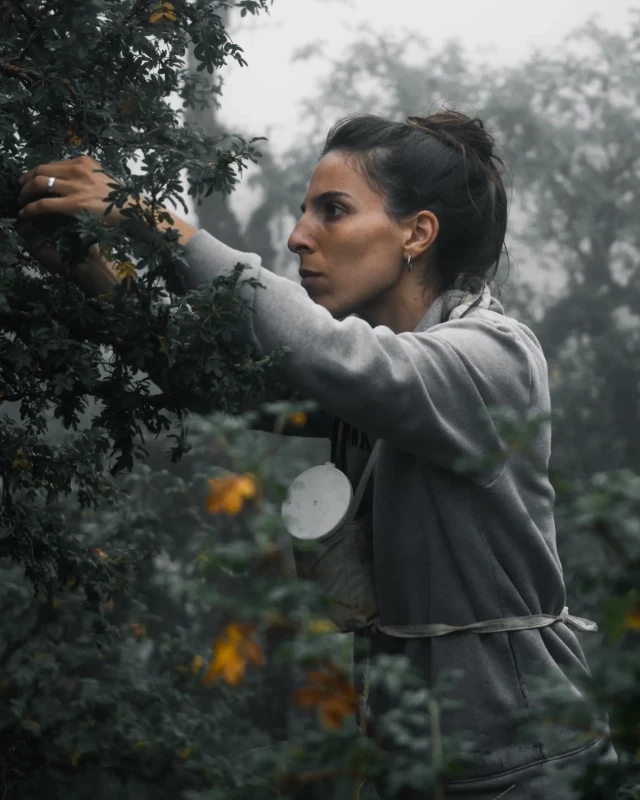
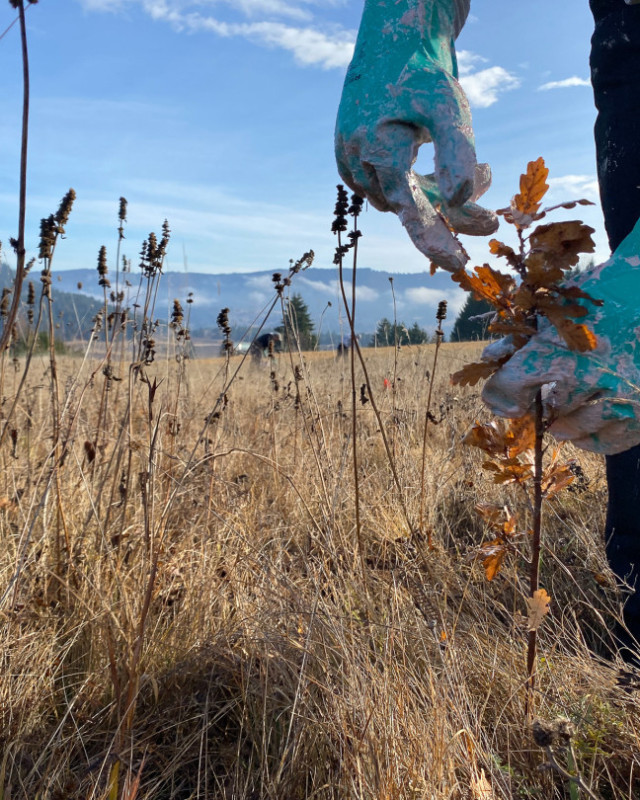
Mission is our general tier for reforestation on private land, designed to capture all worthwhile reforestation efforts into a single tier. Because ecological restoration takes many forms depending on the landscape and its needs, Mission funds the full range under one framework. That same diversity is why Mission monitors with satellite EVI, which tracks vegetation and biodiversity change over time, rather than measuring carbon at planting-line precision.

- Land
- Private
- Carbon rights
- Included
- Verification
- Satellite enhanced vegetation index (EVI)
- Typical use
- Varied reforestation types
- Price
- From €2/tree
- Carbon captured
- Capped at 500kg ex-ante per tree
- Monitoring period
- 5 years per site from planting
- Partners
- Private restoration projects
Impact potential
Climate change mitigation potential
Human activity is the main driver of the world's forest loss. Mission funds the private initiatives pushing back.
Human activity drives the majority of the world's forest loss, and restoration is happening at a fraction of that pace. Around the world, professional restoration projects are bringing forest cover back on land they control. Mission is the tier that channels sponsor funding into these projects, across the full diversity of forms and geographies they take.
Climate change adaptation potential
Restored forests are natural infrastructure for a more extreme climate.
Climate change is intensifying rainfall extremes, droughts, heatwaves, and fire risk across the world's landscapes. Restored forests buffer all of these: they slow water during heavy rain, retain moisture through drought, cool local temperatures, stabilize soil, and provide refuge as surrounding habitats come under pressure. Mission funds the return of this natural infrastructure where it is needed most.
Socioeconomic impact
Restoration is labor-intensive, and the jobs and benefits stay local.
Reforestation at scale requires local labor for site preparation, seedling growing, planting, and monitoring. Mission projects generate employment and build supply chains in the rural areas where restoration happens. Surrounding communities also benefit from what the restored forest produces over time: cleaner water, reduced flood risk, cooler local temperatures, and biodiversity that supports adjacent land uses.
Biodiversity impact
Bring the forest back and the wildlife follows.
When forest is restored on degraded private land, biodiversity returns with it. Mixed-species plantings and natural regeneration rebuild forest structure from soil to canopy, and fauna, pollinators, and understory flora follow. Mission tracks this recovery with satellite EVI and biodiversity monitoring, so the outcome is measured over time rather than assumed at planting.
Our Mission process
Validate planting partner
Tree-Nation finds and validates competent local partners who implement Mission projects.
Select planting sites
Together with our partners, we validate each planting site along with its legal ownership.
Co-design PDD
We create a PDD for each planting site detailing the full project design from species selection to monitoring.
Planting report
We receive a planting report with geolocated photos as proof planting is completed.
Monitoring
The site is moved into monitoring with annual monitoring reports, backed by geolocated photos, satellite verification and survival rates.
Validate planting partner
Tree-Nation finds and validates competent local partners who implement Mission projects.
Select planting sites
Together with our partners, we validate each planting site along with its legal ownership.
Co-design PDD
We create a PDD for each planting site detailing the full project design from species selection to monitoring.
Planting report
We receive a planting report with geolocated photos as proof planting is completed.
Monitoring
The site is moved into monitoring with annual monitoring reports, backed by geolocated photos, satellite verification and survival rates.
Satellite monitoring
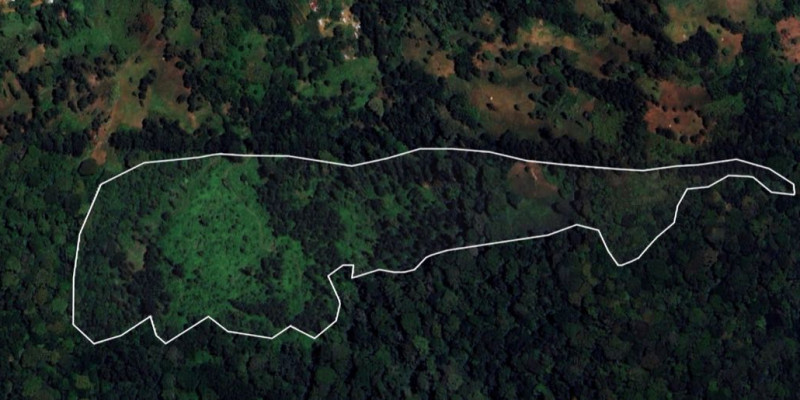
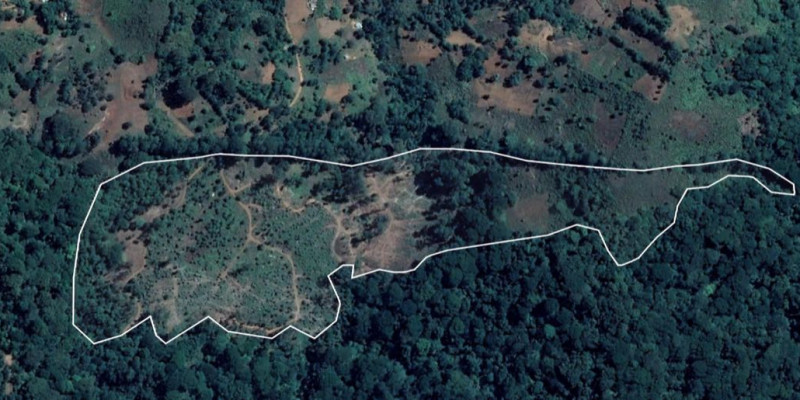
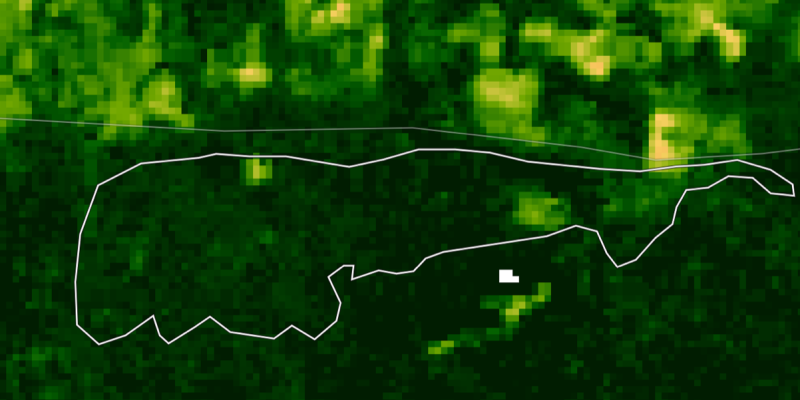
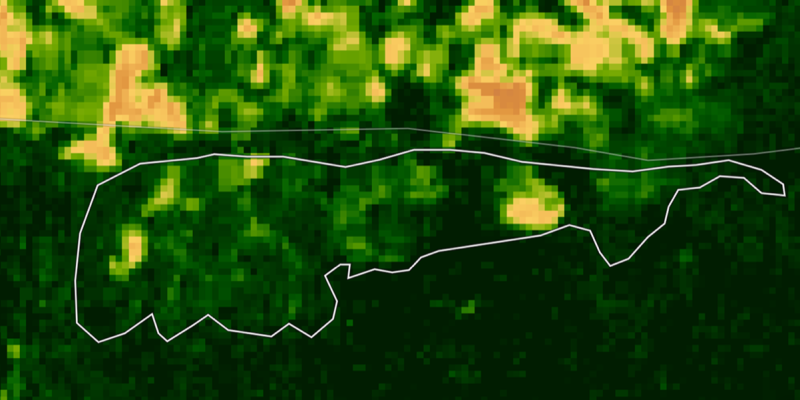
Mission projects are monitored from space throughout the monitoring period. Satellite imagery and the Enhanced Vegetation Index (EVI) confirm canopy development and vegetation recovery across the full project polygon, year over year.
Imagery
High-resolution satellite imagery shows canopy development over time, confirming trees are growing where they were planted.
EVI (Enhanced Vegetation Index)
EVI quantifies vegetation density from satellite reflectance, tracking how green cover increases year over year after planting began. This analysis is done throughout all our planting sites.
What the colors mean
Trend
+10.6%
EVI vs. 2021, before planting finished
EVI over time
In plain terms
The site already had solid forest cover in 2020, but the interior of the parcel was visibly patchier than the surrounding treeline. Planting wrapped up in December 2022, targeting that gap. The extra growth took time to register, EVI stayed close to baseline through the first year after planting, then rose steadily through 2024 and into 2025. Over the most recent full year of data, the site's EVI averaged 10.6% higher than the year before planting finished, and the interior gaps visible in 2020 imagery are the same areas showing the greenest, most changed cover in the latest imagery. The seasonal ups and downs you still see year to year are normal wet/dry-season cycles, not instability, and they show up in the data both before and after planting.
Based on Sentinel-2 satellite imagery.
How carbon is measured
The same per-tree carbon math as every other tier. Each species is calculated on its own biology and climate region, so a mixed planting is the sum of its actual trees rather than a hectare-level average.
- Species-level calculation across mixed plantings
- 10-year growth cap and 500 kg per-tree hard cap
- Survival, cull-back, and prudence reductions applied upfront
How it is verified
Satellite monitoring tracks canopy recovery across the full project polygon, complemented by geolocated field photos and planting records. Species diversity is recorded at planting and monitored as the canopy closes.
- Public polygons
- Geolocated field photos
- Satellite biodiversity tracking
Reporting & disclosure
Mission contributions are designed to fit the frameworks your sustainability team uses. Whether you're required to file depends on your size. Post-Omnibus CSRD applies to companies with 1,000+ employees and €450M+ turnover, with the first reports for FY 2027 due in 2028. If you file, here's how Mission contributions fit each framework. If you don't file, the underlying methodology and data still back your voluntary communication credibly.
| Framework | Applies to | How Mission contributions fit |
|---|---|---|
| CDP Climate Change (Full Corporate) | Voluntary. The version used by companies with 1,000+ employees or $250M+ revenue when they respond to CDP | Answer "Yes" to Question 7.79 (has your organization retired any project-based carbon credits within the reporting year). Then in Question 7.79.1, fill the fields in order. Project type: Reforestation or Forest ecosystem restoration, depending on the specific Mission project. Type of mitigation activity: Carbon removal. Project description: a brief summary of the project and the sponsor's contribution. Credits retired: the volume in tCO₂eq. Purpose of retirement: Voluntary offsetting. Vintage: "Yes" with the planting year if planting has occurred; "No" if retiring credits ex-ante before planting under Tree-Nation's pre-sale model. Were these credits issued to or purchased by your organization: Purchased. Carbon-crediting program: "Other, please specify" and enter Tree-Nation. Method to assess additionality: "Other, please specify" and note that Tree-Nation verifies exclusive sponsorship for the specific project (no other funding sources) and executes planning and planting with local partners. Reversal risk: Monitoring and compensation. Leakage: "Other, please specify" and note that Mission projects are typically on land not in active productive use (degraded, marginal, or previously abandoned), so no commodity displacement or market response applies. Sponsors fill in the remaining fields (other issues, please explain) with their contribution details. |
| CDP Climate Change (SME) | Voluntary. The version available to smaller companies | Not applicable. The SME module covers internal emissions inventory, targets, and reduction initiatives only. Sponsors who want to disclose Mission contributions can opt into the Full Corporate questionnaire instead. |
| CDP Forests (Full Corporate) | Voluntary. The version used by companies with 1,000+ employees or $250M+ revenue when they respond to CDP | Answer affirmatively on Question 8.17 (supporting or implementing projects focused on ecosystem restoration and long-term protection). In Question 8.17.1, fill the fields in order. Project reference: a name for this project in the sponsor's system. Project type: Reforestation or Forest ecosystem restoration, depending on the specific Mission project. Expected benefits: Increase in carbon sequestration, Net gain in biodiversity and ecosystem integrity, and Restoration of natural ecosystem(s). Is this project originating any carbon credits: Yes. Description of project: a brief summary of the project and the sponsor's contribution. Where is the project taking place in relation to your value chain: Project based elsewhere unless the sponsor has operations near the project. Start year: the planting year of the sponsor's contribution. Target year: typically 10 years from planting. Project area to date and Project area in the target year (hectares), Country/Area, Latitude, and Longitude come from the specific project record. Monitoring frequency: Annually. Total investment over the project period: the amount of the sponsor's contribution. For which of your expected benefits are you monitoring progress: Increase in carbon sequestration, Net gain in biodiversity and ecosystem integrity, and Restoration of natural ecosystem(s). Please explain: any additional context on the project or contribution. |
| CDP Forests (SME) | Voluntary. The version available to smaller companies | Not applicable. The SME Forests module asks the sponsor to disclose the deforestation-free (DF) or deforestation- and conversion-free (DCF) status of their own commodities (timber, palm oil, cattle, soy, rubber, cocoa, coffee), not restoration financing. Sponsors who want to disclose Mission contributions can opt into the Full Corporate questionnaire instead. |
| CSRD ESRS E1: Climate | Mandatory for 1,000+ employees and €450M+ turnover. First reports for FY 2027 due in 2028 | Under Paragraphs 57-60, disclose: volume in tCO₂eq, classified as GHG removals; Mission methodology as the quality standard applied; additionality ensured through Tree-Nation's verification of exclusive sponsorship for the specific project (no other funding sources support the intervention); permanence via the 10-year CO₂ cap, prudency reductions, and force majeure provisions; double counting prevented through unique per-tree tracking with vintage assigned at planting. Neutrality claims are substantiated at entity level when paired with value chain reductions. |
| CSRD ESRS E4: Biodiversity | Mandatory for 1,000+ employees and €450M+ turnover. First reports for FY 2027 due in 2028 | Under Paragraph 28, disclose Mission as a biodiversity restoration action (Tree-Nation does not currently issue biodiversity offsets or credits). Describe the action (diverse private-land reforestation restoring forest structure and biodiversity), local knowledge incorporation via mixed native species selection informed by local ecological knowledge, and nature-based solutions applied (Paragraph 28c). Sponsors may optionally add KPIs (hectares planted, species diversity, biodiversity signal via satellite EVI), financing effects (direct sponsor contribution and indirect ecosystem service benefits to surrounding communities), and Mission methodology as the framework applied. |
| CSRD ESRS S3: Affected Communities | Mandatory for 1,000+ employees and €450M+ turnover. First reports for FY 2027 due in 2028 | Under Paragraphs 30-38, disclose: affected communities as private landowners hosting the project, local labor engaged during planting and monitoring, and adjacent communities receiving ecosystem service benefits from the restored land; positive impacts including local employment during planting and site operations, landowner engagement, and downstream ecosystem services (water regulation, biodiversity, benefits to adjacent land); financing effects as the sponsor's contribution allocation; tracking through project-level engagement records maintained by Tree-Nation partners. |
| VSME | Voluntary for SMEs | Describe your Mission contribution in the Practices and Initiatives narrative (B2 in the Basic Module, or expanded in C2 in the Comprehensive Module). VSME is a simplified voluntary standard and does not include a quantified climate contribution slot. |