
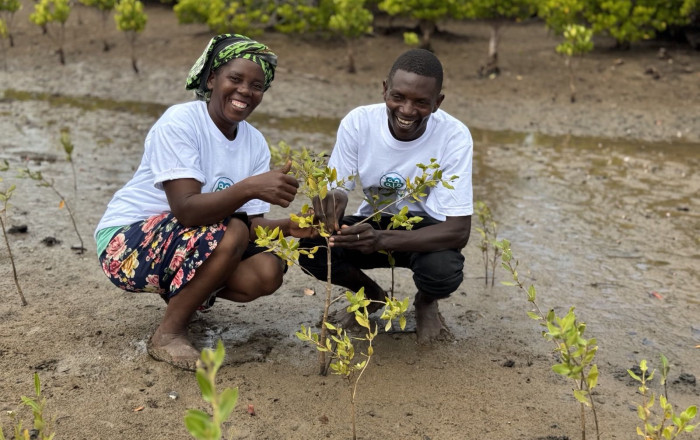
Nature works with governments directly, delivering restoration at the ecosystem scales public land uniquely enables. Mangrove restoration is Nature's primary venue today, chosen for its cost-effectiveness and rapid deployment across coastal geographies. Riparian restoration is Nature's second venue, applying the same government-partnership model to riverbank ecosystems, particularly across Africa. Satellite EVI tracks how vegetation and habitat return over time.
- Land
- Public through government partnerships
- Carbon rights
- Reserved for communities and governments
- Verification
- Satellite enhanced vegetation index (EVI)
- Typical use
- Mangroves & riparian restoration
- Price
- From €0.35/tree
- Carbon captured
- Capped at 500kg ex-ante per tree
- Monitoring period
- 5 years per site from planting
- Partners
- Governments & local communities
Impact potential
Climate change mitigation potential
Nature keeps sponsor money moving into the ground, not into administration outside of planting.
New carbon offset frameworks for public land introduce significant administrative layers outside of tree-planting itself. Sponsor money increasingly flows through external processes and bureaucratic pipelines before reaching the ground. Tree-Nation's mission on public land is to keep that flow as direct as possible. In our framework agreements with governments, carbon offset rights and long-term monitoring duties sit with the communities and governments we plant with. Sponsors do not receive tradeable offset credits from Nature projects. What they enable is tree planting at €0.35 per tree at ecosystem scale, which is where the largest available climate mitigation actually sits. The scale of the opportunity is exceptional. Historical mangrove loss has left vast areas of tropical coast degraded and restorable, almost all of it on public land. Riparian restoration extends the same public-land, government-partnership model to inland river corridors, particularly across Africa where degraded riverbanks are a significant restoration opportunity of their own. Together, these venues can absorb the model at billions-of-trees scale.
Climate change adaptation potential
Coastal and riparian forests are natural water infrastructure for a more extreme climate.
Climate change is intensifying storm surge, sea level rise, coastal erosion, and salinization along tropical coastlines, and river flooding, drought, and freshwater stress inland. Mangroves and riparian forests are the natural infrastructure that buffers these pressures. Mangrove roots break wave energy, trap sediment, hold shorelines against erosion, and filter saltwater intrusion. Riparian forests slow river flooding, filter runoff, stabilize riverbanks, and regulate freshwater flow through drought. Both serve as nursery habitat for the fisheries that communities depend on for food security. Community adaptation extends further: Tree-Nation pays coastal and riparian communities directly for the planting work, an income stream that scales with the volume of restoration and buffers households against climate pressure on traditional livelihoods.
Socioeconomic impact
Immediate wages for planting, long-term ownership of what's restored.
Nature projects pay coastal and riparian communities directly for the planting work, delivering wages that arrive as trees go in the ground. Beyond immediate income, communities and governments retain both the carbon rights and the ecological asset, so the value the restored forest generates as it matures stays with the people and institutions that maintain it: recovered fisheries, coastal and riverbank protection, storm and flood resilience, and any future benefits tied to the restored carbon. Nature projects also build local restoration capacity, with communities gaining planting, monitoring, and forest management skills that transfer across future projects.
Biodiversity impact
Coastal and riparian restoration brings back whole ecosystems, not just the trees.
Mangroves sit at the interface of land and sea, and the life they host reflects that: their submerged roots serve as nursery habitat for fish and crustaceans, their canopies support migratory and resident birds, and their sediments hold reptiles, mammals, and countless invertebrates. Riparian forests sit at a similar interface between land and freshwater, supporting fish, amphibians, aquatic invertebrates, water birds, and terrestrial wildlife that depend on river corridors. Restoring these ecosystems at scale rebuilds the full webs, not just the trees.
Our Nature process
Validate planting partner
Tree-Nation finds and validates government partners and local communities who implement Nature projects.
Select planting sites
Together with our partners, we validate each planting site along with its legal ownership.
Co-design PDD
We create a PDD for each planting site detailing the full project design from species selection to monitoring.
Planting report
We receive a planting report with geolocated photos as proof planting is completed.
Monitoring
The site is moved into monitoring with annual monitoring reports, backed by geolocated photos, satellite verification and survival rates.
Validate planting partner
Tree-Nation finds and validates government partners and local communities who implement Nature projects.
Select planting sites
Together with our partners, we validate each planting site along with its legal ownership.
Co-design PDD
We create a PDD for each planting site detailing the full project design from species selection to monitoring.
Planting report
We receive a planting report with geolocated photos as proof planting is completed.
Monitoring
The site is moved into monitoring with annual monitoring reports, backed by geolocated photos, satellite verification and survival rates.
Satellite monitoring
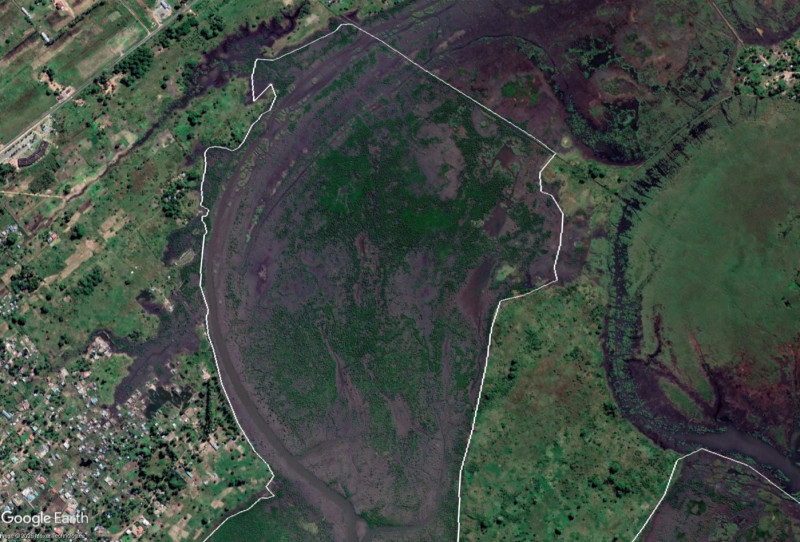
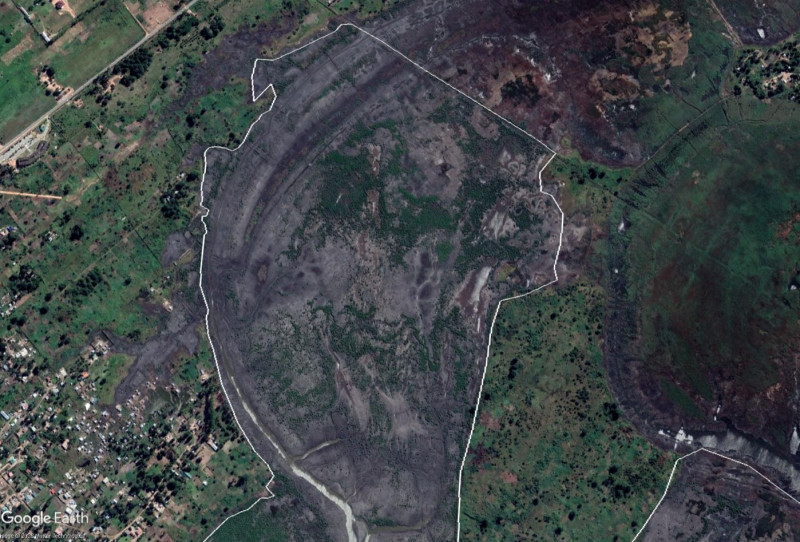
Nature projects are monitored from space throughout the monitoring period. Satellite imagery and the Enhanced Vegetation Index (EVI) confirm canopy development and vegetation recovery across the full project polygon, year over year.
Imagery
High-resolution satellite imagery shows canopy development over time, confirming trees are growing where they were planted.
EVI (Enhanced Vegetation Index)
EVI captures photosynthetic activity from satellites, showing how vigorously the vegetation is growing year over year after planting.
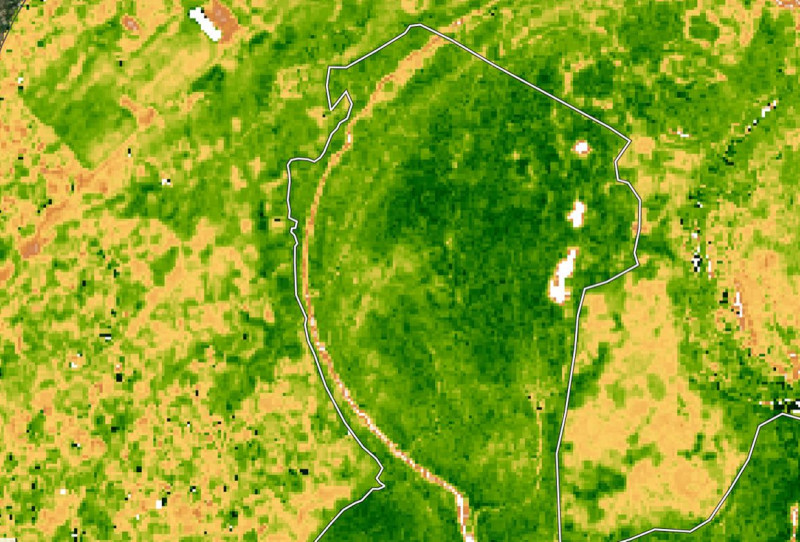
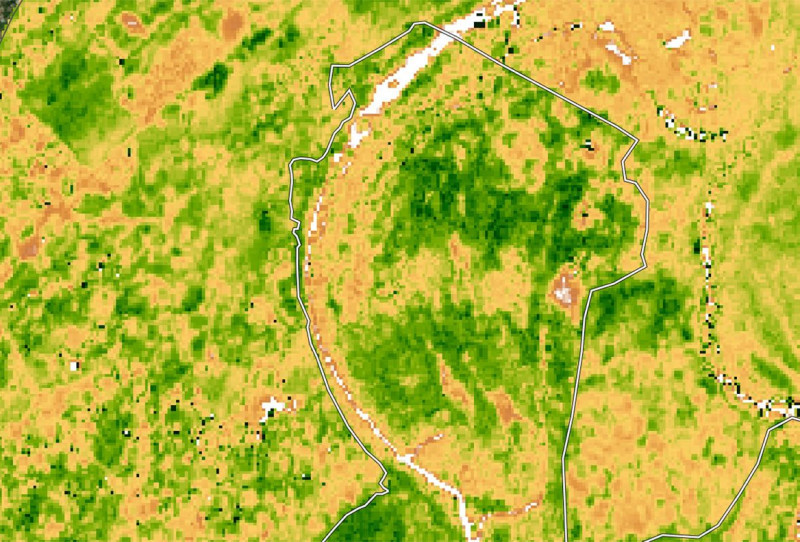
What the colors mean
Trend
+23%
EVI vs. 2022
EVI over time
In plain terms
Vegetation at this site has climbed steadily since 2021, growing measurably greener and denser through 2022 and holding that gain for four straight years since. Compared to the year before planting, EVI has averaged about 23% higher in the most recent complete year, and every year since planting has stayed well above that starting point rather than fading back. The rise looks gradual rather than a sudden jump tied to a single event, suggesting the site was already trending upward and planting reinforced an existing recovery rather than starting one from scratch. A very low single-month reading shows up in the record in 2021, an isolated dip surrounded by normal values, consistent with cloud cover rather than real vegetation loss. The seasonal swings you see year to year reflect normal wet and dry period cycles, and even the most recent partial year is tracking at the highest levels on record.
Based on Sentinel-2 satellite imagery.
How carbon is measured
Identical per-tree methodology to every other tier. What differs is not the calculation but who holds the resulting carbon rights.
- Per tree, from species biology and climate region
- 10-year growth cap and 500 kg per-tree hard cap
- Same conservatism reductions as certified private-land tiers
How it is verified
Project polygons are public, planting is logged per site, and satellite monitoring follows canopy development. Field teams working with the partner government supply geolocated photographic evidence.
- Public polygons
- Planting records per site
- Geolocated photos
Reporting & disclosure
Nature contributions are structured for biodiversity, forest restoration, and community impact reporting. Carbon rights are reserved for the communities and governments Tree-Nation works with, so Nature is not suitable for corporate climate mitigation disclosures. Whether you're required to file depends on your size. Post-Omnibus CSRD applies to companies with 1,000+ employees and €450M+ turnover, with the first reports for FY 2027 due in 2028. If you file, here's how Nature contributions fit each framework. If you don't file, the underlying methodology and data still back your voluntary communication credibly.
| Framework | Applies to | How Nature contributions fit |
|---|---|---|
| CDP Forests (Full Corporate) | Voluntary. The version used by companies with 1,000+ employees or $250M+ revenue when they respond to CDP | Answer affirmatively on Question 8.17 (supporting or implementing projects focused on ecosystem restoration and long-term protection). In Question 8.17.1, fill the fields in order. Project reference: a name for this project in the sponsor's system. Project type: Mangrove protection and restoration, or Reforestation for riparian sites. Expected benefits: Increase in carbon sequestration, Net gain in biodiversity and ecosystem integrity, Improvement of water availability and quality, Disaster risk reduction, and Creation of green jobs and sustainable livelihoods. Is this project originating any carbon credits: Yes, retained by the communities and governments Tree-Nation works with, not by the sponsor. Description of project: a brief summary of the project and the sponsor's contribution. Where is the project taking place in relation to your value chain: Project based elsewhere unless the sponsor has operations near the project. Start year: the planting year of the sponsor's contribution. Target year: typically 10 years from planting. Project area to date and Project area in the target year (hectares), Country/Area, Latitude, and Longitude come from the specific project record. Monitoring frequency: Annually. Total investment over the project period: the amount of the sponsor's contribution. For which of your expected benefits are you monitoring progress: Increase in carbon sequestration, Net gain in biodiversity and ecosystem integrity, and Creation of green jobs and sustainable livelihoods. Please explain: any additional context on the project or contribution. |
| CDP Forests (SME) | Voluntary. The version available to smaller companies | Not applicable. The SME Forests module asks the sponsor to disclose the deforestation-free (DF) or deforestation- and conversion-free (DCF) status of their own commodities (timber, palm oil, cattle, soy, rubber, cocoa, coffee), not restoration financing. Sponsors who want to disclose Nature contributions can opt into the Full Corporate questionnaire instead. |
| CSRD ESRS E4: Biodiversity | Mandatory for 1,000+ employees and €450M+ turnover. First reports for FY 2027 due in 2028 | Under Paragraph 28, disclose Nature as a biodiversity restoration action (Tree-Nation does not currently issue biodiversity offsets or credits). Describe the action (mangrove and riparian ecosystem restoration on public land through government partnerships), local knowledge incorporation via species selection and site management informed by coastal and river community ecological knowledge, and nature-based solutions applied (Paragraph 28c). Sponsors may optionally add KPIs (hectares planted, species diversity, biodiversity signal via satellite EVI), financing effects (direct sponsor contribution, direct wages paid to coastal and riparian communities during planting, and downstream ecosystem service benefits including fisheries recovery, coastal protection, and freshwater regulation), and Nature methodology as the framework applied. |
| CSRD ESRS S3: Affected Communities | Mandatory for 1,000+ employees and €450M+ turnover. First reports for FY 2027 due in 2028 | Under Paragraphs 30-38, disclose: affected communities as coastal and riparian communities where the project is implemented, engaged through government partnership; positive impacts including direct wages paid to community members during planting, retained carbon rights as a long-term community asset, fisheries recovery supporting food security, coastal and flood protection benefits, and local restoration capacity building through planting, monitoring, and forest management skills; financing effects as the sponsor's contribution and its allocation to community wages and project execution; tracking through project-level engagement records maintained by Tree-Nation partners and government counterparts. |
| VSME | Voluntary for SMEs | Describe your Nature contribution in the Practices and Initiatives narrative (B2 in the Basic Module, or expanded in C2 in the Comprehensive Module). VSME is a simplified voluntary standard and does not include a quantified climate contribution slot. |