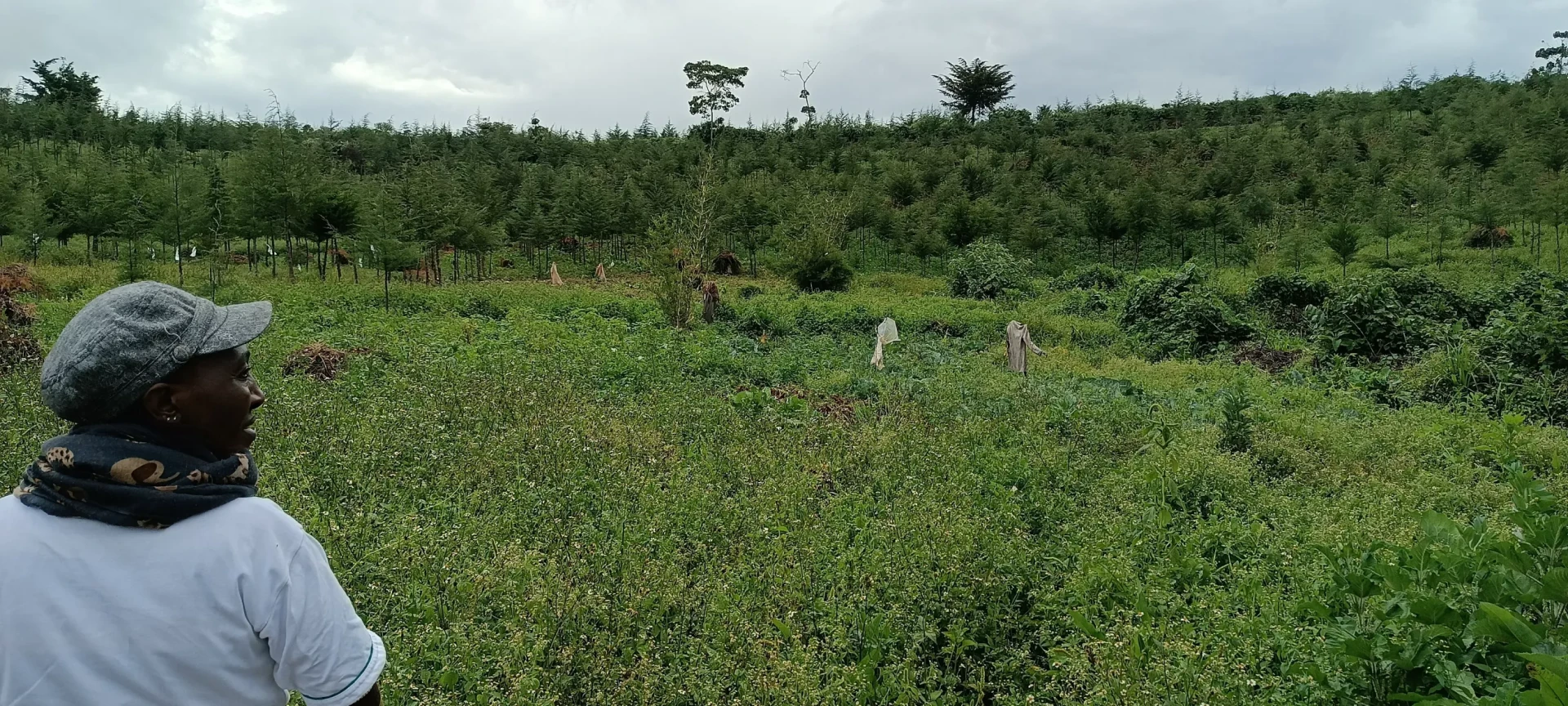

Written by John Bett, Regional Project Manager for Africa.
Introduction
In June 2023, our Africa Regional Manager embarked on a journey to the Aberdare Forest in Nyeri County, Kenya. This expedition, in collaboration with our local allies from the "Save the Aberdare Forest" project, allowed us to witness firsthand the impact of the more than 36,600 trees funded by Tree Nation. Spanning three days, our dedicated team delved into the heart of the Kenyan woodlands to assess the project's progress on our 4 exclusive planting sites.
Overall, we were very impressed by the effort the local project team makes to engage with the community and provide an integral approach to reforestation, where the main goal is not only to enhance and take care of the environment, but also to provide opportunities for the local communities.
Background information
Situated within the Aberdare ecosystem's Upper Tana Catchment area, the tree planting initiative was launched in 2007 as a direct response to the alarming environmental degradation and widespread forest destruction observed in the Aberdare Forest in Kenya. Its core mission is twofold: firstly, to uplift the Upper Tana catchment community by introducing improved livelihood systems, and secondly, to champion the conservation of community natural resources. This dual approach emphasizes enhanced environmental management and governance.
Structured as a community-based organization, the project proudly encompasses 20 community groups, amassing 2,500 members. Grassroots involvement is paramount; community groups manage tree nurseries and are actively involved in tree planting and care across various sites. In 2012 the project integrated local schools, establishing environmental clubs. Through these outlets, a robust school green program emerged, resulting in the planting of over 200,000 trees within educational premises alone.
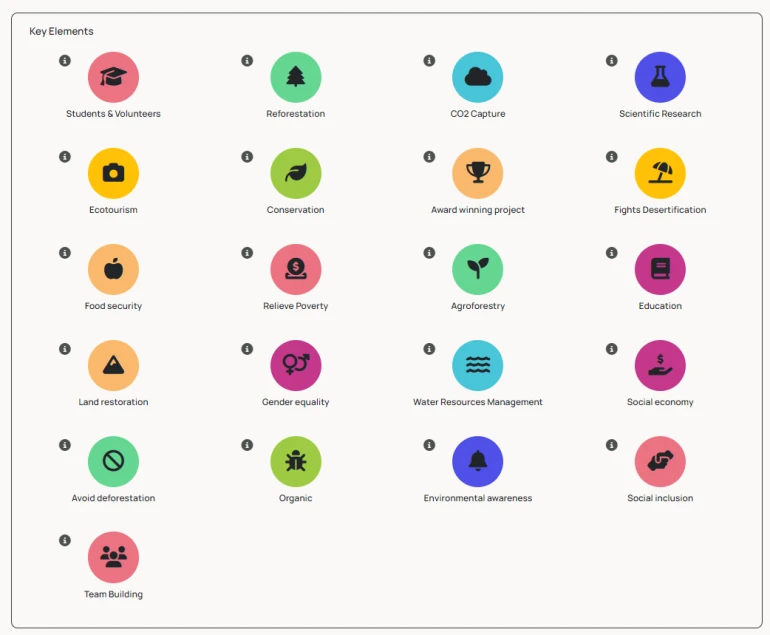
The Save the Aberdare Forest project describes in detail their objectives and how they aim to achieve them on their Project’s page on our Tree-Nation website, which also reflects their key elements.
Our visit
The visit focused on Tree-Nation’s planting sites: Aberdare East Forest, Nyeri Hill Forest, Kabage Forest and the Tumutumu Hill Forest, as well as the nurseries that the project uses to grow the seedlings before planting. The visit had the specific objectives of:
Confirm the planting activities in the Tree-Nation exclusive 4 planting sites.
Verify elements such as tree density and survival rates.
Get insights from the project’s monitoring and reporting protocols.
Meeting and interviewing local planting teams and local communities to measure the socio-economic impacts of the project.
Discuss ways to strengthen partnership with the project.
On the ground: Survey methods and findings
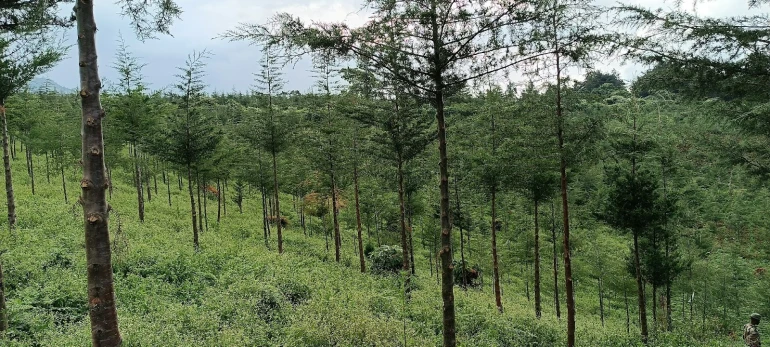 Fig. 1. The Aberdare Forest planting site.
Through observation, pictures, videos, interviews, survival rate survey and a tree density survey done for our visited planting sites, we could gather the following information:
At the core of their operations, the project manages 3 different nurseries that supply the seedlings for their reforestation efforts. With this they are able to grow a variety of 9 different species between fruit trees, endangered trees and fast growing, that then are transported into the planting sites. Up to date, the planting sites have been able to plant over 30,000 trees, with a survival rate of 93%.
Prioritizing local engagement, especially involving indigenous people and stakeholders, is fundamental to the project. Their insights on the area's environmental and cultural nuances significantly inform the initiative's strategy. Moreover, the project integrates and respects the region's traditions, ensuring they align with the broader objectives. For the project, it's imperative to draw on the wisdom of local elders, leaders, and experts during site evaluations. This melding of traditional ecological knowledge with scientific perspectives facilitates a holistic understanding, promoting both sustainability and restoration of the environment.
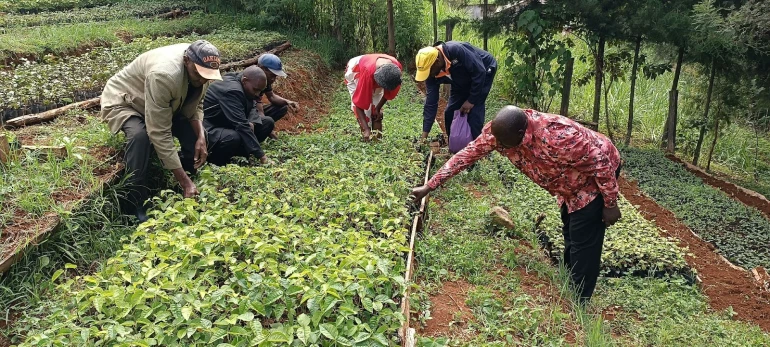 Fig. 2. Evaluation of the trees growing in the nurseries
Central to the project's approach is the empowerment of the community. Local experts share traditional wisdom on sustainable practices, water management, and conservation. By equipping community members with diverse skills, including monitoring and data gathering, the project harnesses collective expertise for optimal results. Strong emphasis on community involvement translates to regular interactive sessions, ensuring residents actively influence project outcomes. These platforms, ranging from open dialogues to skill workshops, underline the importance of local knowledge, promoting a sense of shared ownership and long-term sustainability.
The intertwining of environmental and cultural preservation is vital for the project. To this end, the initiative amplifies local stories, traditions, and cultural milestones. By doing so, it nurtures a deeper communal and public appreciation for the region's intrinsic value.
Risk and mitigation
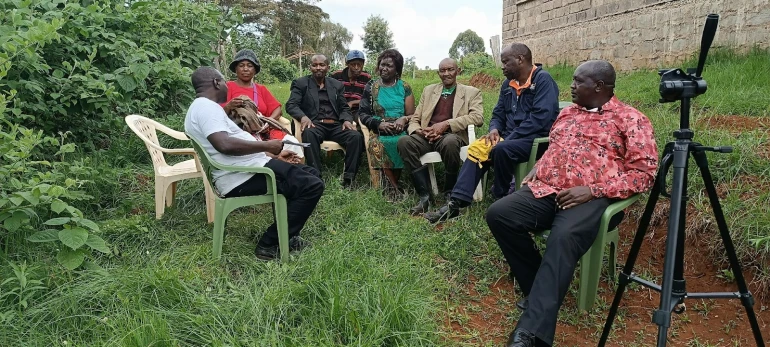 Fig. 3. John Bett interviews the community and project team. The success of environmental initiatives often hinges on navigating multifaceted challenges. A recurrent obstacle is community disengagement, often stemming from a perceived lack of value towards community input, especially if communications lag or farmers' concerns aren't promptly addressed. To counter this, the project emphasizes open communication and active incorporation of community feedback into its strategies.
Additionally, while respecting and integrating traditional practices is a central pillar of the initiative, it's not without its complications. Disagreements or conflicting views on the implementation of these practices can arise. To navigate this, the project seeks to understand varying perspectives, striving to find shared goals and ensuring traditional values align with project objectives.
Local knowledge is invaluable for holistic site assessment and management. However, its reliance poses risks if access to this knowledge is restricted or if key contributors are excluded. In response, the project commits to fostering an inclusive dialogue, ensuring linguistic and cultural inclusivity.
While intent is clear, resource constraints pose a genuine challenge, especially in capacity building. Limited access to vital tools and infrastructure could stymie community participation in crucial restoration activities. To bridge this gap, the project collaborates with local partners, tailoring training programs to meet the specific needs of the community.
Ownership and land management also present a significant challenge. The Tumutumu forest site, managed by the Nyeri County government, currently lacks adequate protection measures. This exposes the area to risks, such as illegal logging. To bolster protective efforts, the project engages in dialogue with relevant authorities, advocating for enhanced security and sustainable forest management. By addressing these challenges head-on, the project fortifies its commitment to environmental and community welfare.
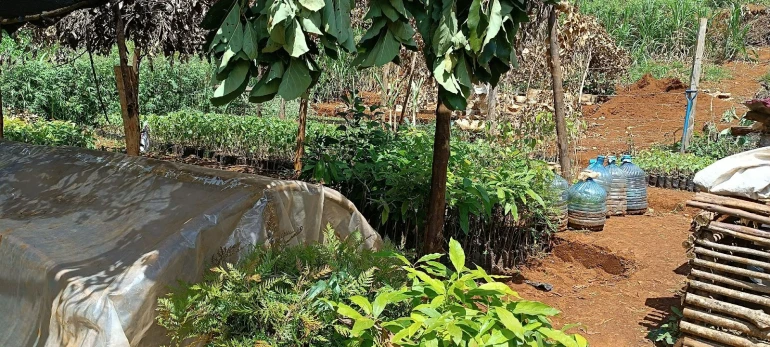 Fig. 4. Nursery filled with seedlingsThe expedition to the Aberdare Forest provided a comprehensive insight into the robust efforts of the "Save the Aberdare Forest" project. By prioritizing local engagement, integrating traditional wisdom, and addressing challenges proactively, the project not only champions environmental conservation but also uplifts the community.
The expedition underscored Tree Nation's commitment to supporting initiatives that harmonize ecological restoration with socio-economic advancements, fostering a brighter future for both the environment and its inhabitants.


